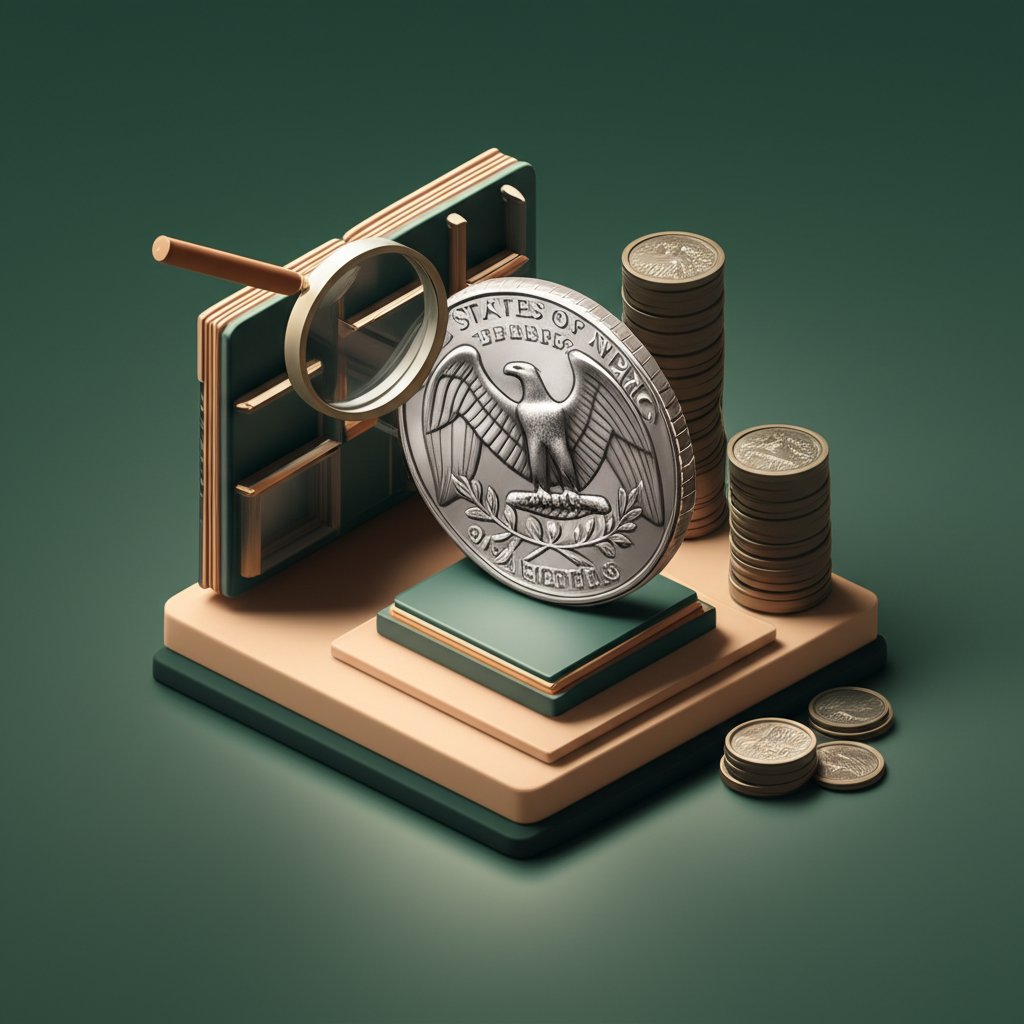
When you stumble upon an old quarter, your first thought might be, "It's just 25 cents." But for many U.S. coins, especially those minted decades ago, that 25 cent coin value can be a significant understatement. What looks like loose change could, in fact, be a small treasure, its worth tied to precious metals or rare historical significance.
Unlocking the true potential of your quarter means looking beyond its face value and understanding the specific characteristics that can elevate it into the realm of collectibles or investments. Whether you're a casual finder or a budding enthusiast, knowing what to look for is your first step toward discovering a quarter that might be worth hundreds, or even thousands, of dollars.
At a Glance: Key Takeaways for Your Old Quarter
- Date is King for Silver: Quarters minted in 1964 or earlier are 90% silver, giving them an inherent melt value far exceeding 25 cents.
- Melt Value is a Baseline: This silver content provides a minimum value, typically $3-$5 per coin, depending on current silver prices.
- Numismatic Value Soars: Rarity, condition, and specific mintmarks or errors can add a substantial "numismatic premium" above the silver content.
- Identification is Crucial: Learn to check the date, mintmark, and design type to quickly assess potential value.
- Never Clean Coins: Cleaning can drastically reduce a coin's numismatic value, even if it looks "better" to the untrained eye.
- Professional Help for High Value: For potentially rare or high-value coins, consult reputable coin dealers or grading services.
Decoding Your Quarter's True Worth: It's More Than Just 25 Cents

The journey to understanding your old quarter's true 25 cent coin value begins with two primary drivers: its metallic content and its numismatic appeal. For many, the initial surprise comes from realizing that some quarters aren't just made of common metals; they're composed of 90% silver. This precious metal content instantly elevates their value above face value, often by ten to twenty times, just for the metal itself.
Beyond the silver, however, lies the fascinating world of numismatics – the study and collection of coins. Here, factors like a coin's age, its rarity (how many were minted), its condition, and any unique errors can turn a silver quarter into a truly extraordinary find, potentially worth more than its weight in gold. Let's break down how these elements contribute to your quarter's real market value.
The Silver Baseline: 1964 and Earlier Quarters
For any U.S. quarter dated 1964 or earlier, you've got a winner on your hands, regardless of its condition. These coins were struck from an alloy of 90% silver and 10% copper. Each one weighs a total of 6.25 grams, meaning it contains precisely 0.18084 troy ounces (or 5.625 grams) of pure silver.
This silver content provides a direct, measurable value known as its "melt value." This value fluctuates daily with the global spot price of silver. To truly Understand silver quarter value, you need to recognize its metallic content first. For instance, if the spot price of silver is $25.00 per troy ounce, a 90% silver quarter has a melt value of approximately $4.52 (0.18084 oz * $25.00/oz). This means even the most common, worn silver quarter is worth significantly more than its quarter-dollar face value.
Here’s a quick look at how silver spot price impacts melt value:
| Silver Spot Price (per troy oz) | Melt Value per 90% Silver Quarter |
|---|---|
| $20.00 | $3.62 |
| $25.00 | $4.52 |
| $30.00 | $5.43 |
| $35.00 | $6.33 |
| $40.00 | $7.23 |
Keep in mind that these figures represent the minimum value for these coins. This melt value acts as a floor; their total 25 cent coin value can be much higher due to numismatic premiums. |
Your Quarter Identification Playbook: Is It Silver? Is It Rare?
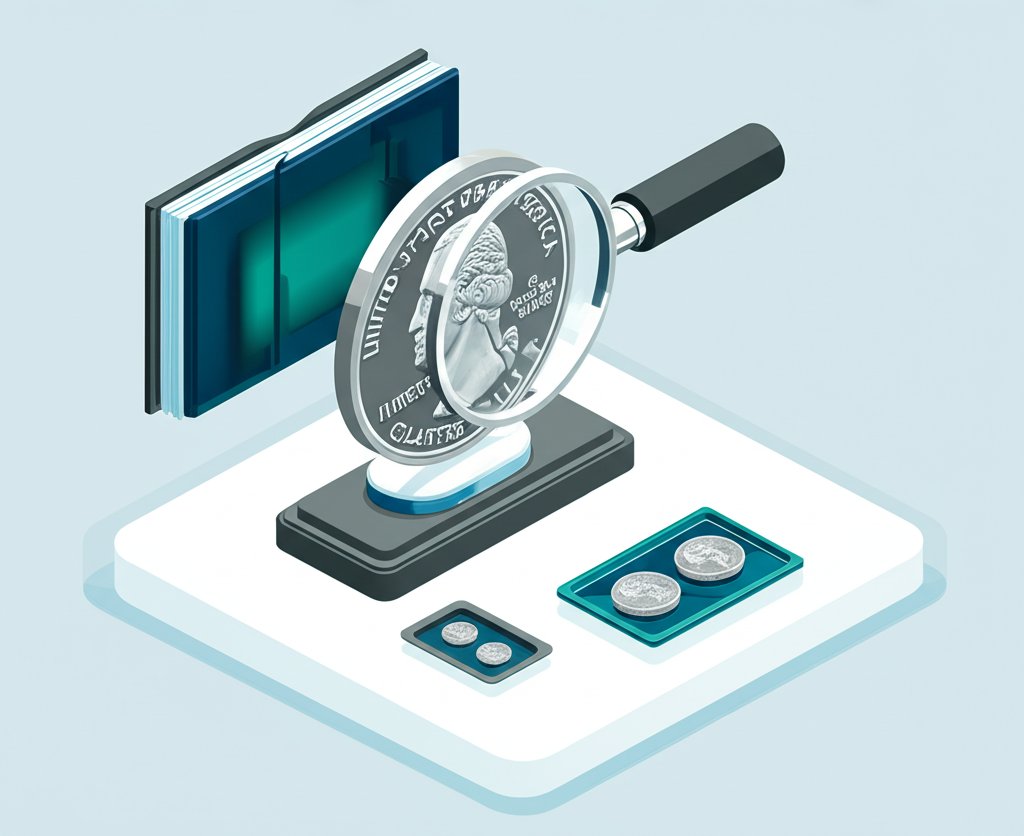
Identifying a valuable quarter is a systematic process. You don't need special equipment, just a keen eye and a bit of patience. Follow these steps to determine if your old 25-cent coin holds hidden potential.
Step 1: Check the Date (The Easiest Filter)
This is your absolute first step and the quickest way to separate a common coin from a potentially valuable one.
- 1964 or Earlier: Any quarter dated 1964 or earlier is automatically 90% silver. These are always worth more than face value due to their precious metal content. Set these aside immediately.
- 1965 or Later: Quarters dated 1965 to the present are generally made of a copper-nickel clad composition. They contain no silver and are typically worth only their 25-cent face value, unless they are a rare error coin, which are exceptions rather than the rule.
Practical Tip: If you have a roll of old quarters, quickly flip through and pull out anything dated '64 or prior. You've already done most of the work for identifying silver content!
Step 2: Examine the Mintmark (Locating Rarity)
For quarters dated 1964 and earlier, the mintmark can be a crucial indicator of rarity and, thus, higher value. The mintmark tells you which U.S. Mint facility produced the coin.
- Where to Look: On Washington quarters (1932-present), the mintmark is typically found on the reverse side of the coin, directly below the eagle. For older designs like Standing Liberty and Barber quarters, its placement varies but is usually on the reverse.
- Common Mintmarks:
- "D": Denotes the Denver Mint.
- "S": Denotes the San Francisco Mint.
- No Mintmark: Signifies the Philadelphia Mint. (Philadelphia did not always use a mintmark, especially on earlier coins).
- Less Common Mintmarks (for older designs):
- "O": New Orleans Mint (used on Barber quarters until 1909).
- "CC": Carson City Mint (used on Barber quarters until 1893).
- Impact on Value: Some mintmark/date combinations resulted in very low mintage numbers, making those coins significantly rarer and more valuable. For example, a 1932-D Washington quarter is far rarer than a 1932 quarter with no mintmark.
Case Snippet: Imagine you find two 1932 Washington quarters. One has no mintmark, the other has a "D". The no-mintmark coin is worth its silver melt value, maybe a few dollars more if in good condition. The 1932-D, however, is a key date and could easily fetch hundreds or even thousands of dollars depending on its condition. That little "D" makes all the difference!
Step 3: Identify the Design Type (Older is Often Pricier)
While Washington quarters are the most common silver quarter, earlier designs generally command higher numismatic premiums due to their age and historical significance.
- Washington Quarters (1932-present): These are the most frequently encountered silver quarters. While many are common, specific dates and mintmarks (like the 1932-D or 1932-S) and error varieties (like the 1937 Doubled Die Obverse) can be highly valuable.
- Standing Liberty Quarters (1916-1930): These beautiful coins feature Lady Liberty holding a shield and olive branch. All Standing Liberty quarters are 90% silver. Key dates, like the 1916 (the first year of issue with a very low mintage), can be extremely valuable, often fetching thousands of dollars even in circulated condition.
- Barber Quarters (1892-1916): The oldest design, featuring a classic depiction of Lady Liberty on the obverse. All Barber quarters are 90% silver. These coins are generally more collectible due to their age, and many dates and mintmarks, such as the 1896-S or 1901-S, are significant rarities worth substantial sums.
Quick Clarification: "Key date" refers to a specific year and mintmark combination that is particularly scarce and sought after by collectors, leading to higher values.
Beyond the Melt: What Makes a 25 Cent Coin Value Skyrocket?
While silver content provides a solid base for your 25 cent coin value, it's the numismatic characteristics that truly send prices soaring. This is where the detective work pays off, as condition and rarity become paramount.
The Power of Condition: Uncirculated vs. Worn
A coin's condition, or "grade," is perhaps the most critical factor in determining its numismatic premium. A coin that has seen little to no circulation will be worth exponentially more than one that is heavily worn.
- Mint State (MS): These coins are uncirculated and show no signs of wear. They look just as they did the day they left the mint. Within Mint State, grades range from MS-60 to MS-70 (perfect), with higher numbers indicating better strike quality and eye appeal. A "perfect" coin, if it exists, is incredibly rare.
- About Uncirculated (AU): Coins with only the slightest traces of wear on their highest points. Still very desirable.
- Extremely Fine (EF/XF) or Very Fine (VF): Coins with light to moderate wear, but all major details are still clear.
- Good (G) or Fair (F): Heavily worn coins where only major design elements are visible, and fine details are lost. These still have melt value but little numismatic premium unless they are extremely rare key dates.
Analogy: Think of it like a vintage car. A perfectly preserved, low-mileage classic will always command a higher price than the same model found rusted in a barn, even if both are "the same car." The same principle applies to coins.
For high-value coins, professional grading services like NGC (Numismatic Guaranty Corporation) or PCGS (Professional Coin Grading Service) are indispensable. They authenticate coins, assign a precise numerical grade, and encapsulate them in a protective slab, which significantly enhances buyer confidence and market value.
Rarity and Key Dates: Uncovering Hidden Gems
Certain years and mintmark combinations produced very few coins, making them inherently rare. Additionally, striking errors that occurred at the mint can create unique, highly sought-after varieties. These are the "superstars" of 25 cent coin value.
Here are some examples of valuable U.S. quarters that command significant premiums:
- 1937 Doubled Die Obverse (DDO) Washington Quarter: A rare error where the date and lettering appear doubled. Highly prized, it can be valued around $13,000+ in Mint State condition.
- 1932-D Washington Quarter: A key date due to low mintage. Values range from $100 to $2,000+ depending on condition.
- 1932-S Washington Quarter: Another key date, also with low mintage. Values typically range from $75 to $1,500+.
- 1916 Standing Liberty Quarter: The very first year of issue, with a notably low mintage. Even in worn condition, this coin can be worth $3,000 to $25,000+, with pristine examples fetching the highest prices.
- 1896-S Barber Quarter: A significant rarity. Values typically range from $1,000 to $8,000+ depending on condition.
- 1901-S Barber Quarter: Another highly sought-after Barber quarter. Values for this coin can range from $2,000 to $15,000+.
Important Note: These values are estimates for coins in good to excellent condition. A heavily worn example of a key date will still be valuable but will fall on the lower end of the spectrum. Always consult a current price guide or a professional dealer for the most accurate valuation.
What to Do with Your Valuable Quarters: A Practical Playbook
Once you've identified quarters that have a potential 25 cent coin value far beyond their face value, the next step is deciding how to proceed. Your approach might differ depending on whether your quarter's value is primarily from its silver content or its numismatic rarity.
Deciding Your Strategy: Silver Stacking vs. Collecting
- Silver Stacking: If you've found several common-date, worn silver quarters (1964 and earlier, with no rare mintmarks or errors), you might consider "silver stacking." This strategy focuses on accumulating coins for their intrinsic silver content, with less emphasis on numismatic appeal. It's a straightforward way to invest in physical silver in small, recognizable denominations. These coins are liquid and easily bought and sold based on the current spot price of silver.
- Numismatic Collecting/Investing: If you have identified a key date, a rare mintmark, or a quarter in exceptional condition, you're entering the realm of numismatic collecting. This involves focusing on specific dates, mintmarks, and conditions to build sets (e.g., a complete set of Washington quarters by date and mintmark, or a "type set" with one of each major design). These coins require more research and careful handling, but their potential for appreciation can be significant.
Best Practices for Selling Your 25 Cent Coin
Selling your quarters wisely can maximize your returns. Avoid common pitfalls by choosing the right selling venue.
Where to Sell (The Good Options):
- Reputable Coin Dealers:
- Local Dealers: Many cities have established coin shops. They offer convenience and immediate cash or trade. Shop around for offers, as prices can vary.
- Online Dealers: Websites of well-known dealers often buy coins, especially if you have a significant quantity or high-value pieces. They may offer competitive prices and can be very convenient.
- Online Auction Platforms:
- eBay: Excellent for selling common silver quarters in lots or moderately valuable numismatic coins. Be sure to use clear photos and detailed descriptions. Research similar sold listings to set a fair price.
- Specialized Auction Houses (e.g., Heritage Auctions): For truly rare or high-grade coins (those valued at hundreds or thousands), a dedicated coin auction house can reach serious collectors and achieve top prices. They handle grading, photography, and marketing for a commission.
- Coin Shows/Conventions: These events bring together many dealers and collectors, offering a great opportunity to get multiple offers on the spot. You can also learn a lot by talking to experts.
Where to Avoid (The Bad Options):
- Pawn Shops: They are typically interested in quick turnover and rarely offer fair market value for numismatic items or even melt value for silver.
- "We Buy Gold" Shops: Similar to pawn shops, their expertise often lies in scrap metal, not numismatic value. You'll likely get a significantly lower offer.
- Jewelry Stores: Unless they specialize in antique coins (which is rare), jewelers are unlikely to appreciate the numismatic value of your quarters.
Maximizing Your Returns:
- Group Common Coins: For common-date, worn silver quarters, it's often best to group them into lots (e.g., "10 pre-1965 silver quarters"). This streamlines selling and typically gets you a better price per coin.
- Sell Key Dates Individually: Any quarter identified as a key date, rare error, or in exceptional condition should be sold individually. Provide clear photos and as much information as possible.
- Consider Professional Grading: If you believe a quarter is a genuine rarity and in potentially high grade (e.g., worth several hundred dollars or more), investing in professional grading (PCGS or NGC) can significantly increase its market value and ease of sale. Graded coins are verified and protected, giving buyers confidence.
Quick Answers: Your 25 Cent Coin Value FAQs
Q: Are all quarters from before 1965 valuable?
A: Yes, absolutely. Every U.S. quarter dated 1964 or earlier is composed of 90% silver. This gives them an inherent melt value that is always higher than 25 cents, typically ranging from $3 to $7+ depending on the current spot price of silver.
Q: How do I know if my quarter is a "key date"?
A: Identifying a key date requires checking both the year and the mintmark. Refer to reputable coin price guides (online or in print) or the key date lists provided earlier in this article. Look up your specific year and mintmark combination; if it's listed as a low mintage or significant rarity, you likely have a key date.
Q: Should I clean my old quarter to make it look better?
A: Absolutely NOT! This is one of the biggest mistakes novice coin collectors make. Cleaning a coin, even gently, will almost always diminish its numismatic value, sometimes by a drastic amount. Collectors prefer coins with their original patina, even if it's dirty or toned. A cleaned coin is easily identifiable and typically sells for much less.
Q: What's the minimum value of a silver quarter?
A: The minimum value for any 90% silver quarter (1964 or earlier) is its silver melt value. This value fluctuates with the market price of silver, but over the past decade, it has typically kept common silver quarters in the range of $3 to $5 each, often higher.
Ready to Uncover Your Quarter's Hidden Potential?
The journey to understanding your 25 cent coin value is both educational and potentially rewarding. You've learned that not all quarters are created equal, and some, particularly those from 1964 and earlier, hold significant inherent value due to their silver content. Beyond that, a combination of date, mintmark, design type, and condition can transform a humble quarter into a highly sought-after collectible.
Now that you have the knowledge, it's time to act. Take a closer look at any old quarters you might have lying around. Check the dates, scrutinize the mintmarks, and appreciate their unique designs. If you find something that appears to be a key date or in exceptional condition, resist the urge to clean it, and instead, seek a second opinion from a reputable coin dealer or consider professional grading. You might just be holding more than just 25 cents in your hand.