
Unearthing a roll of half dollars can spark a treasure hunt, but when it comes to assessing 40 silver half dollars value, the reality is often less about striking it rich with a single rarity and more about understanding the predictable power of silver content. Many folks find themselves with a stack of 1965-1970 Kennedy half dollars, curious if their metallic sheen means a significant payday. These specific coins represent a unique category in U.S. coinage—they’re not solid silver like their predecessors, but they're far from worthless clad issues. Knowing what makes them tick, both as precious metal and potential collectibles, is key to unlocking their true worth.
At a Glance: Maximizing the Value of Your 40% Silver Half Dollars
- Identify 40% Silver: Focus on Kennedy half dollars dated 1965-1970, which feature a faint copper line on the edge.
- Calculate Melt Value First: For most circulated 40% silver half dollars, silver content is their primary worth.
- Understand Silver Content: Each 40% silver half dollar contains approximately 0.1479 troy ounces of pure silver.
- Check Key Dates/Errors: While rare, the 1970-D is a key date, and significant errors can boost numismatic value.
- Avoid Cleaning: Resist the urge to clean coins, as it almost always reduces collector appeal.
- Decision Point: Decide whether to sell for melt value or pursue numismatic channels based on condition and rarity.
The 40% Silver Half Dollar: A Unique Blend in American Coinage
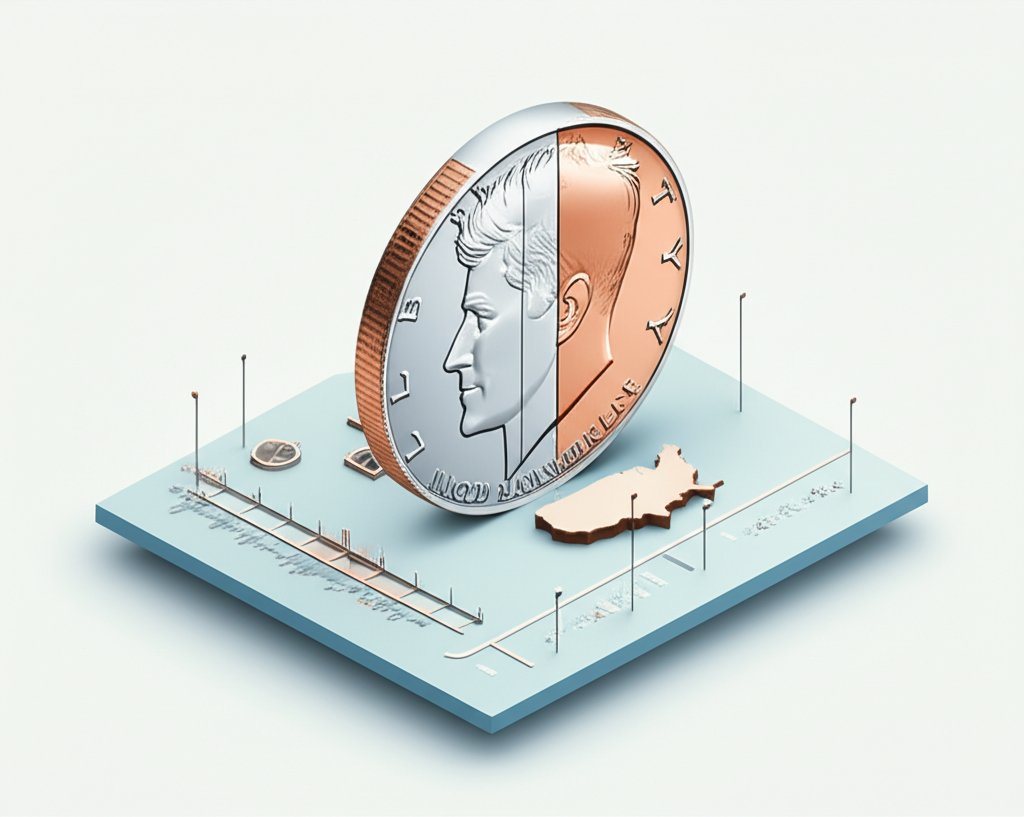
From 1965 to 1970, the United States Mint produced a fascinating transitional coin: the 40% silver half dollar. This composition arose as the price of silver skyrocketed, threatening to make 90% silver coins worth more as metal than as currency. To combat this, the Mint reduced the silver content for half dollars, while dimes and quarters switched to a pure copper-nickel clad composition. These 40% silver halves are often overlooked or misunderstood, sitting squarely between the highly sought-after 90% silver issues (1964 and earlier) and the purely base metal coins that followed (1971 and later).
Visually, identifying these coins is straightforward. If you have a Kennedy half dollar dated 1965 through 1970, it contains 40% silver. The tell-tale sign is usually a faint copper line visible along the coin’s edge, a result of its "clad" construction where layers of 80% silver/20% copper are bonded to a pure copper core. It's subtler than the pronounced copper stripe on post-1970 issues but distinct from the solid silver edge of 1964 and earlier coins. This particular mintage period is also notable because it's the last time U.S. circulating half dollars contained any silver at all. For those curious about the composition of other coins from this era, like the theoretical 1970 silver dollar, remember that Are 1970 Silver Dollars Real? This highlights that while some 1970 issues contain silver, the composition varies by denomination.
Calculating the Melt Value of Your 40 Silver Half Dollars
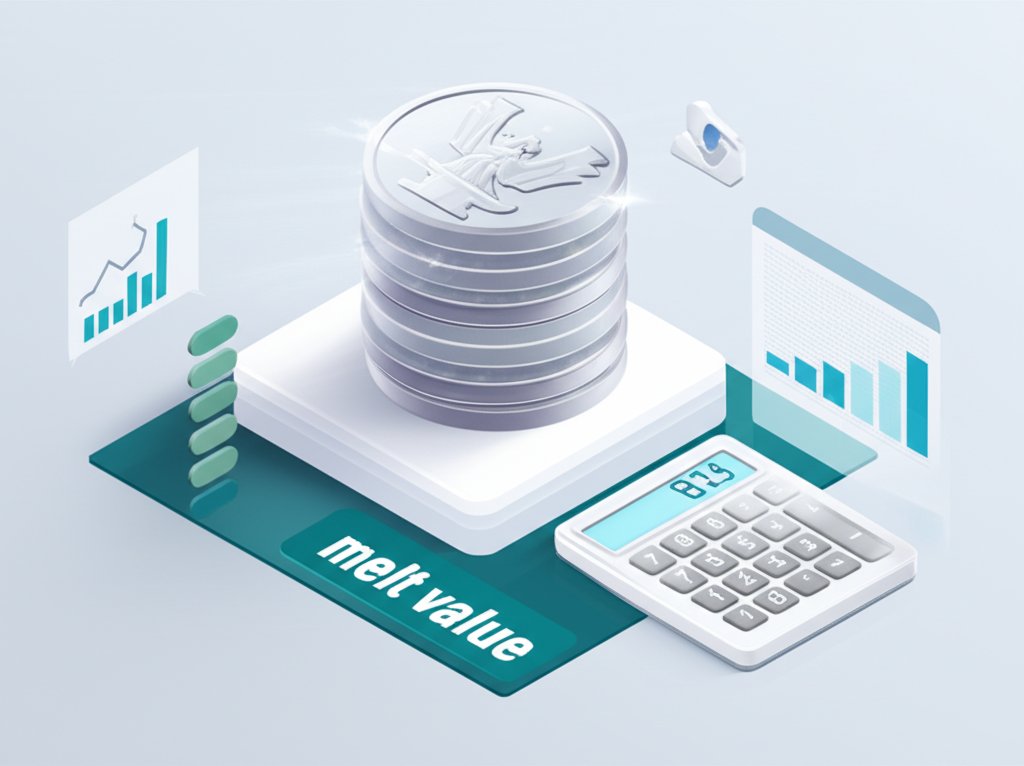
For the vast majority of 40% silver half dollars, their 40 silver half dollars value is directly tied to the fluctuating price of silver. This "melt value" represents the intrinsic worth of the precious metal content within the coins, independent of any numismatic appeal. Understanding how to calculate this is your first and most important step.
Each 40% silver half dollar contains approximately 0.1479 troy ounces of pure silver. This is a precise figure derived from its specific alloy composition and weight. Compare this to the earlier 90% silver half dollars (e.g., Walking Liberty, Franklin, 1964 Kennedy), which each contain about 0.36169 troy ounces of pure silver—more than twice the silver of their 40% counterparts.
To determine the melt value for your 40 silver half dollars, follow these steps:
- Find the Current Silver Spot Price: This is the real-time market price for one troy ounce of pure silver. You can find this on financial news websites (e.g., Kitco, Bloomberg) or reputable bullion dealer websites. Let's use a hypothetical example: suppose the silver spot price is $25.00 per troy ounce.
- Calculate the Melt Value per Coin: Multiply the silver content per coin by the spot price.
- 0.1479 troy oz/coin * $25.00/troy oz = $3.6975 per coin
- Calculate the Total Melt Value for Your Lot: Multiply the melt value per coin by the number of coins you have.
- $3.6975/coin * 40 coins = $147.90
So, in this scenario, your 40 silver half dollars would have a combined melt value of roughly $147.90. This calculation provides a strong baseline for their worth. Always use the most up-to-date silver spot price for accuracy, as this figure can change daily, even hourly.
Beyond Melt: Unearthing Numismatic Value in 40% Silver Halves
While melt value often dominates the discussion for 40 silver half dollars value, it's crucial not to dismiss the potential for numismatic worth entirely. Some 40% silver half dollars can command prices significantly higher than their silver content, particularly if they possess certain desirable characteristics for collectors.
Condition (Grade)
A coin's condition, or "grade," is paramount in numismatics. Even for 40% silver half dollars, a coin in exceptional, uncirculated (MS-60 or higher) condition with brilliant luster and no discernible wear will always be more valuable than a heavily circulated counterpart. Most 40% halves you encounter will be in circulated condition, meaning their numismatic value will likely hover near or slightly above melt. However, finding one in truly pristine, untouched condition—perhaps from an original bank roll—can make a difference. Terms like "Good," "Fine," "Extremely Fine," and "Uncirculated" denote increasing levels of preservation and detail.
Rarity and Key Dates
Most 40% silver half dollars were minted in the hundreds of millions, making them common. However, there are exceptions. The 1970-D Kennedy Half Dollar is a prime example of a "key date" within this series. It was minted exclusively for collectors in Mint Sets and was not released into general circulation. With a relatively low mintage of 2,150,000, and many still sealed in original government packaging, it holds a premium for collectors, especially in higher grades. A 1970-D in brilliant uncirculated condition can easily fetch tens or even hundreds of dollars, far surpassing its melt value. For example, a 1970-D in MS-65 condition might sell for $50-$100 or more, depending on market demand and specific eye appeal.
Errors and Varieties
Manufacturing errors and subtle varieties can transform an ordinary coin into a numismatic prize. For 40% silver half dollars, look for:
- Doubled Dies: Where the design elements appear slightly duplicated due to a misaligned strike.
- Off-Center Strikes: When the coin blank isn't perfectly centered during the striking process.
- Repunched Mint Marks (RPMs): Apparent doubling or tripling of the mint mark (e.g., "D" for Denver).
- Missing Mint Marks: Though rare for these dates, it's always worth checking.
While significant errors are uncommon, they can dramatically increase a coin's value. A striking off-center error on a 1966 Kennedy Half, for instance, could turn a $3 melt-value coin into a $50-$200 collector's item. Inspect your coins carefully, ideally with a magnifying glass, for any anomalies.
The Bottom Line on Numismatic Value: For your typical bag of 40 silver half dollars, assume melt value will be the primary driver of worth. Only exceptionally well-preserved examples, specific key dates (like the 1970-D), or verifiable errors will likely command a significant numismatic premium.
Deciding Your Next Move: Sell for Silver or Seek a Collector?
Once you have a handle on both the melt and potential numismatic value of your 40 silver half dollars, you face a decision: should you sell them for their silver content, or try to market them to collectors? This choice hinges on a few critical factors.
When to Prioritize Melt Value
- Circulated Condition: If your 40% silver halves are visibly worn, scratched, or damaged, their numismatic value will be minimal. Melt value will almost certainly be their maximum worth.
- Common Dates: Most 1965-1969 Kennedy halves (especially non-D mint marks) are very common. Unless in exceptionally high, uncirculated grades, their melt value will be their ceiling.
- Ease and Speed: Selling for melt value is generally quicker and simpler. Bullion dealers, pawn shops, and even some local coin shops will buy silver coins based on their metal content without extensive grading.
Case Snippet: Sarah inherits a coffee can filled with 40 silver half dollars. Most are from the late 1960s, heavily circulated, some even bent. She checks for a 1970-D but finds none. Calculating the melt value (say, $150 total), she decides to sell to a local coin shop that buys "junk silver" at a percentage of spot. It’s a fast, no-fuss transaction.
When to Consider Collector Value
- Uncirculated or Proof Condition: If you have coins that are truly pristine, with original luster and no signs of wear, especially if still in original packaging (like Mint Sets), these warrant further investigation.
- Key Dates or Varieties: If you've identified a 1970-D half dollar or a distinct error coin, its value could significantly exceed melt.
- Patience and Effort: Marketing to collectors requires more effort: professional grading, listing on auction sites, or attending coin shows. This path is only worthwhile if the potential premium justifies the time and cost.
Case Snippet: Mark sorts through his 40 silver half dollars and spots a 1970-D that looks remarkably crisp, almost perfect. He compares it to online images of graded coins and believes it's at least an MS-65. Instead of selling it for melt, he consults a local numismatist who confirms its potential collector value, advising him on either selling it directly to a specialized dealer or submitting it for professional grading (PCGS/NGC) to maximize its price.
Pitfalls to Avoid
- Cleaning Coins: Never, ever clean old coins. Cleaning, even with mild solutions, removes the natural patina and surface material, instantly reducing numismatic value. A "cleaned" coin is usually worth less to collectors than a dirty one.
- Overestimating Numismatic Value: Be realistic. Most 40% silver halves are not rare. Don't spend money on professional grading unless you have strong evidence (like a key date or obvious error) that the coin is truly exceptional.
- Selling to the First Offer: If you believe your coins have numismatic value, get multiple opinions or quotes from reputable dealers before selling.
Practical Playbook: What to Do with Your 40 Silver Half Dollars
You've got 40 half dollars, and you're ready to assess their worth. Here's a step-by-step guide to confidently determine their 40 silver half dollars value and navigate your selling options.
Step 1: Initial Identification and Segregation
- Check Dates: Go through all 40 half dollars. Pull out any dated 1965-1970.
- Inspect Edges: For 1965-1970 coins, confirm the faint copper line on the edge. This confirms their 40% silver composition. If you find any 1964 or older, set them aside—they are 90% silver and typically worth more. Any 1971 or newer are generally copper-nickel clad with no silver value.
- Mint Marks: Note the mint mark (or lack thereof) on the reverse, above the bell for Franklin halves or above the date for Kennedy halves. For the 40% silver Kennedy's, particularly look for the "D" mint mark for Denver.
Step 2: Assess General Condition
- Visual Scan: Briefly look at each 40% silver half dollar. Are they heavily worn, scratched, or dented? Or do some appear relatively pristine, with clear details and original luster?
- No Cleaning!: Absolutely resist the urge to clean them. Just wipe off loose dirt with a soft, dry cloth if necessary, but no chemicals or abrasive rubbing.
Step 3: Calculate Total Melt Value
- Current Spot Price: Look up the current silver spot price from a reliable source (e.g., Kitco, CNBC, a reputable bullion dealer website).
- Multiply: Take the number of 40% silver halves you have (e.g., 40 coins) and multiply by 0.1479 troy ounces (silver content per coin). Then multiply that total silver weight by the current silver spot price. This gives you your baseline melt value.
Step 4: Search for Key Dates and Errors
- Focus on the 1970-D: Specifically, check if any of your 40 half dollars are a 1970-D. If so, examine its condition closely.
- Online Resources for Errors: Use a good magnifying glass and compare your coins to images of known error coins (doubled dies, repunched mint marks, etc.) from reputable numismatic websites (e.g., PCGS, NGC, Coin Community). This is a painstaking process but can be rewarding.
Step 5: Decision Point & Selling Avenues
- Mostly Melt Value?: If your coins are primarily common dates in circulated condition with no obvious errors, selling for melt value is likely your best bet.
- Local Coin Shops/Bullion Dealers: They typically buy "junk silver" (coins valued for their metal content) at a percentage below spot price (e.g., 90-95% of spot).
- Online Bullion Dealers: Many online dealers also purchase junk silver, often requiring shipping.
- Potential Numismatic Value?: If you have a 1970-D in high grade, or a confirmed significant error:
- Professional Appraisal: Seek an appraisal from a reputable numismatist or submit the coin to a third-party grading service (PCGS, NGC) if its potential value warrants the cost.
- Specialized Coin Dealers: These dealers are more likely to appreciate and pay a premium for numismatically valuable coins.
- Online Auction Sites (e.g., eBay): For high-value, graded coins, these platforms offer access to a wider collector base, but require careful handling of listings and shipping.
- Coin Shows: Attending a local or regional coin show allows you to connect with multiple dealers and get various offers.
Quick Answers About 40% Silver Half Dollars
Are all 1965-1970 half dollars 40% silver?
Yes, all U.S. half dollars minted for circulation between 1965 and 1970 are composed of 40% silver. This includes both the regular issue coins and the 1970-D Kennedy Half Dollar which was only issued in Mint Sets.
How can I tell the difference between a 90% silver half dollar and a 40% silver one?
The easiest way is by date: 1964 and earlier are 90% silver. 1965-1970 are 40% silver. Beyond the date, look at the coin's edge. A 90% silver half dollar will have a uniform, solid silver appearance on its edge. A 40% silver half dollar will typically show a faint, sometimes barely visible, copper line or stripe along its edge due to its clad composition.
Is it worth getting 40% silver half dollars professionally graded?
Generally, no, unless you have a specific key date (like a very high-grade 1970-D) or a significant, verifiable error coin. The cost of professional grading (which can be $25-$50+ per coin) usually far outweighs any potential premium for common 40% silver halves, even in uncirculated condition. Most 40% silver half dollars are primarily valued for their silver content.
What's the best way to store my 40 silver half dollars if I'm not selling them immediately?
Store them in a cool, dry place away from direct sunlight and extreme temperature fluctuations. Acid-free archival plastic flips or tubes designed for coin storage are ideal. Avoid PVC-containing plastics, which can damage coins over time. Keeping them in their original bank rolls is also acceptable, provided the rolls are not damp or deteriorating.
Your Action Plan for 40 Silver Half Dollars
Determining the 40 silver half dollars value isn't complicated once you know the core principles. For most individuals, these coins represent a tangible store of silver wealth.
Start by quickly identifying all your 1965-1970 half dollars. Then, without cleaning them, calculate their collective melt value based on the current silver spot price. For the overwhelming majority, this melt value will be their true market worth.
Only after establishing this baseline should you meticulously check for the rare exceptions: pristine, uncirculated examples, the coveted 1970-D mint mark, or undeniable manufacturing errors. If you find one of these numismatic gems, then—and only then—consider investing further time and possibly professional services to realize its maximum collector value. For the rest, enjoy the satisfaction of knowing you possess a valuable quantity of genuine silver.