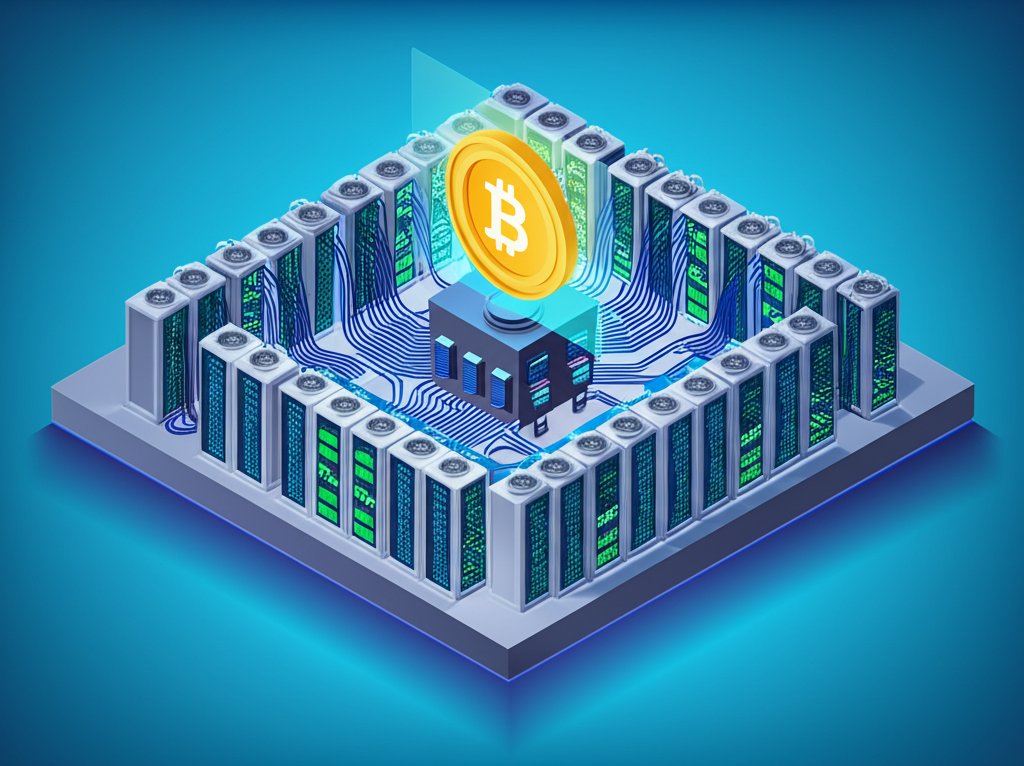
The hum of thousands of specialized computers, the smell of ozone, the constant whir of cooling fans—this is the reality inside a modern bitcoin farm. Far from a casual hobby, these industrial-scale operations are intricate ecosystems designed for one purpose: to solve cryptographic puzzles faster than anyone else and earn newly minted Bitcoin. But behind the promise of digital gold lies a formidable landscape of upfront capital, continuous operational demands, and ever-shifting market dynamics. Building and running a successful Bitcoin mining farm isn't just about plugging in machines; it's a high-stakes venture requiring strategic planning, technical prowess, and a keen eye on the global energy and financial markets.
At a Glance: What You Need to Know About Bitcoin Farms
- Industrial Scale: Bitcoin farms operate at a massive scale, leveraging economies of scale for lower operational costs per terahash compared to home mining.
- High Initial Capital: Expect significant upfront investment for specialized hardware (ASICs), power infrastructure, and cooling systems.
- Electricity is King: Power costs typically consume 60-80% of operational expenses, making location with cheap, stable electricity critical.
- Specialized Hardware (ASICs): You'll need Application-Specific Integrated Circuits designed solely for Bitcoin mining, chosen for hashrate and power efficiency.
- Complex Operations: Success hinges on robust power delivery, effective cooling, vigilant monitoring, and proactive maintenance.
- Market Volatility & Regulation: Bitcoin's price swings and evolving government regulations (including bans in some regions) pose significant risks.
- Environmental Concerns: The substantial energy consumption and e-waste generated by mining operations are driving a push towards renewable energy and sustainable practices.
Understanding the Engine: How Bitcoin Mining Works
Before diving into the mechanics of a farm, it's essential to grasp the fundamental process that makes Bitcoin mining tick. At its core, Bitcoin mining is the backbone of the network's security and the mechanism for creating new Bitcoin.
Every ten minutes, on average, the Bitcoin network aims to add a new "block" of verified transactions to its distributed ledger, known as the blockchain. Miners compete to be the first to verify these transactions. They do this by using powerful hardware to repeatedly generate a 64-digit hexadecimal cryptographic number (a "hash"). The goal is to find a hash that is less than or equal to a specific target hash set by the network. This "target hash" is effectively the puzzle's difficulty.
The first miner to find this valid hash broadcasts it to the network. Once verified by other nodes, they receive a reward in newly minted Bitcoin, plus any transaction fees attached to the transactions in that block. This reward is how new Bitcoin enters circulation.
The network's difficulty isn't static. It adjusts approximately every 2,016 blocks—roughly every two weeks—to ensure that a new block is found, on average, every 10 minutes. If more miners join and the network's processing power (hashrate) increases, the difficulty rises, making it harder to find a valid hash. Conversely, if miners leave, difficulty decreases. This self-regulating mechanism maintains the network's integrity and consistent block generation time.
The Halving: A Built-in Scarcity Mechanism
A critical event in Bitcoin's economic model is the "halving." Approximately every four years (or every 210,000 blocks), the reward for mining a new block is cut in half.
- In 2009, the reward was 50 BTC.
- By 2012, it dropped to 25 BTC.
- In 2016, it became 12.5 BTC.
- The 2020 halving reduced it to 6.25 BTC.
- The most recent halving in April 2024 brought the reward down to 3.125 BTC.
This programmed scarcity is what makes Bitcoin deflationary by design. Eventually, around the year 2200, all 21 million Bitcoins will have been mined. At that point, miners will solely rely on transaction fees for their revenue. This continuous, predictable reduction in supply plays a crucial role in Bitcoin's economic value proposition and makes long-term planning for a Bitcoin mining farm absolutely essential.
The Pillars of a Profitable Bitcoin Farm
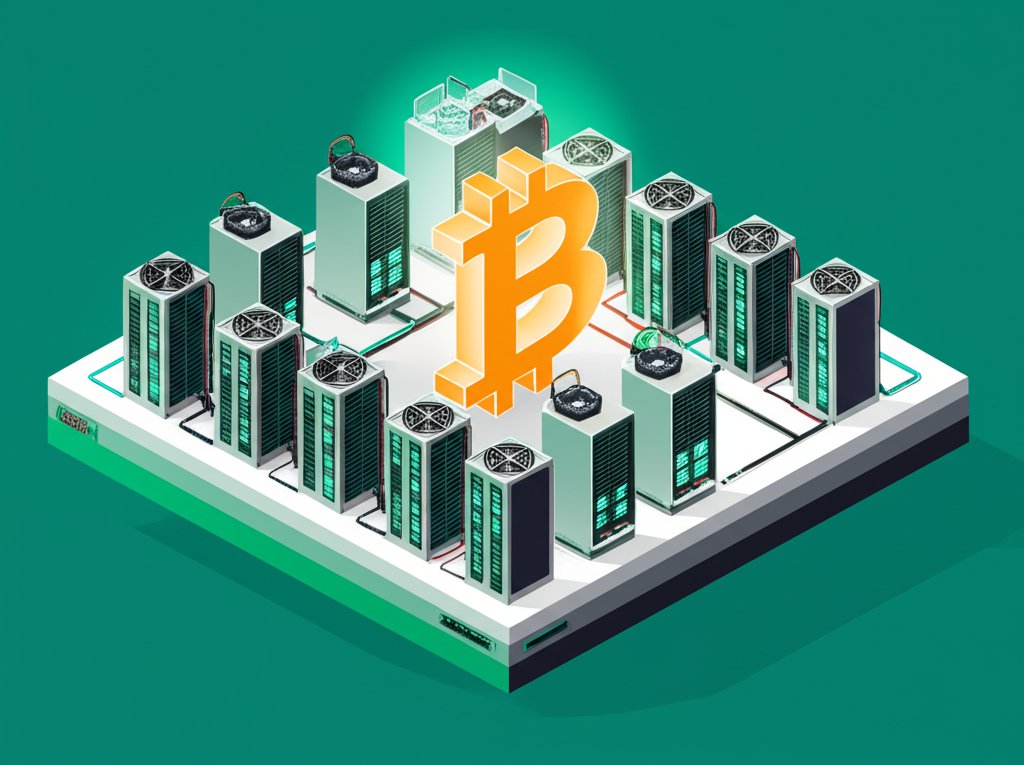
Running an industrial-scale mining operation, or a "mining farm," presents a different beast than a solo miner at home. It benefits from significant economies of scale, leading to lower operational costs per terahash. However, it also demands substantial upfront capital, navigates complex regulations, and exposes operators to higher market volatility.
According to industry experts, successful mining operations rest on four primary pillars:
- Efficient Mining Hardware (ASICs): The specialized chips that do the heavy cryptographic lifting.
- Reliable Power Infrastructure: A stable and affordable energy supply is non-negotiable.
- Effective Cooling Systems: Managing the immense heat generated by ASICs is crucial for longevity and performance.
- Robust Facility Security: Protecting your valuable assets and intellectual property.
Let's explore each of these pillars in detail.
Location, Location, Location: Finding Your Ideal Site
The single most critical decision when planning a bitcoin farm is location. Why? Because electricity typically accounts for a staggering 60-80% of total operational costs. A slight difference in kWh rates can make or break profitability.
An ideal location will boast several key characteristics:
- Low Electricity Costs: The golden standard for industrial mining is electricity rates below $0.06 per kilowatt-hour (kWh). Many successful farms target rates closer to $0.03-$0.04/kWh.
- Stable and Ample Grid Power: Beyond cost, the grid must be reliable, with minimal outages and sufficient capacity to handle megawatts of demand without strain.
- Cool Climate: Natural cooling from a cold ambient environment can significantly reduce the energy consumption of your cooling systems, potentially cutting cooling energy by 15-25%.
- Supportive Regulatory Environment: Some regions embrace mining, offering incentives or clear guidelines, while others impose heavy taxes, restrictions, or even outright bans (as China did in 2021). Understanding the local political and energy landscape is paramount. Kazakhstan, for instance, increased energy taxes and only allows mining during energy surpluses.
- Infrastructure Accessibility: Proximity to transportation routes for hardware delivery and skilled labor for operations and maintenance are practical considerations.
Powering Up: Calculating Your Energy Needs
When planning your facility, you'll need precise power calculations. A single modern ASIC miner can consume between 1,500 and 3,500 watts. On top of that, you must factor in power for cooling systems, networking equipment, and other auxiliary systems. A general rule of thumb is to add 25-30% buffer capacity for cooling and support infrastructure.
For any facility exceeding 1 megawatt (MW) of power consumption—which most industrial bitcoin farms quickly will—professional electrical engineering consultation is not just recommended, it's essential. This ensures safety, efficiency, and compliance with local codes.
The Engine Room: Choosing Your Mining Hardware
The heart of any crypto mining farm is its Application-Specific Integrated Circuit (ASIC) miners. These devices are purpose-built to execute the Bitcoin hashing algorithm (SHA-256) with extreme efficiency. Unlike general-purpose CPUs or GPUs, ASICs are hyper-specialized, making them vastly superior for Bitcoin mining.
When selecting ASICs, focus on these critical criteria:
- Hashrate (TH/s): This measures how many trillions of hashes per second the machine can perform. Higher hashrate means more attempts to solve the block puzzle.
- Power Efficiency (W/TH): This is perhaps the most crucial metric for profitability. It indicates how many watts of electricity are consumed for every terahash of processing power. For new installations, aim for machines with an efficiency below 30 W/TH; even better if you can get closer to 20 W/TH or less.
- Price: The upfront cost of ASICs can be substantial, often hundreds or thousands of dollars per unit.
- Manufacturer Reputation & Reliability: Stick with established manufacturers like Bitmain (Antminer series), MicroBT (Whatsminer series), and Canaan (AvalonMiner series). Their track record for performance, support, and longevity is vital.
The market for ASICs is dynamic. New, more efficient models are constantly released, rendering older generations less profitable. You need to balance the initial investment with the expected lifespan and efficiency gains of newer models.
Beyond the Rigs: Essential Supporting Infrastructure
A Bitcoin farm is more than just a room full of miners. It's a sophisticated ecosystem requiring robust infrastructure to support continuous operation.
Power Distribution Systems
Beyond the main grid connection, you'll need:
- Transformers: To step down high-voltage utility power to usable levels for your ASICs.
- Switchgear & Distribution Panels: To safely distribute power throughout the facility to individual racks and miners.
- Overcurrent Protection: Circuit breakers and fuses are critical to prevent electrical fires and protect equipment from power surges.
- Power Monitoring: Smart power distribution units (PDUs) allow you to monitor power consumption at the rack or even individual miner level, which is essential for efficiency and problem detection.
Cooling Systems: Keeping Temperatures in Check
ASICs generate a tremendous amount of heat. Without effective cooling, performance degrades, and hardware lifespan is drastically reduced. Air-based cooling is the most common method for Inside a bitcoin mining facility.
- Hot Aisle/Cold Aisle Containment: This highly effective configuration separates hot exhaust air from the cold intake air, preventing recirculation and maximizing cooling efficiency. By channeling cold air directly to miner intakes and expelling hot air separately, this setup can reduce cooling energy consumption by 15-25%.
- Industrial Fans & Ventilation: Large-scale fans move vast volumes of air through the facility.
- Evaporative Coolers/Chillers: In hotter climates, these systems might be necessary to pre-cool incoming air.
- Immersion Cooling: An advanced, though less common, method where ASICs are submerged in non-conductive dielectric fluid. This offers superior heat dissipation but comes with higher upfront costs and different maintenance requirements.
Backup Power Solutions
Even with a stable grid, outages happen. Critical systems need backup:
- Uninterruptible Power Supplies (UPS): For core networking gear, monitoring systems, and control servers, a UPS provides 15-30 minutes of battery backup, allowing for graceful shutdowns or bridging short outages.
- Generators: For longer power interruptions, industrial-grade generators fueled by natural gas or diesel can provide continuous power for hours or days, ensuring minimal downtime.
Keeping the Lights On: Operational Management
Once your Bitcoin farm is built, the real work of operational management begins. This isn't a "set it and forget it" endeavor. Constant vigilance and proactive maintenance are key to sustained profitability.
Daily Performance Monitoring
- Hashrate: Track your farm's total hashrate and individual miner performance. Drops can indicate issues.
- Power Consumption: Monitor overall power draw and consumption per miner to identify inefficiencies or hardware faults.
- Temperatures: Keep a close eye on ambient temperatures within the facility and individual ASIC chip temperatures to prevent overheating.
- Uptime: Maximize operational uptime, as every minute offline is lost revenue.
- Error Rates: High error rates on specific miners can signal hardware degradation.
Sophisticated monitoring software can automate much of this, providing real-time alerts for deviations.
Preventative Maintenance & Troubleshooting
Regular maintenance can prevent costly downtime:
- Dust Removal: Dust accumulation is a major enemy of electronics, reducing cooling efficiency and potentially causing shorts. Regular cleaning schedules are vital.
- Cable Management: Properly organized cables improve airflow, simplify troubleshooting, and reduce the risk of accidental disconnections.
- Firmware Updates: Keeping ASIC firmware updated can improve performance, efficiency, and security.
- Hardware Inspections: Periodically inspect fans, power supplies, and other components for signs of wear or failure.
When issues arise, a well-trained operational team capable of quickly diagnosing and resolving common problems—like a failing power supply or a network connectivity issue—is invaluable. Maintaining an inventory of critical spare parts can significantly reduce repair times.
Performance Optimization
- Overclocking/Underclocking: Experienced operators might fine-tune ASIC settings. Overclocking increases hashrate but uses more power and generates more heat; underclocking reduces power consumption at the cost of hashrate, which can be optimal in certain electricity cost scenarios.
- Mining Pool Strategy: Joining a mining pool combines your farm's hashrate with others, providing more consistent, smaller payouts rather than infrequent, large block rewards. Choose pools with low fees, reliable uptime, and good reputation.
The Bottom Line: Financial Planning & Profitability
Operating a Bitcoin farm is ultimately a business venture, and meticulous financial planning is paramount.
Initial Investment (CAPEX)
The capital expenditure for setting up a farm is substantial:
- Mining Hardware: ASICs are the biggest line item, often hundreds of thousands or even millions of dollars depending on scale.
- Facility & Infrastructure: Land acquisition or lease, building construction or modification, electrical infrastructure upgrades (transformers, switchgear), cooling systems, networking equipment, security systems.
- Soft Costs: Professional fees for engineering, legal, permits, and initial consulting.
- Working Capital: Funds for initial operational expenses and to weather market fluctuations.
Operational Expenses (OPEX)
These are your recurring costs:
- Electricity: The largest expense by far.
- Staffing: Technicians, security personnel, management.
- Internet Connectivity: Reliable, high-bandwidth access.
- Maintenance & Repairs: Spare parts, contractor services.
- Insurance: Protecting your valuable assets.
- Software & Monitoring Subscriptions.
- Taxes & Regulatory Fees.
Revenue Projections & Risk Analysis
Projecting profitability requires modeling various scenarios:
- Bitcoin Price Volatility: The price of Bitcoin is notoriously volatile. Your revenue in fiat currency fluctuates directly with it.
- Network Difficulty: As more miners join, difficulty increases, meaning your share of the block reward might decrease unless you add more hashrate.
- Halving Events: Anticipate the impact of halving events on your block reward.
Risk mitigation strategies include: - Hedging: Using financial instruments to lock in a future Bitcoin price or fiat value.
- Cost Management: Constantly seeking ways to reduce electricity consumption or negotiate better rates.
- Strategic Growth: Expanding cautiously, especially during bull markets, and ensuring sufficient capital reserves.
Navigating the Minefield: Challenges and Risks
Operating a bitcoin farm isn't without its hurdles. These challenges can quickly erode profitability if not properly managed.
Technical Glitches
- Equipment Failure: ASICs are pushed to their limits; components like power supplies, fans, or hashboards can fail. A robust warranty and spare parts inventory are crucial.
- Power Quality Issues: Voltage fluctuations, brownouts, or surges can damage equipment. Investing in surge protectors and power conditioning equipment is wise.
- Network Latency: Even slight delays in network communication can mean you miss out on finding a block before another miner.
Market Volatility and Competition
- Bitcoin Price Swings: A sharp drop in Bitcoin's price can quickly turn a profitable operation into a loss-maker, especially if electricity costs are high.
- Increasing Difficulty: The constant influx of new mining power means network difficulty relentlessly rises, requiring continuous investment in more efficient hardware just to maintain your current share of the block rewards.
Regulatory and Environmental Scrutiny
- Evolving Regulations: Governments worldwide are still figuring out how to regulate cryptocurrency mining. This can lead to unexpected taxes, restrictions, or even bans. China's 2021 ban led to a mass exodus of miners and a significant shift in global hashrate distribution.
- Energy Consumption & Carbon Footprint: Bitcoin mining is energy-intensive. While global mining relies increasingly on renewable energy sources (estimated at over 50% by some reports), the sheer scale of consumption remains a point of concern for environmentalists and policymakers.
- Electronic Waste: The rapid obsolescence of mining hardware leads to significant electronic waste, estimated at 24.14 kilotons per year. This e-waste issue demands responsible recycling and disposal practices.
Mitigating these risks involves: - Diversification: Some large farms might mine multiple cryptocurrencies or offer hosting services.
- Agile Operations: Being able to quickly adapt to market changes or regulatory shifts.
- Public Relations & Advocacy: Engaging with local communities and policymakers to educate them about mining's benefits and address concerns.
- Sustainable Practices: Prioritizing renewable energy sources, optimizing energy efficiency, and implementing e-waste recycling programs.
The Future of Bitcoin Farms: Sustainability & Innovation
The narrative around Bitcoin mining is evolving rapidly. As the industry matures, there's an undeniable push towards greater sustainability and innovative energy solutions. Many farms are now actively seeking out stranded energy resources—excess geothermal, hydro, wind, or solar power that would otherwise go to waste—to power their operations. This not only reduces their carbon footprint but also provides a revenue stream for otherwise underutilized energy, often at highly competitive rates.
Beyond renewable energy, advancements in cooling technologies (like immersion cooling) and more energy-efficient ASICs continue to push the boundaries of what's possible. The future of the Bitcoin farm isn't just about raw processing power; it's about smart, sustainable, and resilient operations that can weather both technical challenges and market storms.
Is a Bitcoin Farm Right For You? Final Considerations
Venturing into the world of industrial Bitcoin mining is not for the faint of heart. It demands a significant capital outlay, a deep understanding of electrical and networking infrastructure, and an acute awareness of market dynamics. While the potential for substantial returns exists, so too does the risk of significant losses if not approached with due diligence and expertise.
Before committing, consider these questions:
- Do you have access to competitively priced, stable electricity? This is the single biggest determinant of long-term profitability.
- Are you prepared for a large upfront investment in specialized hardware and infrastructure? And do you have the capital reserves to sustain operations during market downturns?
- Can you assemble a skilled team for operations, maintenance, and security? Or partner with an experienced hosting provider?
- Are you comfortable with the volatility of the cryptocurrency market? And the evolving regulatory landscape?
- Have you thoroughly researched potential locations and their associated risks and benefits?
A bitcoin farm is a complex, capital-intensive undertaking. But for those who meticulously plan, execute efficiently, and adapt to the ever-changing landscape, it can be a highly rewarding venture at the forefront of digital finance.