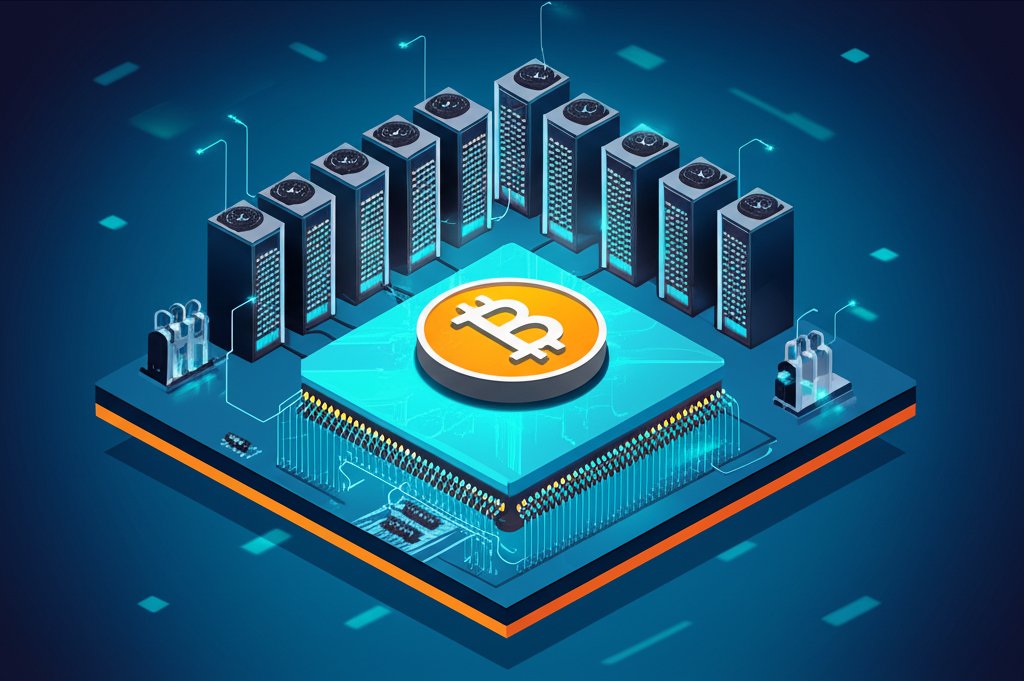
The sheer scale and sophistication of modern bitcoin mining facilities are transforming the global cryptocurrency landscape. These aren't just a few computers in a basement; we're talking about industrial-grade operations, vast data centers meticulously engineered for a singular purpose: to process Bitcoin transactions and mint new coins. Understanding the intricacies of a state-of-the-art bitcoin mining facility is crucial, whether you're an investor, an aspiring miner, or simply curious about the backbone of decentralized finance.
At a glance, here’s what we’ll cover about building and running a bitcoin mining facility:
- Defining Scale: Understand the key metrics that categorize a major mining operation.
- Global Players: Discover the largest facilities and their strategic locations.
- Infrastructure Essentials: Dive into the power, hardware, and cooling technologies required.
- Investment & Operations: Unpack the substantial capital and running costs.
- Profitability Factors: Learn the critical drivers for efficiency and return on investment.
- Actionable Insights: Practical steps for strategizing your own mining venture.
The New Frontier of Digital Gold Mining: What Defines a Modern Facility?
A modern bitcoin mining facility, often referred to as a "bitcoin farm" or "mining data center," is a complex fusion of advanced technology, massive electrical infrastructure, and sophisticated operational management. Its primary role is to house thousands of specialized Application-Specific Integrated Circuit (ASIC) miners, all working in concert to solve cryptographic puzzles and add new blocks to the Bitcoin blockchain.
The scale of these operations is staggering. We measure them not just by the number of machines, but by their electrical capacity in Megawatts (MW) and their collective computing power, known as hashrate, in Exahash per second (EH/s). For context, a single EH/s represents a quintillion (10^18) hashes per second—an immense processing capability. After the 2021 mining ban in China, the landscape shifted dramatically, positioning the United States, particularly Texas, as a global leader, contributing approximately 35% of the global hashrate due to its favorable energy costs and regulatory environment.
Anatomy of a Gigafactory: Inside the World's Largest Facilities
To truly grasp the magnitude, let’s look at some of the world’s most prominent bitcoin mining facilities:
- Compute North (Texas, USA): With a capacity exceeding 300 MW and a hashrate around 30 EH/s, this facility spans over 100 acres and accommodates more than 100,000 ASIC miners. It’s a testament to industrial-scale digital asset production.
- Marathon Digital Holdings (Texas, USA): Operating at 280 MW with a hashrate near 25 EH/s, Marathon emphasizes sustainable energy sources, showcasing an industry trend towards greener operations.
- Riot Blockchain (Rockdale, Texas): Currently at 200 MW, Riot has ambitious plans to expand to 750 MW, aiming to become the largest single mining operation globally. Their infrastructure investment already surpasses $2 billion, highlighting the colossal capital required.
- BIT Mining (Kazakhstan & USA): This operator commands approximately 180 MW of capacity, contributing around 18 EH/s to the network, diversifying its geographical footprint.
- Hive Blockchain (Canada & Sweden): Running on 120 MW, delivering about 12 EH/s, Hive strategically leverages abundant renewable energy sources like hydropower and geothermal in colder climates, such as its 6,000 square-foot former military helicopter hangar in Boden, Sweden, housing over 15,000 rigs.
These facilities illustrate the global shift and the strategic advantage of regions with low-cost, often renewable, energy. Beyond Texas, other key regions include Kazakhstan, Russia, Canada, and the Nordic countries, all chosen for their blend of affordable power and naturally cool climates.
Powering the Digital Revolution: Essential Infrastructure for a Bitcoin Mining Facility
The operational heart of any bitcoin mining facility lies in its robust infrastructure, meticulously designed to support relentless, energy-intensive computations.
Unwavering Electrical Grid
The primary demand for a large-scale bitcoin mining facility is reliable and affordable electricity. Large farms consume anywhere from 50 to 300+ MW, necessitating direct connections to high-voltage power lines and advanced substations. Think of it as supplying a small city's worth of power directly to your machines. This requires significant investment in transformers, switchgear, and backup systems to ensure continuous operation and protect against costly downtime.
Cutting-Edge ASIC Hardware
The miners themselves are specialized machines called Application-Specific Integrated Circuits (ASICs). These are purpose-built to perform the SHA-256 cryptographic hashing algorithm required for Bitcoin mining. The latest models, such as the Antminer S19 Pro (110 TH/s, 3250W), WhatsMiner M30S++ (112 TH/s, 3472W), and the highly efficient Antminer S19 XP (140 TH/s, 3010W), are designed for maximum hash rate per watt, balancing computational power with energy consumption. Selecting the right hardware is a critical decision, as it directly impacts profitability and operational efficiency.
Advanced Cooling Systems
The intense computational work performed by thousands of ASICs generates enormous amounts of heat. Without effective cooling, performance degrades, and hardware lifespan shortens. Modern bitcoin mining facilities employ various sophisticated cooling solutions:
- Air Cooling: The most common method, using large fans and ventilation systems to cycle cool air through server racks and exhaust hot air. This works best in naturally colder climates.
- Immersion Cooling: A more advanced technique where miners are submerged in a non-conductive dielectric fluid. This method offers superior heat dissipation, reduces noise, and can extend hardware life, though it's more capital-intensive.
- Hydro Cooling: Utilizing water-based systems, often through closed-loop systems, to transfer heat away from components. This can be highly efficient but requires careful plumbing and maintenance.
The choice of cooling system is heavily influenced by climate, budget, and desired efficiency, profoundly impacting the overall operational costs and facility design.
The Price Tag and Profit Puzzle: Investment and Operational Realities
Establishing and running a bitcoin mining facility is a capital-intensive undertaking, demanding significant upfront investment and ongoing operational expenditure. To truly Understand Bitcoin farm demands, you must consider both facets.
Substantial Capital Investment
Building a large-scale facility requires a multi-million-dollar commitment across several key areas:
- Land and Infrastructure: Acquiring land, preparing the site, and constructing purpose-built data center facilities can cost between $50 million and $100 million.
- Mining Hardware: This is often the largest single expense, with tens of thousands of ASICs costing anywhere from $200 million to $500 million, depending on scale and model.
- Electrical Infrastructure: Connecting to the grid, building substations, and installing distribution systems can easily run from $100 million to $200 million.
- Cooling Systems: Depending on the chosen technology, advanced cooling can add another $50 million to $100 million to the initial outlay.
Dominant Operational Costs: Electricity
Once operational, the single largest recurring cost for a bitcoin mining facility is electricity, typically accounting for 60-80% of total expenditures. Even a slight reduction in power rates can significantly boost profitability. Beyond electricity, operational costs include:
- Maintenance: Regular upkeep of hardware, electrical systems, and cooling infrastructure.
- Staffing: Teams to manage operations, security, and technical support.
- Connectivity: High-speed internet for network synchronization.
- Security: Physical and cybersecurity measures to protect valuable assets.
Despite the high costs, these operations also act as economic drivers, creating local jobs and fostering development in the communities where they are established.
Strategic Decisions for Efficiency and Profitability
For any bitcoin mining facility, maximizing efficiency and profitability boils down to a few critical strategic choices.
Location, Location, Location: The Quest for Cheap Power
The single most impactful decision is location. Regions with consistently low electricity costs are goldmines for miners. For instance, Quebec, Canada, offers power at around $0.04/kWh, largely thanks to its abundant hydropower resources. Similarly, areas with naturally colder climates, such as Iceland or Scandinavia, offer a double benefit: cheaper renewable energy and reduced cooling costs due to ambient temperatures, which minimizes the energy needed to keep ASICs cool.
Intelligent Hardware Selection
Choosing the right ASIC miner involves a careful balance between initial cost, expected lifespan, hashing power (TH/s), and energy efficiency (J/TH or Watts/TH). Newer models generally offer better efficiency, but their higher upfront cost must be weighed against potential gains over time. Understanding the payback period for different hardware generations is crucial.
The Edge of Innovation: Optimization through AI and Advanced Tech
The industry is continuously evolving, with innovation playing a significant role in squeezing out more efficiency. Artificial intelligence (AI) and machine learning are increasingly being deployed to optimize mining operations. For example, Hut 8 Mining has leveraged AI to reduce energy costs by up to 30% and boost mining efficiency by 20%. These systems can predict optimal operating temperatures, manage power consumption spikes, and even automatically adjust miner settings for peak performance, ensuring that every watt of electricity translates into maximum hash power.
Practical Playbook: Launching or Scaling Your Bitcoin Mining Facility
Considering the complexities, here’s a simplified playbook to guide your thinking:
- Feasibility Study & Business Plan: Before anything else, conduct a thorough analysis. Model profitability scenarios based on varying Bitcoin prices, difficulty adjustments, and most importantly, electricity costs. This will solidify your investment thesis.
- Site Selection: Prioritize locations with access to stable, low-cost electricity and a reliable grid. Factor in climate for cooling advantages and local regulations.
- Power Procurement: Negotiate long-term power purchase agreements (PPAs) directly with utility providers. This is your biggest leverage point for operational profitability.
- Infrastructure Design: Work with experienced engineers to design the electrical grid, cooling systems (air, immersion, or hybrid), and physical security for your facility. Over-specifying power and cooling capacity slightly can provide headroom for future growth.
- Hardware Acquisition: Source bulk orders of the most energy-efficient ASICs available, considering lead times and supply chain dynamics. Diversify your hardware if possible to mitigate single-point-of-failure risks.
- Operational Management: Implement robust monitoring systems for all miners, temperature controls, and power consumption. Explore automation and AI-driven optimization tools to manage the facility around the clock.
- Sustainability Integration: Investigate renewable energy options (solar, wind, hydro) or participate in demand response programs. This not only aligns with environmental goals but can also secure cheaper, more stable energy.
Quick Answers to Common Mining Facility Questions
Q: What's the biggest challenge in running a large bitcoin mining facility?
A: Without a doubt, the biggest challenge is consistently securing and managing affordable, reliable electricity. Power outages, price spikes, or grid instability can severely impact profitability and uptime.
Q: How important is sustainability for a bitcoin mining facility?
A: Critically important. Beyond environmental considerations, investing in renewable energy sources often provides more stable and predictable electricity costs, which directly translates to long-term profitability and better public perception.
Q: Can a small investor get involved in building a bitcoin mining facility?
A: While building a multi-megawatt facility is capital-intensive, smaller modular units exist. Alternatively, cloud mining services or co-location facilities allow smaller investors to participate without the massive upfront infrastructure investment, though they come with their own risks and fee structures.
Your Next Move: Strategic Considerations for a Mining Facility
The world of bitcoin mining facilities is not for the faint of heart; it's a high-stakes, high-reward arena that demands meticulous planning, substantial capital, and relentless operational excellence. Success hinges on a keen understanding of energy markets, technological advancements, and a proactive approach to efficiency. By focusing on strategic location, intelligent hardware choices, and embracing innovative cooling and optimization techniques, you position yourself to navigate the complexities and capitalize on the immense potential of this digital gold rush.
