Imagine a digital currency that, unlike traditional money, has a pre-set, unchangeable supply schedule, carefully programmed from its very inception. This isn't a hypothetical economic model; it's Bitcoin, and at the heart of its unique monetary policy lies the btc block reward. This reward isn't just a payout for miners; it's the engine of Bitcoin's scarcity, the mechanism that introduces new coins into circulation, and a cornerstone of its "digital gold" narrative. Understanding the block reward is crucial to grasping why Bitcoin behaves differently from any other asset you know.
At a Glance: Bitcoin's Block Reward Explained
- What it is: The amount of new Bitcoin awarded to a miner for successfully adding a block of transactions to the blockchain.
- Starting Point: Initially, the reward was 50 BTC per block.
- The Halving: Approximately every four years (or every 210,000 blocks), this reward is cut in half.
- Current State: As of the most recent halving in April 2024, the reward is 3.125 BTC per block.
- Future: It will continue to halve until it reaches effectively zero, projected around the year 2140.
- Why it matters: Creates predictable scarcity, making Bitcoin a deflationary asset designed to increase in value relative to inflationary fiat currencies.
- Who controls it: The Bitcoin network's immutable consensus rules, agreed upon by all participants.
What Exactly is the BTC Block Reward? Your Entry Ticket to Bitcoin's Core
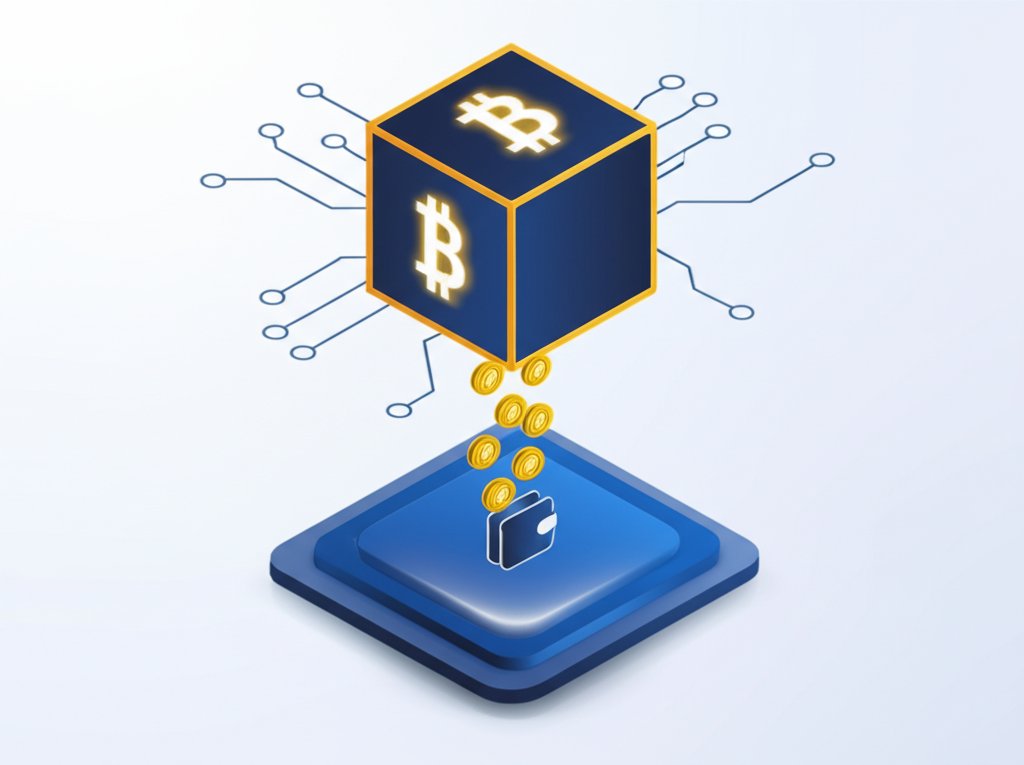
Think of the block reward as Bitcoin's built-in mint. Every time a miner successfully verifies a batch of transactions and adds it to the blockchain (creating a "block"), the Bitcoin network awards them a specific amount of newly created bitcoins. This is the primary way new bitcoins are introduced into the economy. Without this reward, there would be no incentive for miners to dedicate their computing power to secure the network, process transactions, and maintain the integrity of the blockchain. It's an elegant solution to two fundamental problems: how to create new money, and how to distribute it fairly while incentivizing security.
This reward isn't static. It's subject to a hard-coded, predictable schedule of reduction, often referred to as "the halving."
The Ingenious Halving Mechanism: Cutting the Supply, Increasing the Scarcity
The most distinctive feature of the btc block reward is its programmed reduction through a process called "halving." This isn't a random event; it's a fundamental rule baked into Bitcoin's original code by its pseudonymous creator, Satoshi Nakamoto.
Here’s how it works:
- Fixed Interval: After every 210,000 blocks are mined, the block reward is automatically cut in half.
- Time Equivalence: Given Bitcoin's target of a 10-minute block interval, 210,000 blocks typically take approximately four years to mine. This is why you often hear the halving referred to as a quadrennial event.
- The Progression:
- When Bitcoin launched in 2009, the reward was 50 BTC per block.
- The first halving (November 2012) reduced it to 25 BTC.
- The second halving (July 2016) brought it down to 12.5 BTC.
- The third halving (May 2020) lowered it to 6.25 BTC.
- The most recent halving (April 2024) set the reward at 3.125 BTC per block.
- This process will continue until the block reward eventually reaches nearly zero, making the total supply of Bitcoin capped at 21 million coins.
This mechanism is far more than just an arbitrary number. It’s the very core of Bitcoin's economic policy. For a deeper dive into these fundamentals, you might find more context on Bitcoins Block Reward Explained. This predictable, decreasing supply schedule is what truly differentiates Bitcoin from traditional fiat currencies.
Why Bitcoin's Block Reward Matters: A Digital Gold Standard
The halving of the btc block reward isn't just a technical detail; it's the beating heart of Bitcoin's value proposition. It underpins why many refer to Bitcoin as "digital gold" and positions it as a potential hedge against inflation.
Scarcity by Design
Unlike traditional fiat currencies, which can be printed or created at will by central banks, Bitcoin's supply is absolutely capped at 21 million coins. The halving ensures that the rate at which new bitcoins are introduced into the market continuously decreases over time. This engineered scarcity is what makes Bitcoin deflationary by design. Think of precious metals like gold: their value is partly derived from their limited supply and the difficulty of extraction. Bitcoin mimics this, but with a transparent, verifiable, and unchangeable supply schedule.
Predictable Monetary Supply
One of Bitcoin's most radical innovations is its transparent and predictable monetary policy. Every participant in the network knows exactly how many bitcoins exist, how many are being created, and when the next supply reduction will occur. This contrasts sharply with traditional financial systems where central banks can alter monetary supply based on economic conditions or political pressures, leading to uncertainty and potential inflation.
Because we know Bitcoin's issuance over time, we can understand:
- Current Inflation Rate: What percentage of new bitcoins are entering circulation relative to the existing supply.
- Future Inflation Rate: How this rate will predictably decrease after each halving.
- Total Circulation: How many bitcoins are currently in existence.
- Remaining to be Mined: How many bitcoins are left to be discovered by miners.
This level of transparency and predictability is unprecedented in monetary history and offers a powerful counter-narrative to the "monetary debasement by inflation" seen in fiat currencies. A simple example: compare housing prices decades ago to now, and you’ll notice they’ve increased significantly—a symptom of increasing monetary supply and decreasing purchasing power. Bitcoin offers a different path.
A Hedge Against Inflation?
The premise is straightforward: if the issuance of bitcoins decreases over time, and demand for them remains constant or increases, then the price (guided by price equilibrium) is likely to rise. This makes Bitcoin an attractive asset for those looking to preserve purchasing power over the long term, acting as a potential safeguard against the inflationary pressures inherent in expanding fiat money supplies.
A Look Back: The Halving Timeline
Bitcoin’s history is marked by these pivotal halving events. Each one has reduced the supply of new bitcoins and served as a major point of discussion and speculation within the crypto community.
Here are the dates of past halving events:
- First Halving: November 28, 2012 (UTC). Block reward reduced from 50 BTC to 25 BTC.
- Second Halving: July 9, 2016 (UTC). Block reward reduced from 25 BTC to 12.5 BTC.
- Third Halving: May 11, 2020 (UTC). Block reward reduced from 12.5 BTC to 6.25 BTC.
- Fourth Halving: April 20, 2024 (UTC). Block reward reduced from 6.25 BTC to 3.125 BTC.
The next halving is projected to occur around early 2028, further reducing the block reward to 1.5625 BTC. This steady progression toward zero new coins is a testament to the unchanging nature of Bitcoin's design.
Who Sets the Rules? Decentralized Control and Unwavering Consensus
So, who is the central authority dictating these halvings and the 21 million supply cap? The answer is perhaps Bitcoin's most revolutionary aspect: there isn't one. The issuance of bitcoins is controlled by the network itself, derived by consensus among all Bitcoin participants.
Since Bitcoin was first designed, the following consensus rules have remained immutable:
- Total Supply: A hard cap of 21,000,000 bitcoins will ever be produced.
- Block Interval: A target of 10-minute block intervals.
- Halving Schedule: A halving event occurring every 210,000 blocks (approximately every 4 years).
- Block Reward Decay: The block reward starts at 50 BTC and continually halves with each event until it reaches 0 (projected around 2140).
Any change to these fundamental parameters would require a global, overwhelming consensus from all Bitcoin participants – miners, node operators, developers, and users. This distributed consensus mechanism is what makes Bitcoin's monetary policy so resilient and trustworthy. No single entity, government, or corporation can unilaterally decide to print more bitcoins or alter the supply schedule.
The Miner's Incentive: Balancing Security and Supply
Miners are the backbone of the Bitcoin network. They dedicate powerful computers to solve complex cryptographic puzzles, competing to be the first to verify and add a new block of transactions to the blockchain. For their efforts, they receive two forms of compensation:
- The Block Reward: The newly minted bitcoins we've been discussing.
- Transaction Fees: Fees paid by users to have their transactions included in a block.
As thebtc block rewardhalves, the direct incentive from new coin issuance decreases. This raises an important question: will miners remain incentivized to secure the network as the block reward dwindles?
The prevailing belief is that as the block reward diminishes, transaction fees will become an increasingly dominant portion of a miner's revenue. For this to happen, Bitcoin usage and transaction demand must continue to grow, making transaction fees lucrative enough to ensure the network remains highly secure. This dynamic is a crucial long-term aspect of Bitcoin's economic model, ensuring that security remains robust even as the new coin supply approaches its limit.
Halvings and Price: Unpacking the Market Debate
It's natural to wonder about the impact of a halving event on Bitcoin's price. This is a topic of intense debate among investors and analysts, with two primary schools of thought:
- "Priced In" Theory: Some argue that because the halving schedule is publicly known and programmed years in advance, its effect on price is already "priced in" by the market. In other words, efficient markets have already accounted for the future supply reduction, and therefore, there should be no dramatic price movement immediately after the event.
- "Supply Shock" Theory: Others contend that a halving of new supply, if demand for bitcoins remains equal to or greater than what it was before the event, should inherently cause an increase in price. This is basic economics: reduced supply with consistent or increased demand typically leads to higher prices.
Historical Performance (Not Financial Advice)
While past performance is never an indicator of future results, looking at historical data provides interesting context:
- Post-2012 Halving: Bitcoin saw significant price appreciation in the year following the first halving.
- Post-2016 Halving: A similar pattern emerged, leading into the major bull run of 2017.
- Post-2020 Halving: Bitcoin again experienced substantial growth in the subsequent months, culminating in new all-time highs in 2021.
Each halving has historically preceded a significant upward trend in Bitcoin's price. Whether this correlation implies causation, or if other macroeconomic factors were at play, remains a subject of ongoing analysis. What is clear is that the halving events serve as powerful psychological markers for the Bitcoin community, often igniting renewed interest and discussion about its scarcity and long-term potential.
Beyond 2140: What Happens When Rewards Hit Zero?
The current projections indicate that the final halving will occur around the year 2140, at which point the btc block reward will effectively become zero. At this point, the last fraction of a bitcoin will be mined, and the 21 million bitcoin supply cap will be reached.
Does this mean miners will stop securing the network? Not necessarily. As discussed earlier, transaction fees are designed to take over as the primary incentive for miners. As Bitcoin adoption grows and the network processes more transactions, the aggregate value of transaction fees is expected to become substantial enough to compensate miners adequately, ensuring the continued security and operation of the blockchain.
This transition from block reward-centric revenue to transaction fee-centric revenue is a critical long-term test of Bitcoin's economic model. It underscores the importance of a vibrant and active network with high demand for block space.
Common Questions About BTC Block Rewards
You've got questions; we've got answers. Here are some of the most common inquiries about the btc block reward.
How often does the Bitcoin halving happen?
Bitcoin halvings occur approximately every four years, or more precisely, every 210,000 blocks mined. Since new blocks are mined roughly every 10 minutes, this works out to about every four years.
What is the current Bitcoin block reward?
As of the halving in April 2024, the current Bitcoin block reward is 3.125 BTC per block.
Will the Bitcoin block reward ever reach zero?
Yes, the block reward is programmed to continue halving until it effectively becomes zero, which is projected to happen around the year 2140, at which point no new bitcoins will be minted.
Does the halving affect old bitcoins?
No, the halving only affects the rate at which new bitcoins are introduced into circulation. It does not change the amount of bitcoins you already own. Your existing bitcoins remain exactly as they are.
Is the halving guaranteed to make Bitcoin's price go up?
While historically halving events have preceded significant price increases, there is no guarantee that this will always be the case. The market is influenced by many factors, and past performance is not an indicator of future results. It’s important to conduct your own research and understand the risks involved.
What happens if a halving is missed or doesn't happen?
A halving cannot be "missed" or "not happen." It is an immutable rule embedded in Bitcoin's protocol. The network's consensus mechanism ensures that all participants enforce this rule automatically every 210,000 blocks. Any attempt to deviate would result in a fork of the blockchain, where the majority network would continue to follow the established rules.
Your Role in Bitcoin's Future: Understanding its Core Economics
The btc block reward is more than a technical detail for miners; it's a foundational element of Bitcoin's entire economic structure. It represents a deliberate, transparent, and immutable monetary policy designed to create scarcity and predictability in a world accustomed to flexible, often inflationary, fiat currencies.
By understanding the block reward and the halving mechanism, you gain insight into:
- Bitcoin's scarcity model: Why it behaves like digital gold.
- Its deflationary nature: How its purchasing power is designed to be preserved, or even increase, over time.
- The incentives for network security: How miners are compensated to keep the system running securely.
- The long-term vision: How the network plans to sustain itself after new coin issuance ceases.
Whether you're an investor, a technology enthusiast, or simply curious about the future of money, grasping the nuances of the Bitcoin block reward empowers you to make more informed decisions and appreciate the revolutionary design behind the world's first truly decentralized digital currency. It's a system built on math, consensus, and a profound commitment to a predictable future.