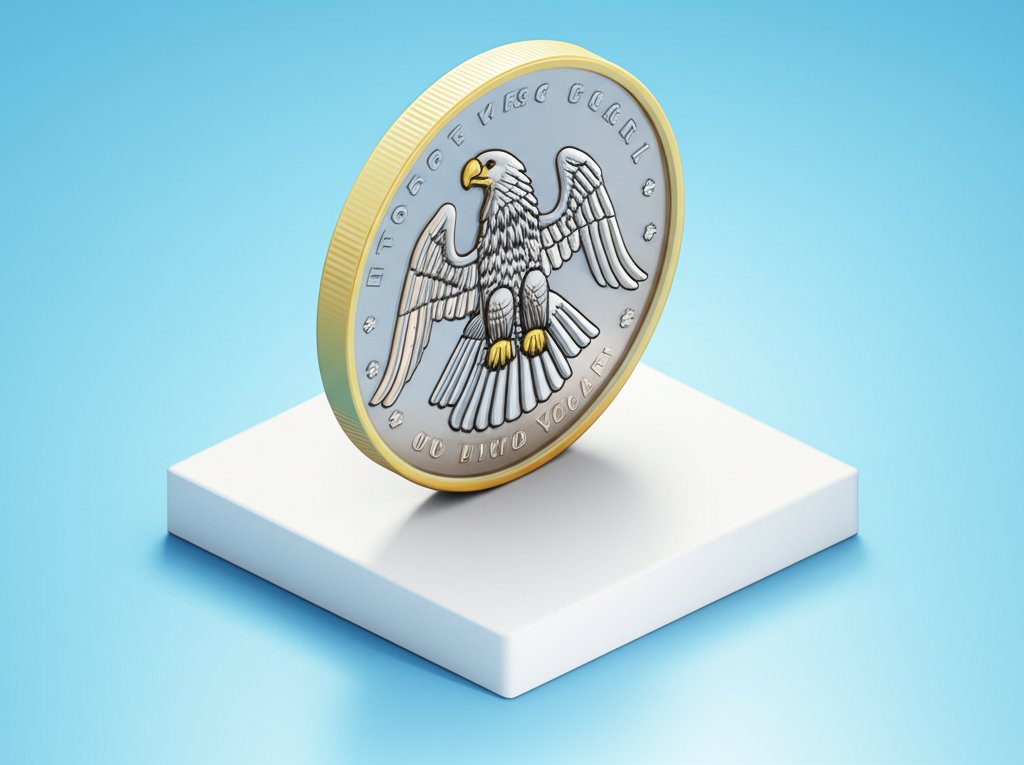
Imagine sifting through a box of old coins, a dull dollar coin catching your eye. "It's just a dollar," you might think. But what if that seemingly ordinary piece of metal holds a secret? Unlocking its true dollar coin value isn't just about the face value; it's about a fascinating intersection of history, metallurgy, and scarcity that can transform pocket change into a significant treasure. Many collectors overlook these larger coins, yet some of the most iconic and valuable U.S. issues are dollar coins.
At a Glance: What You'll Learn About Your Dollar Coin's Value
- Key Factors: Understand how mint marks, mintage, condition, and metal content dictate a coin's worth.
- Hidden Gems: Discover which historical dollar coins command millions and why.
- Everyday Potential: Learn to differentiate common dollars from those with surprising numismatic premiums.
- Smart Moves: Get practical advice on assessing, preserving, and maximizing your dollar coin's value.
- Pitfalls to Avoid: Identify common mistakes that can instantly devalue your collection.
The Anatomy of Value: What Really Drives a Dollar Coin's Worth?
Determining the true dollar coin value requires more than just a quick glance at its date. It's a precise combination of factors, each contributing to its overall desirability among collectors. Think of it like a puzzle where every piece—from where it was made to how many were struck—shapes the final picture of its market price.
Mint Marks: The Secret Code to Rarity
Look closely at your dollar coin. Does it have a tiny letter near the date or on the reverse? This is a mint mark, indicating where the coin was struck. Some mint marks are far more desirable than others, signaling lower mintage figures or specific historical contexts.
- Valuable Marks: Charlotte (C), Carson City (CC), New Orleans (O), West Point (W), Dahlonega (D), San Francisco (S), and Denver (D).
- Philadelphia (No Mark): Historically, coins from the Philadelphia Mint often carried no mint mark, though this has changed for some modern issues. Don't assume no mark means no value, especially for older coins.
For instance, a Morgan Silver Dollar with a "CC" mint mark (Carson City) almost always carries a premium over one from Philadelphia, simply because fewer were produced in Carson City.
Mintage Figures & Key Dates: Scarcity is King
The number of coins originally struck, known as the mintage, is a direct indicator of scarcity. Fewer coins minted generally means higher value, assuming demand exists. Within each dollar coin series, certain years stand out as "key dates" due to exceptionally low mintage numbers or specific historical events.
- Low Mintage Examples: An 1893-S Morgan Dollar is legendary due to its tiny mintage of just 100,000, making it incredibly rare and valuable.
- First/Last of Type: The first or last year a particular design was issued can also add significant historical significance and value.
Always research the mintage figures for your specific coin's date and mint mark. This data is often readily available online or in coin collecting guides.
Condition (Grade): The Preservation Premium
A coin's condition, or "grade," is perhaps the single most impactful factor on its dollar coin value. A slight difference in wear can mean a difference of hundreds or even thousands of dollars. Professional grading services assign a numerical grade (e.g., MS63, MS65) to uncirculated coins and adjectives (e.g., Fine, Very Fine) to circulated ones.
- Uncirculated (Mint State - MS): These coins show no signs of wear from circulation and retain their original mint luster. Even within this category, grades like MS63 or MS65 represent excellent condition and often offer the optimal value-to-cost ratio for collectors.
- Circulated Grades: Coins that have seen use will show wear on their high points. While most circulated modern dollars are worth face value, very old or rare circulated dollars can still be quite valuable.
Never attempt to clean a coin yourself. Cleaning can drastically reduce its numismatic value, often rendering it worth only its melt value, even if it looks "shinier" to an untrained eye.
Metal Content: The Intrinsic Foundation
Many older dollar coins were made of precious metals, primarily silver. This "intrinsic value"—the value of the metal itself—sets a baseline for their worth.
- Silver Dollars (Pre-1935): Most U.S. silver dollars minted in 1935 or earlier contain 26.73 grams of 90% silver, equating to 0.773 troy ounces of pure silver. This means even common silver dollars carry an intrinsic value that fluctuates with the market price of silver. A general common range is $35-$45.
- Clad Coins: Modern dollar coins (like Eisenhower, Susan B. Anthony, Presidential, and American Innovation dollars) are made of a copper-nickel clad composition. They have no precious metal content, so their value is purely numismatic (collector value) or face value.
For silver dollars, the numismatic premium (what collectors are willing to pay above melt value) is where the real potential lies.
Errors & Varieties: The Unique Flaws
Sometimes, a mistake at the mint creates a truly unique coin. These "errors" or "varieties" can significantly boost a dollar coin value. Examples include:
- Doubled Dies: Where the design elements appear doubled.
- Off-Center Strikes: When the coin blank is not perfectly centered in the dies.
- Missing Mint Marks: Though rare, certain series might have valuable instances of this.
These unique characteristics are often subtle and require a keen eye or magnification to spot.
Historical Significance: Beyond the Metal
A coin's place in history can also add to its value. The first year of a new design, coins associated with specific historical events, or even those with a unique backstory can become highly sought after by collectors, even if their mintage isn't exceptionally low.
Unearthing Legends: The Dollar Coins That Broke Records
While most dollar coins you encounter won't be worth millions, understanding the "unicorns" of the collecting world helps contextualize what drives extreme value. These legendary coins represent the pinnacle of numismatic desire, showcasing the ultimate potential of dollar coin value. For a broader overview of how to start your hunt, you can Spot valuable dollar coins in your collection.
Here are five of the most valuable U.S. dollar coins, each with a story as compelling as its price tag:
- Flowing Hair Dollar (1794-1795): The Dawn of US Coinage
- Significance: This was the very first dollar coin issued by the U.S. government, a true piece of American history.
- Rarity: Extremely limited mintage, especially the 1794 issues.
- Record Sale: A pristine 1794 Flowing Hair Dollar once sold for an astonishing $12,000,000. Its status as the first U.S. dollar, combined with its exceptional condition, secured its place in history and on price lists.
- 1804 Dollar: The King of American Coinage
- Significance: Despite its date, most 1804 Dollars were actually struck in 1834 as diplomatic gifts, making them "proof" issues.
- Rarity: Only 15 known examples exist across three classes.
- Record Sale: An example of the 1804 Dollar fetched $7,680,000, a testament to its legend and extreme scarcity. It's often called the "King of American Coinage."
- Trade Dollar (1873-1885): A Coin for Global Commerce
- Significance: These large silver dollars were primarily minted for trade with China and other Asian countries, indicating America's burgeoning international presence.
- Rarity: While many were minted, specific dates, especially those struck after 1878 (when their legal tender status in the U.S. was revoked), and particularly the 1885 issues, are exceedingly rare.
- Record Sale: An 1885 Trade Dollar, a true rarity, achieved a sale price of $3,960,000. The fact that fewer than five are known to exist makes it incredibly desirable.
- Morgan Silver Dollar (1878-1904, 1921): The Iconic American Dollar
- Significance: Named after its designer, George T. Morgan, this is arguably the most collected and recognized American silver dollar. The Pittman Act of 1918 led to the melting of over 270 million of these coins, increasing the rarity of many dates.
- Rarity: While many dates are common, specific mint marks and years, like the 1893-S, are incredibly scarce.
- Record Sale: The legendary 1893-S Morgan Dollar, known for its tiny mintage, sold for $2,086,875. This coin embodies the power of mintage figures in driving dollar coin value.
- Seated Liberty Dollar (1840-1873): Elegance in Silver
- Significance: Featuring a seated allegorical figure of Liberty, these coins are a classic representation of mid-19th century American coinage.
- Rarity: High-grade, uncirculated examples are exceptionally rare across many dates due to the widespread use of silver coins in commerce. Key dates, especially those from the San Francisco (S) mint, are particularly scarce.
- Record Sale: An 1870-S Seated Liberty Dollar commanded $1,092,500. Its rarity in uncirculated condition, combined with the low survival rate of San Francisco issues from that era, makes it a prize for serious collectors.
Beyond the Rares: Valuing Everyday and Transitional Dollars
While the multi-million dollar examples are thrilling, most collectors focus on more accessible (yet still valuable) dollar coins. Understanding these common series is crucial for any budding numismatist.
Silver Dollars (Pre-1935): The Intrinsic Value Foundation
These are your best bet for finding significant dollar coin value in older "everyday" coins.
- Key Identification: If your dollar coin is dated 1935 or earlier (e.g., Peace Dollars, older Morgans), it's highly likely to be 90% silver.
- Intrinsic Value: As mentioned, these contain about 0.773 troy ounces of pure silver. This provides a baseline value, meaning even heavily circulated common dates are worth significantly more than face value—typically $35-$45 for common examples, depending on silver spot price.
- Numismatic Premium: Look for specific mint marks, key dates (like the 1928 Peace Dollar), and higher grades. These factors push the value well above the silver melt price.
Transitional Dollars: Eisenhower and Susan B. Anthony
These series represent a shift in U.S. coinage from precious metals to clad compositions. While they don't contain silver, they offer different avenues for value.
- Eisenhower Dollars (1971-1978): Large, copper-nickel clad coins. Most are worth face value. However, some 1971-S and 1972-S proof issues were struck in 40% silver, making them an exception. Also, uncirculated examples from the Philadelphia (P) and Denver (D) mints in high grades (especially MS65 and above) can fetch a small premium, particularly those with strong strikes.
- Susan B. Anthony Dollars (1979-1981, 1999): The first small-sized dollar coin, often confused with quarters. Most are worth face value. Look for certain varieties, like the 1979-P "Wide Rim" variety, which can carry a modest premium. High-grade uncirculated examples of any year are also sought after by collectors.
These coins often serve as an affordable entry point for new collectors, allowing them to practice identifying grades and varieties without a huge investment.
Modern Dollars: Presidential and American Innovation Series
These contemporary dollar coins are generally abundant and primarily serve educational and commemorative purposes.
- Presidential Dollars (2007-2016): These honor former U.S. presidents. Most circulating examples are worth face value. However, uncirculated "collector versions" (often from mint sets) in pristine condition can command a small premium, typically $4-$12. Look for any errors, like the "Godless" dollars (missing edge lettering) from 2007, which can be highly sought after.
- American Innovation Dollars (2018-Present): This series celebrates American ingenuity and innovation. Similar to Presidential dollars, circulating examples are face value. High-quality uncirculated or proof versions purchased directly from the U.S. Mint can have collector value, usually in the $4-$12 range, depending on grade and specific release.
For modern dollars, the real value lies in finding mint errors or acquiring them directly from the U.S. Mint in collector-grade condition.
Practical Playbook: Maximizing Your Dollar Coin's Value
Knowing the factors that contribute to dollar coin value is one thing; putting that knowledge into practice is another. Here's a step-by-step guide to assessing and potentially enhancing your coin's worth.
Step 1: Accurate Identification – Date, Mint Mark, and Type
Before anything else, precisely identify your coin.
- Locate the Date: This is usually on the obverse (front) of the coin.
- Find the Mint Mark: This small letter is often near the date, on the reverse, or sometimes on the coin's edge (for modern dollars). Use a magnifier if needed. Common placements include below the eagle on Morgan/Peace Dollars, or on the edge of Presidential/Innovation Dollars.
- Identify the Series: Is it a Flowing Hair, Morgan, Peace, Seated Liberty, Eisenhower, Susan B. Anthony, Presidential, or American Innovation Dollar? Knowing the series helps you focus your research.
Step 2: Preliminary Condition Assessment (The DIY Approach)
Without professional grading, you can still get a good sense of your coin's condition.
- Handle with Care: Always hold coins by their edges to avoid transferring oils and dirt from your skin.
- Visual Inspection:
- Luster: Does the coin have its original "cartwheel" effect (a rotating sheen when tilted under light)? This is a hallmark of uncirculated coins.
- Wear: Look for flattening of high points in the design. For example, on a Morgan Dollar, check the high points of Liberty's hair, cheek, and the eagle's breast feathers.
- Scratches/Dings: Are there any significant scratches, nicks, or rim dings? These will reduce value.
- Cleanliness (Not Cleaning!): Is the coin unusually shiny or does it have an unnatural appearance? This could indicate a previous cleaning, which severely damages numismatic value.
Your goal here is to determine if it's clearly circulated, potentially uncirculated, or damaged.
Step 3: Research and Compare (Leveraging Resources)
Once identified and preliminarily assessed, dive into research.
- Coin Guides: Invest in a good coin price guide (e.g., A Guide Book of United States Coins by R.S. Yeoman, often called the "Red Book"). These provide mintage figures, key dates, and estimated values across different grades.
- Online Databases: Websites like PCGS.com and NGCcoin.com offer extensive image libraries, population reports (how many exist at each grade), and price guides. Search for your specific date, mint mark, and series.
- Current Silver Prices: If you have a pre-1935 silver dollar, check the current spot price of silver to determine its intrinsic melt value.
Step 4: When to Seek Professional Help: Appraisal and Certification
For coins that appear to be rare, in high grade, or have potential significant value, professional help is invaluable.
- Appraisal: An experienced coin dealer or professional appraiser can give you an accurate estimate of your dollar coin value. They have the expertise to spot subtle varieties, errors, and accurately grade coins. This is the most reliable way to know your coin's worth.
- Certification (Grading): For highly valuable coins, consider sending them to a third-party grading service like Professional Coin Grading Service (PCGS) or Numismatic Guaranty Company (NGC).
- Benefits: Certification authenticates the coin, assigns a universally recognized grade, encapsulates it in a tamper-evident slab for protection, and makes it easier to sell or insure.
- When to Certify: Generally, only certify coins with an uncertified market value of $100 or more, as grading fees can range from $20-$50+ per coin.
Pitfalls to Avoid: Don't Devalue Your Discovery
- Cleaning Coins: This is the cardinal sin of coin collecting. Cleaning, even gently, removes the original patina and surface, irreversibly damaging the coin's numismatic value. A "cleaned" coin is almost always worth less than a dirty, original one.
- "Rubbing" Coins: Attempting to rub dirt off with a cloth or finger can also cause microscopic scratches.
- Poor Storage: Storing coins in PVC-containing flips (soft plastic) can cause them to turn green and get sticky over time. Use inert, archival-safe holders (e.g., Mylar flips, hard plastic slabs).
- Counterfeits: Be extremely wary of deals that seem too good to be true, especially for highly valuable coins like the 1893-S Morgan Dollar or 1928 Peace Dollar. Always buy expensive coins from reputable dealers.
Smart Collecting Strategies: Focus and Patience
- Grade Focus: For maximizing value for money, many collectors find that coins in the MS63-MS65 range offer the optimal balance of condition and cost. Prices jump significantly for MS66 and higher.
- Key Dates for Your Series: Learn the specific key dates and varieties for the dollar coin series you are interested in. This targeted knowledge is invaluable.
- Track Silver Prices: If you're collecting silver dollars, keep an eye on the market price of silver. This directly impacts the intrinsic value of your coins.
Quick Answers to Common Dollar Coin Value Questions
How much is a typical dollar coin worth?
Most modern dollar coins (Eisenhower, Susan B. Anthony, Presidential, American Innovation) found in circulation are worth face value. However, older silver dollars (pre-1935) are typically worth $35-$45 or more, even in circulated condition, due to their silver content and numismatic demand.
Are all silver dollars valuable?
All U.S. dollar coins struck in 90% silver (generally pre-1935) have an intrinsic value based on their silver content, making them worth significantly more than face value. However, their numismatic value (collector value) varies greatly depending on factors like date, mint mark, and condition. Common silver dollars are valuable, but rare dates can be worth thousands or even millions.
Should I clean my old dollar coin?
Absolutely not. Cleaning a coin, even gently, can permanently damage its surface and destroy its numismatic value. The patina and original surfaces are crucial for collectors. A "cleaned" coin is almost always worth significantly less than an uncleaned one, often reducing its value to just its melt value.
Where can I get my dollar coin appraised?
The best way to get an accurate dollar coin value is through a professional appraisal. You can visit a reputable local coin dealer (check for positive reviews and professional affiliations), attend a coin show, or consult with a numismatic appraiser. For high-value coins, sending them to a third-party grading service like PCGS or NGC for authentication and grading also provides an expert valuation.
What's the difference between intrinsic and numismatic value?
- Intrinsic Value: This is the value of the raw materials a coin is made from, primarily its precious metal content (like silver or gold). For example, a 90% silver dollar has an intrinsic value based on the current market price of silver.
- Numismatic Value: This is the value a coin holds beyond its intrinsic or face value, based on its rarity, condition, historical significance, demand among collectors, and unique characteristics (like errors or varieties). A rare key-date coin might have a numismatic value far exceeding its intrinsic metal value.
Your Next Steps in Valuing Your Dollar Coins
Discovering the true dollar coin value in your collection is a rewarding journey that combines historical detective work with an appreciation for rarity. Don't let a coin's current appearance fool you; many treasures lie hidden in plain sight.
Start by carefully identifying each dollar coin: its date, mint mark, and specific series. Conduct preliminary research using online databases or coin guides to understand its general scarcity and typical price ranges. For any coin that appears to be old, in excellent condition, or has an unusual feature, resist the urge to clean it. Instead, seek a professional appraisal. This simple step can prevent irreversible damage and ensure you unlock the coin's full potential. With knowledge and careful handling, you might just find a significant piece of history—and value—in your hand.