Every now and then, a humble dollar coin passes through your hands. Perhaps it's a golden Sacagawea, a dignified Presidential coin, or even a dusty silver piece from a grandparent's forgotten stash. Most people assume they’re only worth face value, but that's where the story gets interesting. In the world of numismatics, some dollar coins worth money are not just rare—they're legendary, fetching prices that would make your jaw drop.
So, how do you sift through the ordinary to find the extraordinary? It's not just about age; it's about a confluence of factors: minting location, historical context, scarcity, condition, and sometimes, a fascinating mistake made during production. Get ready to turn your pocket change into a treasure hunt.
At a Glance: Quick Takeaways for the Aspiring Numismatist
- Age Isn't Everything: While old coins often hold value, modern errors or low-mintage issues can also be incredibly valuable.
- Condition is King: An uncirculated coin is almost always worth more than a heavily worn one.
- Mint Marks Matter: These tiny letters indicate where a coin was made and can dramatically affect its rarity.
- Errors Are Exciting: Doubled dies, off-center strikes, or wrong planchets can turn a regular coin into a rare collector's item.
- Do Your Homework: Identify your coin, research its series, and understand key dates and varieties.
- Professional Help: For potentially valuable finds, consider professional grading services like PCGS or NGC.
The Core of Coin Value: What Drives Rarity and Price Tags
Before diving into specific coins, it helps to understand why certain pieces command such high prices. It's a blend of art, history, and economics. Factors like mintage numbers (how many were originally produced), survival rates (how many are left), historical significance, and precious metal content (silver, gold) all play a role. Ultimately, it boils down to supply and demand among collectors. If you're wondering Whats Your Dollar Coin Worth, understanding these underlying principles is your first step.
Before the Modern Era: America's Most Sought-After Dollar Coins
The earliest U.S. dollar coins are, unsurprisingly, among the most valuable. These pieces are not just currency; they're tangible slices of early American history, often representing the first attempts of a young nation to establish its economic identity.
The Legendary Flowing Hair Dollar (1794-1795): A Founding Treasure
Imagine holding the very first dollar coin ever issued by the U.S. government. That's the Flowing Hair Dollar. Minted for just two years, 1794 and 1795, these coins are incredibly scarce. The design features an allegorical Liberty with flowing hair on the obverse and a small eagle on the reverse. A pristine 1794 specimen once sold for an astonishing $12 million, with another fetching $6.6 million, cementing its status as a cornerstone of American numismatics.
The Enigmatic 1804 Dollar: King of American Rarities
Despite its date, the 1804 Dollar wasn't actually minted in 1804. Most were produced in 1834 as special diplomatic gifts. Only 15 examples are known to exist, making it one of the world's most famous and rarest coins. These incredible pieces have graced auction blocks for millions, with one selling for $7.68 million and another for $3.87 million. If you ever stumble upon one, you've certainly hit the jackpot and will Discover the most expensive dollar coin in your collection.
The Trade Dollar (1873-1885): Gateway to the East
Minted primarily to compete with other nations' silver coins in Asian markets, the U.S. Trade Dollar is distinct. These coins feature a seated Liberty holding an olive branch and a bundle of wheat. They were legal tender in China, and many pieces show "chopmarks"—small merchant stamps applied by Chinese traders to verify their silver content. While fascinating, chopmarks usually reduce a coin's value unless they tell a unique story. An 1885 Trade Dollar once sold for $3.96 million, and a proof version from the same year commanded $2.1 million. These captivating coins are truly Explore Antique Dollar Coins with an international backstory.
Silver Sentinels: Morgan and Seated Liberty Dollars
These two series represent a pivotal era in U.S. coinage, embodying the nation's expansion and its rich silver history. They're often the starting point for many collectors due to their iconic designs and widespread availability (though rare dates still exist).
The Iconic Morgan Silver Dollar (1878-1921): A Wild West Legend
Perhaps the most recognizable silver dollar, the Morgan was minted from 1878 to 1904, and then again in 1921. Its design, by George T. Morgan, features a stately Liberty head and a majestic eagle. Millions were melted down following the Pittman Act of 1918, making certain dates and mint marks exceptionally rare.
Key dates to watch for:
- 1893-S: Known for its extremely low mintage, an 1893-S in high grade sold for over $2 million.
- 1889-CC (Carson City): Another low-mintage classic, an 1889-CC once fetched $881,250.
- Other Carson City (CC) mint marks: Generally sought after due to the limited production from the legendary Carson City Mint.
If you have a collection of these, you're likely sitting on some of the Most valuable dollar coins minted in U.S. history.
The Refined Seated Liberty Dollar (1840-1873): Elegance and Scarcity
Predating the Morgan, the Seated Liberty Dollar is another significant silver dollar series. Designed by Christian Gobrecht, it depicts Liberty seated on a rock, holding a shield and staff. While more accessible in lower grades, uncirculated examples and specific key dates are exceedingly rare and valuable. Whats your dollar coin worth if it's a Seated Liberty? Well, an 1870-S specimen achieved $1.09 million at auction, and an 1866 "No Motto" variety (missing the "In God We Trust" motto) sold for $1.05 million. These dramatic price tags underscore the importance of both condition and specific varieties when evaluating your finds. Knowing the nuances of US dollar coin worth requires a keen eye for these details.
Modern Dollars with Hidden Fortunes: Sacagawea, Presidential, and More
While less likely to contain vast amounts of precious metal, modern dollar coins can still be highly valuable, especially due to rare errors or extremely low circulation numbers.
- Sacagawea Dollars (2000-Present): While most are common, the year 2000 produced a famous error known as the "Cheerios Dollar" (identified by detailed feathering on the eagle's tail) and the even rarer 2000 Sacagawea Dollar/Washington Quarter "mule" error. This "mule" coin, struck with a Sacagawea obverse die and a Washington Quarter reverse die, is one of the most famous and valuable modern errors, selling for five to six figures.
- Presidential Dollars (2007-2016): Most of these are worth face value. However, the 2007 George Washington dollar had a significant error: some coins were released without the edge lettering ("In God We Trust," motto, date, and mint mark). These "missing edge lettering" errors, particularly from the Philadelphia mint (P), are sought after by collectors.
It's clear that Are dollar coins valuable isn't just a question for antique pieces. Even contemporary issues can hold surprises. The key is to look for anomalies, especially with the Sacagawea and Presidential series, which can transform ordinary pocket change into significant finds. Knowing What are dollar pieces worth really boils down to checking for these specific varieties and errors.
The Magic of Mint Marks: Decoding Your Coin's Origin
A tiny letter on a coin can mean the difference between a common piece and a truly valuable one. These are mint marks, and they tell you exactly where your coin was produced.
- P or no mark: Philadelphia Mint (most common, though P was added to some denominations later)
- S: San Francisco Mint
- D: Denver Mint (or Dahlonega for earlier gold coins)
- O: New Orleans Mint
- CC: Carson City Mint (highly desirable for Morgan Dollars)
- C: Charlotte Mint (for earlier gold coins)
- W: West Point Mint (often for special proofs or commemoratives)
For example, a Morgan Dollar with a "CC" mint mark is almost always worth significantly more than one with a "P" or "O" mark from the same year, simply because the Carson City Mint produced far fewer coins. Checking the mint mark is one of the first things an experienced collector does when evaluating a coin. It's a critical step in identifying Discover Rare Dollar Coins.
Spotting the "Oops" That Pay Off: Valuable Error Coins
Some of the most exciting finds in numismatics are coins that were imperfectly struck. These "error coins" are production mistakes that escaped the mint and can be worth a fortune to collectors. Here are some types to watch for:
- Doubled Dies: This occurs when a coin die strikes the planchet more than once, slightly misaligned, creating a "doubled" appearance on letters, numbers, or design elements. Look for strong, split letters.
- Off-Center Strikes: The coin's design is not perfectly centered on the planchet, leaving a blank crescent on one side and part of the design missing on the other.
- Broadstrikes: A broadstrike occurs when the coin is struck without its retaining collar, causing the metal to spread out, resulting in a larger, flatter coin without the raised rim.
- Wrong Planchet Errors: A coin is struck on the metal stock intended for a different denomination or even a different country. For example, a cent struck on a dime planchet would be much smaller and silver-colored. The 1944 Steel Wheat Cent is a prime example of a wrong planchet error.
- Mule Errors: A truly rare error where a coin is struck using dies from two different denominations or types. The 2000 Sacagawea Dollar/Washington Quarter mule is a perfect illustration of this, combining the obverse of a Sacagawea dollar with the reverse of a Washington quarter.
Other notable error coins include the 2004-D Wisconsin Quarter with an "extra leaf" variety and the 2005-D Kansas Quarter with a grease-filled die error that humorously reads "IN GOD WE RUST." These unique anomalies are high on any Valuable Dollar Coin List.
Condition is Key: How to Inspect Your Finds
A coin's condition, or "grade," is paramount to its value. A coin with original luster and minimal wear will fetch far more than a heavily circulated one, even if they're the same rare date and mint mark.
Here's how to conduct a basic visual inspection:
- Good Lighting: Use a strong, direct light source.
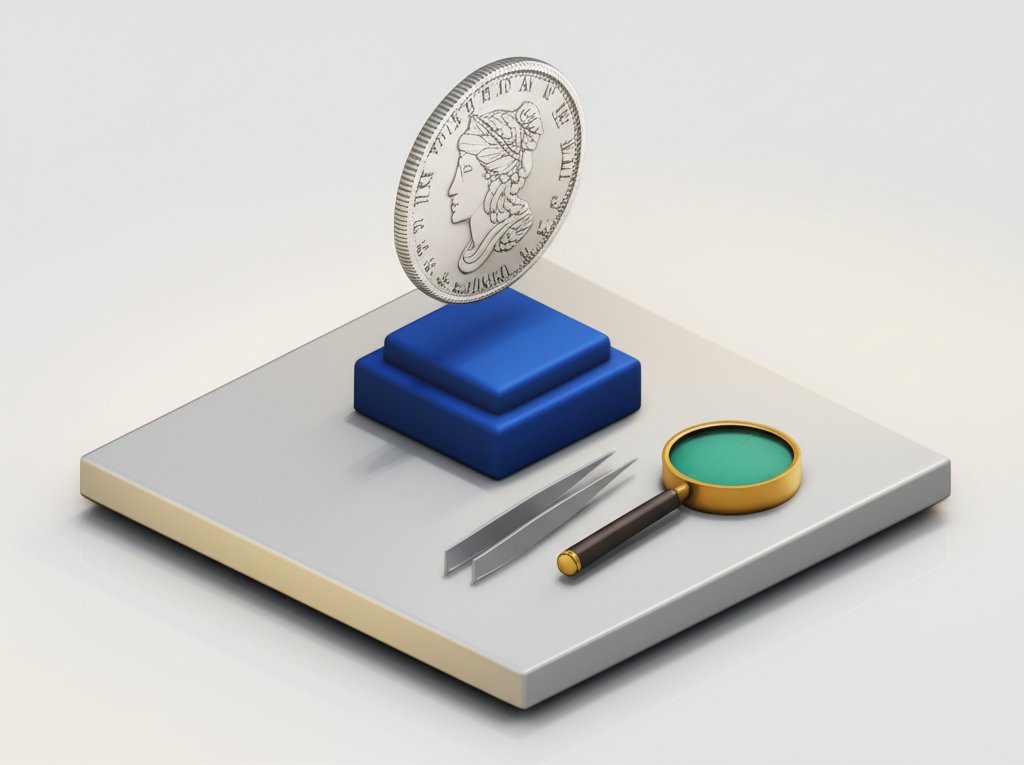
- Magnification: A 10x jeweler's loupe is essential for seeing fine details.
- Hold by Edges: Never touch a coin's surface directly, as oils from your skin can damage it.
- Look for Luster: Original mint luster appears as a cartwheel effect when tilted under light. Loss of luster indicates wear.
- Examine High Points: Check the highest points of the design for wear. On a Flowing Hair Dollar, for example, examine Liberty's hair and the eagle's wings. For a Morgan Dollar, check Liberty's cheek, hair, and the eagle's breast.
- Avoid Cleaning: Never clean a coin! Even professional cleaning reduces value significantly.
Knowing these details is crucial for understanding Whats a dollar coin worth and whether it holds significant numismatic value beyond its metal content.
Authenticity Matters: Detecting Fakes and Fantasies
As valuable coins become more public, so does the unfortunate trade in counterfeits. If you believe you have a genuinely rare and valuable coin, verifying its authenticity is crucial.
- Weight, Diameter, Thickness: Compare your coin's specifications to official mint data. Slight discrepancies can indicate a fake or a wrong planchet error. Precision scales and calipers are your friends here.
- Sound Test (Ring Test): An experienced ear can sometimes detect the difference in "ring" between a genuine silver coin and a base metal counterfeit. This is an advanced technique and not foolproof.
- Magnet Test: While not definitive, a magnet can help identify fakes. Most genuine U.S. silver and copper coins are non-magnetic. If your "silver" coin sticks to a magnet, it's likely a steel planchet fake. This is especially useful for older silver coins.
While these home tests offer a starting point, they are not substitutes for expert verification. It’s always best to be cautious, especially when asking Are your dollar coins valuable and dealing with potentially high-value items.
Beyond Dollar Coins: Other U.S. Treasures to Look For
While our focus has been on dollar coins, the principles of scarcity, condition, errors, and key dates apply across all U.S. denominations. Many other non-dollar coins have attained legendary status and command incredible prices.
- Cents: The 1909-S VDB Lincoln Cent, 1914-D Lincoln Cent, and the 1922 "No D" Lincoln Cent are all highly sought after. Even small denominations like Pennies worth money can fetch a fortune!
- Nickels: The 1913 Liberty Head Nickel (only five known) is perhaps the most famous rare nickel, but the 1937-D "3-Legged" Buffalo Nickel is also a significant error coin.
- Dimes: Key Mercury Dime dates include the 1916-D and the 1942/1 overdate.
- Quarters: The 1932-D and 1932-S Washington Quarters are rare initial issues, and yes, sometimes even quarters can surprise you with their worth when you ask Whats a Dollar Quarter Worth.
The hunt for Rare American Dollar Coins extends to the entire spectrum of U.S. coinage, offering a vast landscape for collectors.
When to Get a Pro: Grading and Appraisal Services
If you suspect you have a genuinely valuable dollar coin—especially one of the famous rarities or a significant error—your next step should be professional appraisal and grading. Organizations like PCGS (Professional Coin Grading Service) and NGC (Numismatic Guaranty Company) are the industry standards.
They will:
- Authenticate: Confirm your coin is genuine.
- Grade: Assign a numerical grade (on a 70-point scale) reflecting its condition, which is critical for value.
- Encapsulate: Seal your coin in a tamper-evident holder, preserving its condition and providing peace of mind.
This service isn't cheap, but it's essential for maximizing value and ensuring buyer confidence if you decide to sell. They can definitively tell you How much is one coin worth in the collector's market.
Your Next Steps: Turning Pocket Change into Potential Riches
The world of dollar coins worth money is rich with history, intrigue, and the potential for incredible discoveries. Whether you're a seasoned collector or just starting to look at your change with new eyes, the thrill of the hunt is undeniable. Start by examining your collection, researching anything that looks unusual, and never underestimate the value of a well-preserved piece or a fascinating error. With a little knowledge and a keen eye, that forgotten dollar coin might just be your next big treasure. Happy hunting!