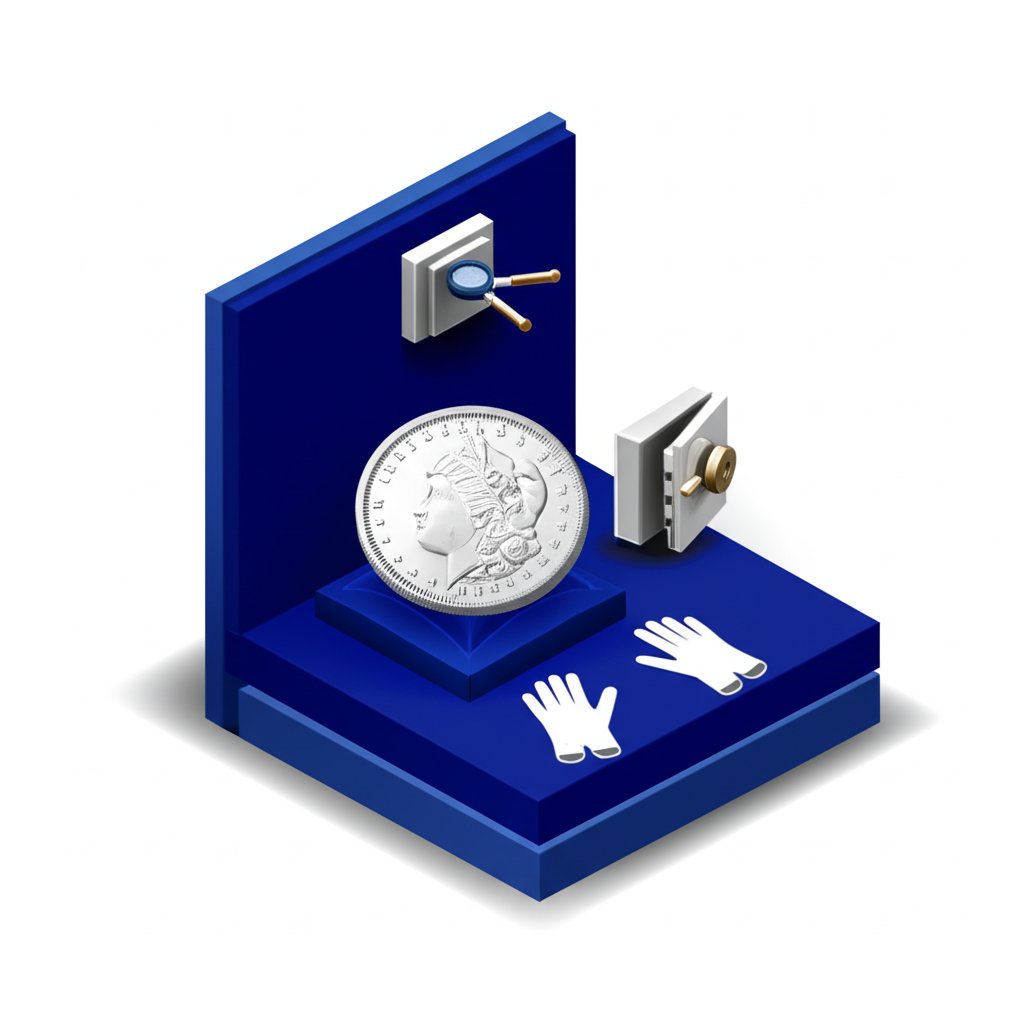
How much is a dollar coin worth? It's a question that often sparks a glimmer of hope when someone stumbles upon an old, hefty disk in a dusty drawer. For many U.S. dollar coins, the answer is usually face value, or perhaps a few dollars over. Yet, for a select few, that answer can stretch into the hundreds, thousands, or even millions, transforming a piece of metal into a tangible slice of history and a significant investment.
Understanding the true value of a dollar coin isn't just about its age; it's a deep dive into history, rarity, and condition. While modern Sacagawea or Presidential dollars often fetch little more than face value, the story changes dramatically when you encounter a relic from the Silver Era.
At a Glance: What Drives a Dollar Coin's Value
- Rarity is Key: Low original mintages and low survival rates make coins scarce and valuable.
- Condition Rules: Uncirculated coins with sharp details and no wear command the highest prices.
- Mint Marks Matter: Specific mint marks (like CC, S, O, D, W, C) can significantly increase value for certain dates.
- Metal Content: Older silver dollars have an inherent precious metal value, even if common.
- Errors and Varieties: Unique production mistakes or design variations can turn an ordinary coin into a treasure.
- Authenticity: Professional grading (PCGS, NGC) is essential for high-value coins to confirm legitimacy and condition.
Beyond a Buck: The Factors That Determine a Dollar Coin's True Worth
Before we dive into specific valuable coins, it's crucial to understand the foundational elements that dictate how much a dollar coin is worth. These aren't just academic points; they're the very criteria experts use to appraise your potential find.
- Mintage & Survival Rate: How many were originally made? And more importantly, how many survived in collectible condition? Low mintage numbers, especially combined with events that led to melting or extensive circulation, drastically reduce the available supply, pushing prices up.
- Condition (Grade): This is paramount. A coin's grade describes its physical state, from "Poor" (barely recognizable) to "Perfect Uncirculated" (MS-70, flawless). The difference between a "Fine" and an "Uncirculated" example of the same rare coin can be hundreds of thousands of dollars. Factors like wear, scratches, dents, and cleaning all impact grade.
- Mint Mark: U.S. coins were struck at various mints, each denoted by a small letter (or lack thereof for Philadelphia). Charlotte (C), Carson City (CC), New Orleans (O), San Francisco (S), Denver (D), Dahlonega (D), and West Point (W) are all important. A specific mint mark for a particular year can indicate a much smaller mintage or a higher demand, skyrocketing its value.
- Metal Content: Older dollar coins (pre-1935, primarily) contain 90% silver, giving them an intrinsic "melt value" that fluctuates with the price of silver. Even common silver dollars are worth significantly more than face value due to this content.
- Historical Significance: Some coins represent pivotal moments in American history or were produced under unique circumstances, adding to their allure and value.
- Errors and Varieties: Accidental deviations during the minting process, such as doubled dies, missing edge lettering, or off-center strikes, can create unique, highly sought-after collector items.
Identifying Your Dollar Coin's Era: A Quick Overview
The history of U.S. dollar coins is broadly divided into three eras, each with distinct characteristics and typical values:
- The Silver Era (1794-1935): These are the true heavyweights. Composed of 90% silver (0.773 troy ounces pure silver), this era includes the Flowing Hair, Draped Bust, Seated Liberty, Trade, Morgan, and Peace Dollars. Most coins from this period will be worth significantly more than face value, even in worn condition, due to their silver content alone. The truly rare ones reside here. For a broader guide on spotting these valuable types, you might want to Spot rare dollar coins in your collection.
- The Transition Era (1971-1999): This period saw the introduction of base metal dollars, beginning with the Eisenhower (Ike) Dollar (1971-1978) and followed by the smaller Susan B. Anthony (SBA) Dollar (1979-1999). Most of these circulate at face value. However, certain Eisenhower dollars contain 40% silver (collector issues, not for circulation), and specific SBA error coins can hold premiums.
- The Modern Era (2000-Present): This includes the Sacagawea, Presidential, Native American, and American Innovation dollars. These are typically worth face value, but like the SBA, certain rare errors (such as missing edge lettering on some Presidential dollars) or special commemorative issues can command a premium for collectors.
The Big Five: Dollar Coins Worth the Most Money
When asking "how much is a dollar coin worth," these five legendary pieces represent the pinnacle of U.S. dollar coin collecting. Their record prices underscore their extreme rarity and historical significance.
- Flowing Hair Dollar (1794-1795): The very first dollar coin issued by the U.S. government, its design features Lady Liberty with flowing hair. Only struck for two years, these coins are incredibly scarce.
- Key Feature: First U.S. dollar, distinct bust of Liberty, small mintage.
- Record Price: An astounding $12,000,000 for a pristine 1794 example, and $6,600,000 for another. These aren't just coins; they're national treasures.
- 1804 Dollar ("King of American Coins"): Despite its date, most 1804 dollars were actually struck in 1834 as diplomatic gifts (a few "original" 1804 strikes are also known). With only 15 known examples, it's one of the rarest and most coveted coins in the world.
- Key Feature: Distinct "1804" date, regardless of actual striking year. Known as Class I, II, or III.
- Record Price: $7,680,000 and $3,877,500 demonstrate its legendary status among collectors.
- Trade Dollar (1873-1885): These large silver coins were primarily minted for commerce with East Asia, particularly China. Many circulated heavily there and bear "chopmarks"—small stamps applied by Chinese merchants to verify authenticity. An 1885 Trade Dollar is the rarest of the series.
- Key Feature: Larger than other silver dollars, "TRADE DOLLAR" inscribed, often with oriental chopmarks.
- Record Price: A very rare 1885 Trade Dollar (only five known) sold for $3,960,000. An 1885 Proof example fetched $2,100,000.
- Morgan Silver Dollar (1878-1904, 1921): Perhaps the most iconic and widely collected U.S. dollar coin. Its design features a majestic Lady Liberty and an eagle. While common dates are affordable, certain mint marks and years are extremely valuable. The 1893-S and 1889-CC are legendary. The Pittman Act of 1918 led to the melting of over 270 million Morgans, making some earlier dates much rarer.
- Key Feature: Distinct Liberty head, eagle reverse, 90% silver. Mint marks (CC, O, S, D, P) are crucial.
- Record Price: An 1893-S Morgan Dollar, a key rarity, sold for $2,086,875. An 1889-CC reached $881,250.
- Seated Liberty Dollar (1840-1873): Featuring Lady Liberty seated on a rock, holding a shield and pole, these dollars predate the Trade and Morgan series. High-grade (uncirculated) examples are exceedingly rare and highly prized.
- Key Feature: Seated Liberty design, "UNITED STATES OF AMERICA" on reverse, 90% silver.
- Record Price: An 1870-S Seated Liberty commanded $1,092,500. A rare 1866 Seated Liberty (No Motto) also surpassed the million-dollar mark at $1,050,000.
Beyond the "Big Five": Other Dollar Coins with Significant Value
While the "Big Five" grab headlines, several other dollar coins can be quite valuable.
- Peace Silver Dollar (1921-1935): The last true silver dollar struck for circulation. While many dates are common, key dates like the 1928-S, 1934-S, and especially the 1928-P (low mintage) can fetch hundreds or even thousands in higher grades. A common date in average condition might be worth $35-$45 for its silver content alone.
- Draped Bust Dollar (1795-1804): Following the Flowing Hair, these are also very rare early dollars, succeeding the Flowing Hair type. Values are typically in the tens of thousands for good examples.
- 40% Silver Eisenhower (Ike) Dollars (1971-1976): Not all Ike dollars are base metal. Special collector editions from 1971-1976 were struck in 40% silver at the San Francisco Mint (S mint mark). These are heavier and have a different ring. They are worth $8-$25 or more depending on condition and specific year. Circulation strike Ike dollars are generally worth $2-$5.
- Susan B. Anthony (SBA) Dollars (1979-1999): Generally worth $2-$3, but two significant varieties exist:
- 1979-P "Wide Rim" or "Near Date": A rare variety where the date is closer to the rim. Can be worth $50-$500 depending on grade.
- 1981-S Proof "Type 2": A rare variant of the proof coin.
- Modern Dollar Errors (Sacagawea, Presidential, Native American, American Innovation): While most are face value, certain striking errors can create significant value:
- 2007-P Presidential Dollars (missing edge lettering): An error where the motto "IN GOD WE TRUST" and "E PLURIBUS UNUM" are missing from the coin's edge. These can sell for $50-$600+.
- 2000-P Sacagawea Dollar (Wounded Eagle): A die break on the eagle's belly makes it appear "wounded." Worth $50-$200+.
- 2000-P Sacagawea Dollar (Cheerios Promotion): A small number were distributed in Cheerios boxes with distinct tail feather details. These are extremely valuable, potentially $5,000-$25,000+.
- Always scrutinize modern dollar coins for unusual features, especially on the edge.
Your Practical Playbook: What to Do When You Find a Dollar Coin
So, you've found a dollar coin. How do you figure out if it's just a buck or a treasure?
- Identify the Coin's Era and Type:
- Check the Date: Is it 1935 or earlier? If so, it's likely silver and has inherent value.
- Look at the Design: Does it match one of the "Big Five" or other notable silver dollars (Peace, Draped Bust)?
- Is it an Eisenhower (Ike)? Check the date (1971-1976) and look for an "S" mint mark. If it's an "S" and it feels heavier, it might be 40% silver.
- Is it an SBA, Sacagawea, or Presidential? These are usually face value unless they have a known error.
- Locate the Mint Mark: This small letter, usually on the reverse, often below the eagle, or below the date on some coins (like the Morgan), is critical. Even a slight variation in the mint mark for a given year can mean a huge difference in value. (e.g., 1893-S Morgan vs. 1893-P Morgan).
- Assess Condition (Carefully!):
- DO NOT CLEAN IT. This is the golden rule of coin collecting. Cleaning, even gently, will almost always reduce a coin's numismatic value, often drastically. Patina and natural toning are desirable; cleaned coins look unnatural and damaged to experts.
- Look for Wear: Is the highest point of the design (e.g., Liberty's hair, eagle's feathers) smooth or still detailed? Lack of wear indicates higher grade.
- Check for Scratches, Dings, or Damage: These will lower the grade.
- Original Luster: Coins that haven't been touched or circulated extensively often retain an original "cartwheel" luster when tilted in the light. This is a strong indicator of an uncirculated (and potentially highly valuable) coin.
- Weigh it and Check for Magnetism (For Silver Dollars):
- Genuine 90% silver dollars weigh 26.73 grams. A significantly different weight can indicate a fake or a 40% silver Ike (which is 24.59g).
- Silver is non-magnetic. If a magnet sticks to your silver dollar, it's almost certainly a fake or a modern base-metal coin.
- Research Potential Value: Once you have the year, mint mark, and a rough idea of condition, consult reputable online price guides (like PCGS, NGC, Greysheet/Coin Dealer Newsletter) or a standard coin catalog (e.g., A Guide Book of United States Coins by R.S. Yeoman, often called "The Red Book"). Remember, these are guide prices; actual sales can vary.
- Consider Professional Appraisal/Grading:
- If you suspect your coin is genuinely rare or valuable (e.g., potentially worth over $100, or a key date like an 1893-S Morgan), your best next step is to get a professional appraisal.
- For truly high-value pieces, sending the coin to a third-party grading service like Professional Coin Grading Service (PCGS) or Numismatic Guaranty Company (NGC) is highly recommended. They will authenticate the coin, assign a precise grade, and encapsulate it in a tamper-evident holder, which significantly enhances its market value and liquidity.
Quick Answers: Common Questions & Misconceptions
Q: Are all silver dollars valuable?
A: All silver dollars (those made of 90% silver, generally pre-1935) are worth more than their face value due to their intrinsic metal content. Common dates in average circulated condition typically fetch $35-$45 for their silver. However, only a subset are "rare" and command numismatic premiums into the hundreds, thousands, or millions.
Q: What's the difference between a "proof" and a "business strike" dollar coin?
A: A "business strike" is a coin made for general circulation. A "proof" coin is a specially produced coin made for collectors, struck multiple times with polished dies on polished planchets, resulting in a mirror-like finish (fields) and frosted designs (devices). Proof coins are generally rarer and often more valuable than their business strike counterparts.
Q: Can I clean my old dollar coin to make it look better?
A: No, absolutely not. Cleaning a coin, even with soft cloths or common household cleaners, will almost always cause microscopic abrasions on the surface, ruining the coin's original luster and significantly reducing its numismatic value. A naturally toned, dirty coin is usually worth far more to collectors than a shiny, cleaned one.
Q: How do I authenticate a potentially valuable silver dollar to avoid fakes?
A: For coins valued over $100 or known key dates (like an 1893-S Morgan), professional authentication by PCGS or NGC is the gold standard. For preliminary checks, verify the weight (26.73g for 90% silver dollars), check for magnetism (silver is non-magnetic), examine the design details for softness or inconsistencies, and check the edges for irregularities.
Your Next Steps: From Curious Find to Confident Collector
Discovering an old dollar coin is an exciting moment. While most will remain interesting historical artifacts with minimal monetary value, a careful assessment can sometimes reveal a hidden gem.
- Initial Scan: Quickly check the date. If it's 1935 or earlier, immediately treat it with care.
- Handle With Gloves: If it looks promising, handle the coin by its edges, ideally with cotton gloves, to avoid leaving fingerprints.
- Document and Photograph: Take clear pictures of both sides and any distinguishing features.
- Identify and Research: Use online resources and coin catalogs to pinpoint the exact year, mint mark, and known varieties.
- Consult an Expert: If your research suggests significant value, seek out a reputable coin dealer or consider submitting it to a professional grading service.
Remember, the journey of understanding "how much is a dollar coin worth" is as much about learning history as it is about monetary value. Happy hunting!