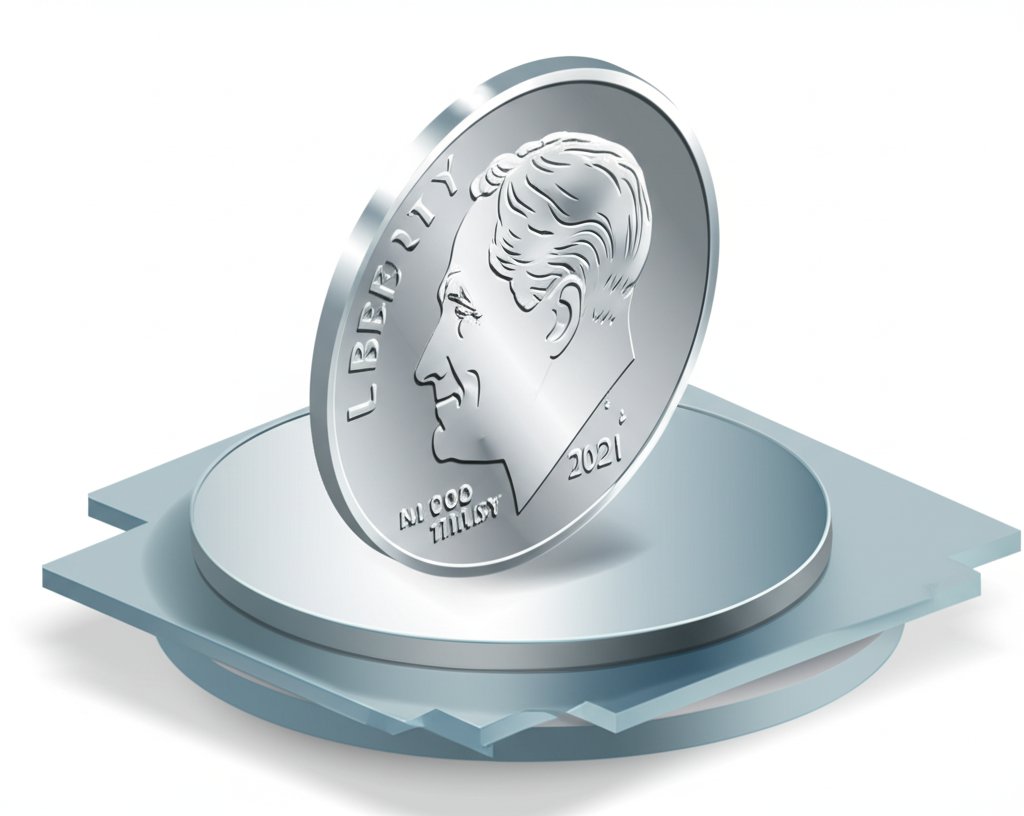
Ever stumbled upon an old dime, perhaps tucked away in a dusty drawer or glinting from a coin jar, and wondered, "How much is a silver dime worth?" You're not alone. Many people discover these small treasures without realizing their potential value, which can range from a modest premium over face value to, in rare cases, millions of dollars. Pinpointing the true worth of your silver dime involves a blend of understanding its metallic content, its historical significance, and its physical condition.
Whether you're a budding collector or just curious about that old coin you found, this guide will help you unpack the genuine value of U.S. silver dimes. We'll move beyond mere speculation, equipping you with the practical steps and insights needed to accurately assess your coin.
At a Glance: What You’ll Discover About Your Silver Dime’s Worth
- Date is Key: Only U.S. dimes minted before 1965 contain 90% silver.
- Value is Layered: Its worth isn't just silver melt value; rarity and condition are huge factors.
- Common vs. Rare: Most circulated silver dimes are valued around $2-$3, but some key dates are profoundly rare and valuable.
- DIY Assessment: You can perform initial checks for authenticity and condition with simple tools.
- Professional Insight: Knowing when to seek expert grading is crucial for high-value coins.
The Silver Cutoff: Why the Date on Your Dime Matters So Much
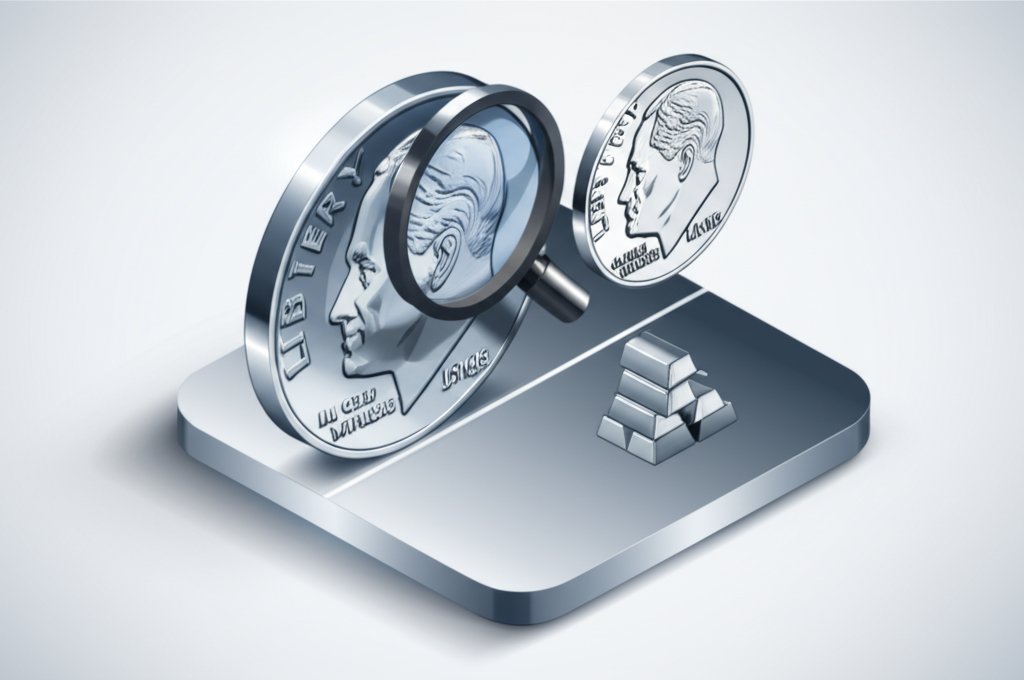
The first, and arguably most critical, step in determining how much your silver dime is worth involves a simple glance at its date. Prior to 1965, all U.S. dimes were composed of 90% silver and 10% copper. This composition made them a reliable store of value, their intrinsic worth tied directly to the fluctuating price of silver.
However, escalating silver prices in the early 1960s prompted a significant change. Starting in 1965, the U.S. Mint transitioned to a copper-nickel alloy for dimes (and quarters), effectively removing all silver content. This means any dime dated 1965 or later, regardless of how shiny it looks, is essentially worth its 10-cent face value, unless it's a rare error coin, which is an entirely different category. So, if your dime isn't dated 1964 or earlier, it won't be silver.
Unpacking True Value: Beyond Just Silver Melt

When evaluating a pre-1965 silver dime, its worth isn't a single, fixed number. Instead, it's a dynamic interplay of three primary factors: its silver melt value, its numismatic (collector) value based on rarity, and its physical condition. Understanding these components is essential for a comprehensive appraisal.
Pillar 1: The Silver Melt Value (The Baseline)
Every silver dime has a base value derived from the amount of pure silver it contains. This is often called its "melt value" because it represents what the silver content would be worth if the coin were melted down.
A standard U.S. silver dime weighs 2.5 grams and contains approximately 0.0723 troy ounces of pure silver. To calculate its melt value, you multiply this silver content by the current "spot price" of silver (the market price for one troy ounce of pure silver).
Mini-Example: If the spot price of silver is $25 per troy ounce, a silver dime's melt value would be roughly 0.0723 troy oz * $25/troy oz = $1.81. This melt value provides a foundational understanding, but it's rarely the only determinant of a coin's worth. For a broader framework on these value components, our detailed Guide to Silver Dime Worth delves into each facet more thoroughly.
Pillar 2: Numismatic Value (Rarity & Collector Appeal)
Numismatic value is what truly elevates a coin's worth beyond its precious metal content. This value is driven by collector demand, which in turn is influenced by a coin's rarity, historical significance, and unique characteristics.
- Key Dates and Low Mintages: Some silver dimes were produced in much smaller quantities than others, making them inherently rarer. These "key dates" are often highly sought after by collectors. A lower mintage number directly correlates with increased rarity and, consequently, higher potential numismatic value. For example, the 1916-D Mercury Dime had a mintage of only 264,000, making it one of the rarest regular-issue dimes.
- Mint Marks: The mint mark (a small letter indicating where the coin was struck: 'D' for Denver, 'S' for San Francisco, 'O' for New Orleans, and no mark for Philadelphia) can significantly impact value. A dime from a specific mint in a particular year might be much rarer than the same year from a different mint.
- Error Coins: Dimes with striking errors (e.g., double dies, off-center strikes, planchet errors) can command substantial premiums, even if they aren't traditionally rare dates.
Case Snippet: The 1894-S Barber Dime. Only 24 of these dimes were ever minted, and just nine are known to exist today. In 2016, one example sold for an astonishing $1,997,500, with another reaching $2,160,000 in a subsequent auction. This isn't just about silver; it's about extreme rarity and historical allure.
Pillar 3: Condition and Grading (The Aesthetic & Preservation Premium)
A coin's condition, or "grade," is paramount in determining its numismatic value. A rare coin in pristine condition will always be worth significantly more than the same rare coin that is heavily worn or damaged. The Sheldon grading scale, ranging from Poor (P-1) to Perfect Mint State (MS-70), is the universal language for assessing a coin's condition.
- Circulated Grades: Coins that have seen extensive use will show wear on their high points. Grades like "Good" (G), "Very Good" (VG), "Fine" (F), and "Very Fine" (VF) indicate varying degrees of wear. Most common silver dimes you find will fall into these categories, and their value often hovers slightly above their melt value, typically between $2 and $3.
- Uncirculated Grades: Coins that have never entered circulation and retain their original mint luster are graded as "Mint State" (MS). These are the most desirable and command the highest prices.
- Special Designations: For certain dime types, specific features can dramatically increase value. For example, "Full Bands" (FB) on Mercury and Roosevelt dimes refer to fully struck and unbroken horizontal bands on the fasces (Mercury) or torch (Roosevelt). A 1949 Roosevelt Dime with Full Bands in MS68 grade once sold for $13,200 – a testament to how perfect condition combined with a specific characteristic can multiply worth.
Pitfall Alert: Never clean a coin! Cleaning, even gently, will almost always diminish its value to collectors. The natural patina developed over decades is part of its authenticity and appeal.
Your Practical Playbook for Evaluating a Silver Dime
Ready to find out what that dime in your hand might be worth? Here’s a step-by-step guide to help you make an initial assessment.
Step 1: Confirm It's Silver – Check the Date!
This is the non-negotiable first step.
- Look for the date: If it's 1965 or later, it's not silver (unless it's a very rare and specific error). Stop here; it's face value.
- If it's 1964 or earlier: Congratulations, you have a 90% silver dime! Now proceed to the next steps to assess its potential beyond melt value.
Step 2: Authenticity Check – Weight, Dimensions, and Magnetism
Before diving into rarity, ensure your dime is legitimate. These simple checks can rule out fakes or non-silver coins:
- Weight: A genuine silver dime should weigh 2.5 grams. A digital gram scale is ideal for this.
- Dimensions: It should measure 17.9 mm in diameter and 1.35 mm in thickness. Calipers can help verify this.
- Magnet Test: Silver is not magnetic. If your dime sticks to a magnet, it's not silver. This can be a quick indicator, especially for confirming post-1964 coins are indeed copper-nickel.
Step 3: Identify the Type and Mint Mark
Knowing the specific type of silver dime is crucial as values vary wildly across different series.
- Dime Types (with silver years):
- Draped Bust (1796-1807): Very rare and valuable, even in lower grades.
- Capped Bust (1809-1837): Also highly collectible.
- Seated Liberty (1837-1891): Many key dates and varieties.
- Barber Dime (1892-1916): Classic design, look for the 'S' mint mark from 1894.
- Mercury Dime (1916-1945): A collector favorite, key dates like 1916-D.
- Roosevelt Dime (1946-1965): The most common silver dimes, but some dates/conditions (like Full Bands) carry premiums.
- Locate the Mint Mark:
- Barber Dimes: On the reverse, below the eagle.
- Mercury Dimes: On the reverse, to the left of the fasces (bundle of rods).
- Roosevelt Dimes: On the reverse, above and to the left of the torch.
- No mint mark typically means it was minted in Philadelphia.
Step 4: Assess Condition (Amateur Grading)
This is where a magnifying glass (10x magnification is standard) comes in handy. Examine your dime for signs of wear, scratches, and original luster.
- High Points: Look at the highest raised areas of the design. On Mercury dimes, check the bands on the fasces. On Roosevelt dimes, examine the torch flames and bands. On Barber dimes, look at Liberty's hair and the eagle's feathers. The more detail remaining, the better the condition.
- Luster: Does the coin still have any original "cartwheel" luster when tilted in light? This indicates an uncirculated or nearly uncirculated condition.
- Damage: Are there any nicks, scratches, dents, or signs of improper cleaning? These will significantly reduce value.
- Eye Appeal: Does the coin just look "good" to you? Eye appeal is subjective but contributes to value.
Step 5: Research Current Values
Once you've identified the date, mint mark, and made a rough assessment of condition, you can begin researching its market value.
- Online Price Guides: Websites like PCGS (Professional Coin Grading Service) and NGC (Numismatic Guaranty Corporation) offer comprehensive price guides for graded coins, which can serve as benchmarks.
- Auction Results: Check recent auction sales data for similar coins in comparable conditions. This gives you a real-time sense of what collectors are actually paying.
- Coin Books/Catalogs: "A Guide Book of United States Coins" (the "Red Book") is a standard reference for average retail prices.
Practical Scenario: You find a 1943-S Mercury dime. It's circulated but in "Fine" condition, with some details on Liberty's hair still visible, but the fasces bands are worn flat. Checking a price guide, you might see that common dates in Fine condition are listed for $2.50-$3.50, slightly above the current silver melt value. This aligns with most common circulated silver dimes.
When to Call in the Pros: Professional Grading
If your research suggests your silver dime could be a key date, a rare variety, or in exceptionally high-grade condition, professional grading is a wise investment. Services like PCGS and NGC provide impartial, expert evaluations, assigning a precise grade and encapsulating the coin in a tamper-evident holder. This certification adds credibility and significantly enhances the coin's liquidity and market value, especially for coins worth hundreds or thousands of dollars.
Example: The 1873-CC "No Arrows" Seated Liberty Dime, an ultimate rarity, sold for $3.6 million in 2023. This coin was professionally graded, its authenticity and condition meticulously verified, which was crucial for achieving such an astronomical price. Without professional authentication and grading, such a coin would struggle to realize its full potential.
Quick Answers to Common Silver Dime Questions
You've got questions about your dimes, and we've got crisp, expert answers.
Q: What's the absolute easiest way to tell if my dime is silver?
A: Check the date. If it's 1964 or earlier, it's 90% silver. If it's 1965 or later, it's clad (copper-nickel) and worth face value.
Q: Do all pre-1965 silver dimes have high numismatic value?
A: No. While all pre-1965 dimes have a silver melt value, most common dates in circulated condition are only worth slightly more than their melt value (typically $2-$3). Numismatic value kicks in for rarer dates, mint marks, and higher grades.
Q: My dime looks silver, but it's dated 1965. Is it an error?
A: Highly unlikely. Post-1964 dimes are made of a copper-nickel alloy, which can still appear silver-colored. True silver 1965 dimes are extremely rare transitional errors, usually identified by their weight difference and requiring expert verification. Don't assume yours is one without professional authentication.
Q: How much is a 1965 dime worth?
A: Generally, 10 cents. As explained, 1965 dimes are not silver.
Q: Can I clean my silver dime to make it more valuable?
A: Absolutely not. Never clean a coin. Cleaning removes the natural patina and can leave microscopic scratches, severely reducing its numismatic value to collectors. A "cleaned" coin is usually worth less than an uncleaned one in the same condition.
Q: What about those silver proof dimes? Are they worth more?
A: Yes, starting in 1992, the U.S. Mint began producing special "proof sets" that include dimes made of 90% silver. These are typically sold directly to collectors and are identifiable by their mirror-like finish. Their value is usually above melt, varying by year and demand, but they are not found in circulation.
Your Next Steps: Unlocking Your Dime's Potential
Now that you understand the factors that determine how much a silver dime is worth, you're ready to take action.
- Segregate Your Silver: Carefully separate any dimes dated 1964 and earlier from your other coinage. Store them safely in individual flips or tubes, never in PVC holders which can damage coins over time.
- Conduct Your Initial Assessment: Use a magnifying glass, a scale, and calipers to check dates, mint marks, and condition, as outlined in the playbook.
- Research Potential Gems: For any dimes that appear to be key dates, have unusual mint marks, or are in remarkably good condition, delve deeper into online price guides and auction records.
- Consider Professional Expertise: If you suspect you have a significant rarity or a high-grade example of a valuable date, resist the urge to sell it hastily. Investing in professional grading from PCGS or NGC will authenticate your coin and help it achieve its maximum market value.
Even if most of your silver dimes turn out to be common dates worth close to their melt value, you've gained valuable knowledge and perhaps uncovered a piece of history. Every coin has a story, and now you have the tools to uncover it.