You just stumbled upon an old quarter in a dusty box or inherited a small coin collection. Naturally, your first thought might be, "how much is a silver quarter worth?" While a regular quarter is just 25 cents, those shimmering coins minted before 1965 are an entirely different story. They hold intrinsic value far beyond their face value, rooted in the precious metal they contain and, in some cases, significant numismatic rarity.
It’s an exciting discovery, finding something potentially valuable where you least expect it. Whether you're a seasoned collector, a curious newcomer, or just clearing out an attic, understanding the true worth of a silver quarter means looking beyond the denomination printed on its face. It's about delving into the world of precious metals and historical numismatics.
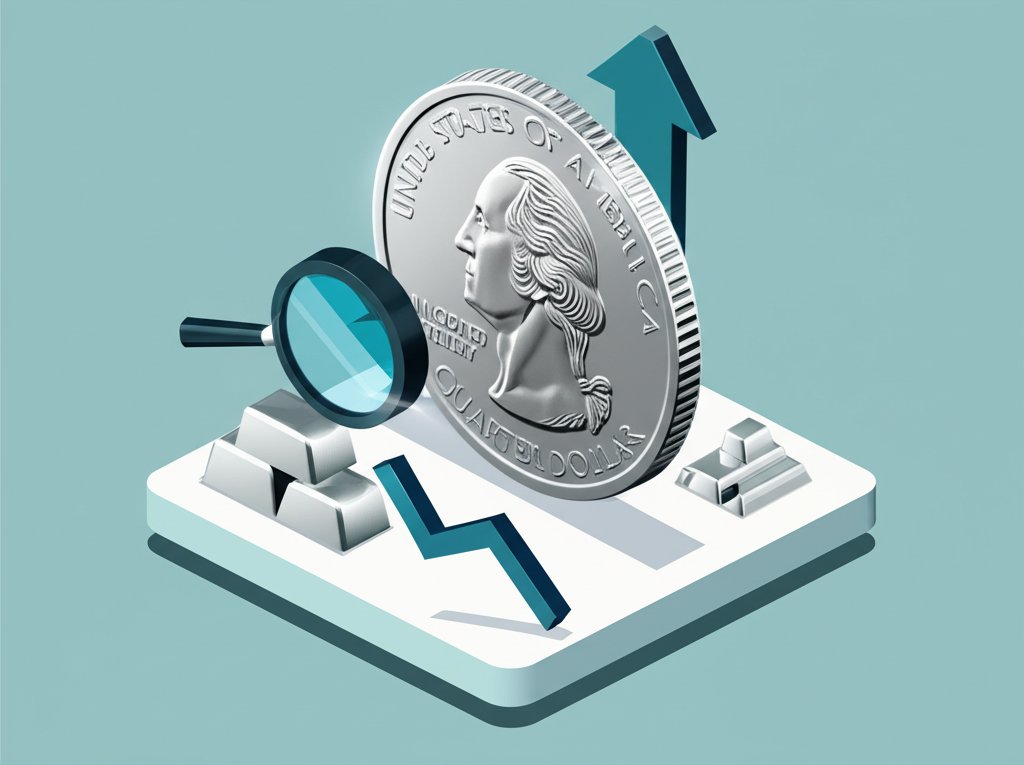
At a Glance: Key Takeaways for Your Silver Quarter
- All U.S. Quarters dated 1964 and earlier are 90% silver. This is the defining characteristic.
- Minimum Value: A silver quarter is always worth more than 25 cents due to its silver content, approximately 0.1808 troy ounces.
- How to Spot One: Look for the date "1964" or earlier. Check the coin's edge for a solid silver appearance; modern quarters show a copper stripe.
- Value Factors: The current spot price of silver sets the base "melt value." Collector value (numismatic value) can significantly increase this based on the coin's type, condition, date, and mintmark.
- Rare Finds: Certain dates, especially 1932-D and 1932-S Washington quarters, and early series like Standing Liberty and Barber quarters, can be worth hundreds or even thousands of dollars.
- Modern Proofs: The U.S. Mint still produces silver quarters for collectors, distinct from circulation coins.
What Exactly Is a Silver Quarter?
When we talk about a "silver quarter," we're specifically referring to U.S. quarters produced for general circulation in 1964 or earlier. These coins are a tangible piece of American monetary history, representing an era when everyday coinage contained precious metals.
From 1796, when the U.S. Mint first produced quarters, until 1964, nearly all quarters were composed of 90% silver and 10% copper. This alloy gave them a distinct weight and luster, separating them visually and physically from the copper-nickel clad quarters introduced in 1965. Each of these pre-1965 silver quarters weighs approximately 6.25 grams, with 0.1808 troy ounces of pure silver content. This substantial silver content is the foundation of their value today.
The transition away from silver coinage in 1965 was primarily due to rising silver prices, which made the melt value of these coins exceed their face value. People began hoarding them, and the U.S. government shifted to a cheaper, more abundant metal composition. This historical change solidified the status of pre-1965 quarters as valuable collectibles and bullion items.
How to Easily Identify a Silver Quarter
You don't need to be a numismatic expert to tell if you've got a silver quarter in your hand. Here's a simple checklist:
- Check the Date: This is the most straightforward identifier. If the quarter is dated 1964 or earlier, it's silver. If it's 1965 or later, it's almost certainly a copper-nickel clad coin (with a few exceptions for collector-specific modern proof issues, which are clearly marked).
- Examine the Rim: Take a good look at the side of the coin – its edge, or "rim." A silver quarter will have a solid silver edge running all the way around. Modern quarters (1965 and later) will show a distinct copper-colored stripe between two silvery layers. That copper stripe is your immediate indicator of a non-silver coin.
- Feel the Weight (and Listen): While subjective, silver quarters often feel slightly heavier than their modern counterparts. If you're really keen, try balancing a known silver quarter against a modern one. Some collectors also note a different "ring" when dropped gently on a hard surface, though this method requires a trained ear and caution to avoid damaging the coin.
Once you've confirmed your quarter is indeed silver, you're ready to explore its potential worth. How much are pre-1964 quarters worth really depends on a few key factors we'll dive into next.
Unpacking the Base Value: The Silver Melt Price
Every silver quarter has a minimum value that it can't fall below, and that's its "melt value." This value is determined by the current market price of silver. Think of it as the coin's intrinsic worth, regardless of its age or condition.
As we established, a 90% silver quarter contains approximately 0.1808 troy ounces of pure silver. To calculate its melt value, you simply multiply this silver content by the current "spot price" of silver (the price for one troy ounce on the commodities market).
Let's use an example:
- If the current spot price of silver is $25 per troy ounce, then your silver quarter's melt value is:
0.1808 oz × $25/oz = $4.52 - If silver skyrockets to $41 per troy ounce, that same quarter's melt value jumps to:
0.1808 oz × $41/oz = $7.41
This calculation clearly shows why a silver quarter is always worth significantly more than its 25-cent face value. The melt value fluctuates daily with the silver market, so the actual monetary worth will vary. Current silver quarter prices are constantly shifting, so always check the most up-to-date spot price.
Keep in mind that while you can calculate the theoretical melt value, actually melting down U.S. coinage is illegal. The melt value simply provides a practical floor for what dealers and collectors are willing to pay for its precious metal content. Understanding this baseline is crucial before you assess any additional numismatic value. If you're curious about the process, Melted quarter explained goes into more detail about the concept.
Beyond the Shine: Factors That Skyrocket Collector Value
While the melt value provides a solid baseline, many silver quarters are worth far more to collectors. This "numismatic value" is driven by a combination of factors that elevate a common silver slug into a prized artifact. If you're wondering, How much are silver quarters worth beyond their silver, these are the elements that create that premium.
1. Coin Type and Series
The design and historical era of your silver quarter play a huge role. Earlier, rarer designs generally command higher prices, even in circulated condition, simply because fewer exist today.
- Draped Bust Quarters (1796-1807): The very first quarters, extremely rare and highly valuable.
- Capped Bust Quarters (1815-1838): Scarce and desirable.
- Seated Liberty Quarters (1838-1891): A longer series, but many dates and mintmarks are highly sought after.
- Barber Quarters (1892-1916): Classic design, relatively common for some dates, but many key dates.
- Standing Liberty Quarters (1916-1930): Iconic design, known for some major rarities, especially those with full head details.
- Washington Quarters (1932-1964): The most common silver quarters, but still contain several highly valuable dates and mintmarks.
- Modern Silver Proof Quarters (1992-Present): These are not circulation coins. The U.S. Mint produces special proof sets for collectors. Their value comes from their flawless "proof" finish, limited mintages, and collector demand, rather than being found in change.
2. Condition (Grade)
This is perhaps the most critical factor for numismatic value. A coin's condition, or "grade," describes its state of preservation and wear. A quarter with minimal wear and strong original luster will be worth substantially more than one that's heavily circulated, scratched, or damaged.
Coin grading uses a precise scale (the Sheldon scale, from 1 to 70), with higher numbers indicating better condition.
- Good (G): Heavily worn, but major design elements are visible.
- Fine (F): Moderate wear, some details are clear.
- Extremely Fine (EF/XF): Light wear on the highest points of the design.
- Uncirculated (AU): Slight traces of wear, but still has much original mint luster.
- Mint State (MS-60 to MS-70): No signs of wear, full original luster. Coins graded MS-65 or higher are considered "Gem Uncirculated" and can command significant premiums.
Small details matter immensely. For Standing Liberty quarters, for instance, a "Full Head" designation (meaning Liberty's head details are sharp and complete) can multiply a coin's value many times over.
3. Date and Mintmark
The specific year and the mint where a quarter was produced (indicated by a small letter, like "D" for Denver, "S" for San Francisco, or no mark for Philadelphia) are crucial indicators of its rarity. Low-mintage issues – years where fewer coins were struck – are inherently scarcer and thus more valuable.
- Key Dates: These are specific dates and mintmark combinations that are known to be rare and highly sought after by collectors.
- Semi-Key Dates: Less rare than key dates, but still valuable.
- Common Dates: While still silver, these dates were produced in large quantities and generally carry a smaller premium over their melt value, primarily reflecting the What's your silver quarter worth in terms of its metal content.
For example, a 1932 Washington quarter from Philadelphia (no mintmark) is common. A 1932-D (Denver) or 1932-S (San Francisco) Washington quarter, however, is a significant rarity due to very low mintages and can be worth hundreds, even thousands, of dollars depending on condition. Discover valuable silver quarters often hinge on these date and mintmark combinations.
Spotlighting Highly Desirable Silver Quarters
While every pre-1965 quarter has its base silver value, certain dates and types stand out as numismatic treasures. These are the coins that collectors dream of finding. What are silver quarters worth when they're truly special? Here's a look at the heavy hitters:
Washington Quarters (1932–1964)
The most common silver quarters, but they have their stars.
- 1932-D (Denver): This is the key date for Washington quarters. With a mintage of only 436,800, finding one in any condition is a significant find. High-grade examples can fetch thousands.
- 1932-S (San Francisco): Another low-mintage rarity (503,600 struck). Also extremely valuable, especially in better grades.
- Other Early Dates (e.g., 1934-D, 1936-D, 1937-S): While not as rare as the 1932-D/S, these early issues can still command healthy premiums, especially in higher circulated or uncirculated grades.
You can delve deeper into Washington Quarter Silver Values to see a comprehensive breakdown of this popular series.
Standing Liberty Quarters (1916–1930)
These quarters feature an iconic design by Hermon MacNeil, with Lady Liberty standing guard. The design changed in 1917, covering Liberty's exposed breast, and mintmarks were moved. Full Head details (where Liberty's head is clearly defined) add significant value.
- 1916: The absolute rarity of the series. Only 52,000 were minted. Even in heavily circulated condition, these are worth thousands.
- 1918/7-S Overdate: A famous and valuable error where a "7" is visible under the "8." A highly sought-after variety.
- 1921: Another low-mintage year, especially from Philadelphia.
- 1927-S: A semi-key date, particularly desirable in higher grades.
Barber Quarters (1892–1916)
Designed by Charles E. Barber, these quarters feature a classic Liberty Head design. Many dates were produced in lower mintages, making them generally more valuable than their Washington counterparts.
- 1896-S (San Francisco): A prime key date, with only 188,039 minted.
- 1901-S (San Francisco): Another low-mintage stunner, only 72,664 were struck, making it one of the rarest Barber quarters.
- 1913-S (San Francisco): A significant semi-key date, with values climbing steadily in better conditions.
- Other S and O (New Orleans) Mintmarks: Many Barber quarters from San Francisco and the defunct New Orleans mint (until 1909) are scarcer and hold higher value.
Early Silver Quarters (Pre-1892)
Before the Barber design, we had the Seated Liberty, Capped Bust, and Draped Bust quarters. These coins are significantly older and much harder to find, even in lower grades.
- Draped Bust (1796-1807): Very rare, even in low grades. The 1796 is the first year of issue and a numismatic legend.
- Capped Bust (1815-1838): Scarce and historically significant.
- Seated Liberty (1838-1891): While a long series, many dates, especially those from Carson City ("CC") and San Francisco ("S") mints, are highly collectible. The 1873-CC "With Arrows" is a notable key date.
Even in "Good" or "Fair" condition, these early coins are often worth hundreds, if not thousands, of dollars. Their historical significance combined with sheer scarcity drives their high prices.
Modern Silver Proof Quarters (1992-Present)
It's important to distinguish these from pre-1965 circulation coins. Since 1992, the U.S. Mint has produced special "silver proof" quarters as part of annual proof sets for collectors. These are 90% silver, just like their vintage predecessors, but they are struck with highly polished dies on specially prepared planchets, resulting in a mirror-like finish.
- Key Value Drivers: Their limited mintage, perfect condition, and aesthetic appeal make them valuable collector items. They are generally not found in circulation.
- Examples: Silver proof quarters from the 50 State Quarters program, America the Beautiful Quarters, and current designs all have values above their melt price, often ranging from $5 to $30+ depending on the year, set, and market demand.
Knowing these specific examples arms you with the knowledge to recognize a truly special find. Quarter dollar value chart and specialized price guides will give you more granular data for these and other valuable dates.
Your Step-by-Step Guide to Valuing Your Silver Quarter
Now that you understand the factors, let's put it into practice. Determining Discover your silver quarters value involves a methodical approach.
Step 1: Confirm It's Silver
- Date Check: Look for "1964" or earlier. This is non-negotiable for common circulation silver quarters.
- Rim Test: Check the edge. A solid silver color confirms it; a copper stripe means it's clad.
Step 2: Calculate the Base Melt Value
- Find Current Silver Spot Price: Use a reputable metals exchange website or financial news source. This price changes daily, even hourly.
- Apply the Formula: Multiply the spot price by 0.1808 (the troy ounces of silver in a 90% quarter).
- Example: If silver is $28/ounce, your quarter is worth 0.1808 * $28 = $5.06 (melt value).
- This gives you the absolute minimum you should expect for the coin.
Step 3: Assess the Coin's Condition (Grade)
This step requires careful observation. Avoid cleaning your coin, as this almost always reduces its value.
- Examine for Wear: Look at the highest points of the design (e.g., Washington's hair, Liberty's knee). How much detail is worn away?
- Check for Luster: Does the coin still have any original "cartwheel" luster, especially in protected areas?
- Note Damage: Scratches, dents, corrosion, cleaning marks, or bent coins will significantly decrease value.
- Consider Details: For Standing Liberty quarters, can you see the full details of Liberty's head (eyes, ear, hair)?
- Self-Grading Resources: There are many online guides with visual examples for grading various coin types. Use these to get a rough idea (e.g., Good, Fine, XF, AU, Uncirculated).
Step 4: Identify the Date and Mintmark
- Date: Clearly visible on the coin's obverse (front).
- Mintmark:
- Washington Quarters: On the reverse (back), below the eagle for earlier dates, or on the obverse (front) for later dates (e.g., 1968 and later, but remember we're looking at pre-1965 for silver). For 1932-1964 Washington quarters, it's on the reverse below the eagle.
- Standing Liberty Quarters: On the obverse, to the left of Liberty's feet for 1916-1917 Type 1; on the obverse above the date for 1917 Type 2 through 1930.
- Barber Quarters: On the reverse, below the eagle.
- Compare your date and mintmark to known key dates and rarities.
Step 5: Consult Price Guides
Once you have an idea of the date, mintmark, and condition, refer to reputable coin price guides.
- The Red Book (A Guide Book of United States Coins): The standard annual reference for U.S. coin values.
- Online Price Guides: Websites like PCGS (Professional Coin Grading Service), NGC (Numismatic Guaranty Corporation), and Coin World offer extensive price guides and population reports.
- These resources provide estimated values for various grades. Remember these are guides; actual selling prices can vary.
Step 6: Seek Expert Opinion (Optional, but Recommended for Rare Finds)
If you believe you have a particularly rare or high-grade silver quarter, it's wise to get an expert's opinion.
- Local Coin Dealer: Many dealers offer free appraisals or consultations.
- Professional Grading Services: For coins potentially worth hundreds or thousands, sending them to PCGS or NGC for professional grading and encapsulation is a good investment. This provides authentication, a guaranteed grade, and enhances market liquidity.
By following these steps, you'll gain a much clearer picture of What's your quarter worth beyond its face value.
Common Questions & Persistent Misconceptions
The world of coin collecting can seem complex, but answering a few common questions can clear up much of the confusion around silver quarters. If you're wondering How much is a quarter if it's silver, let's tackle some myths.
"Are all quarters before 1965 silver?"
Yes, for general circulation coins. Any U.S. quarter intended for circulation with a date of 1964 or earlier is made of 90% silver. This rule holds true across all the designs from Washington to Barber and earlier.
"What about quarters dated 1965 or later?"
Quarters dated 1965 and later are generally copper-nickel clad, meaning they contain no silver and are only worth 25 cents. The only exceptions are specific modern silver proof quarters, which were never intended for circulation and are clearly part of special collector sets produced by the U.S. Mint. These are easy to identify as proofs due to their mirror-like finish and typical packaging.
"Is a silver quarter always worth a lot of money?"
No, not necessarily "a lot," but always more than 25 cents. Its minimum value is always tied to the fluctuating spot price of silver. For common dates in circulated condition, it might be just a few dollars above melt value. "A lot" (hundreds or thousands) is reserved for truly rare dates, error coins, or exceptionally high-grade examples.
"Can I spend a silver quarter if I wanted to?"
Legally, yes, but economically, no. A silver quarter is still legal tender for 25 cents. However, spending it would be like using a $20 bill to pay for a $1 item and throwing away the change – you'd be giving away significant value. Its melt value alone is typically many times its face value, not to mention any potential numismatic premium. Check your quarters value before you ever consider spending one!
"Should I clean my silver quarters to make them shine?"
Absolutely not! This is one of the biggest mistakes a new collector can make. Cleaning a coin, even gently, removes its natural patina and can leave microscopic scratches that permanently damage its surface. This irreversible damage significantly reduces the coin's numismatic value, often to just its melt value. Always leave coins in their original, uncleaned state.
"Is it really worth my time to look for silver quarters?"
For the casual finder, definitely! The thrill of discovering a valuable coin, even if it's just a few dollars above face value, is part of the fun. For serious collectors, identifying key dates and high-grade examples can be a rewarding, albeit challenging, pursuit that yields significant returns. The journey to Discover quarter dollar worth is often its own reward.
The Market for Silver Quarters: What You Need to Know
Understanding how and where silver quarters are bought and sold can help you make informed decisions, whether you're looking to sell a find or build a collection. View Silver Quarter Prices and market trends are essential tools here.
Where Silver Quarters Change Hands
- Coin Dealers: Local and online coin dealers are primary buyers and sellers. They offer convenience and expertise, often paying a fair price (usually slightly below market to account for their profit margin) for common silver quarters. For rarer coins, they might offer consignment or a more competitive bid.
- Online Marketplaces: Platforms like eBay are popular for both buying and selling. Be cautious, though; research seller reputations, understand shipping/insurance costs, and accurately describe/photograph your coins.
- Coin Shows & Auctions: For highly valuable or rare silver quarters, professional coin shows and auctions (either live or online) can achieve the highest prices due as they attract serious collectors and investors. This is particularly true for professionally graded coins.
- Bullion Dealers: If your quarter's value is primarily its silver content (i.e., a common date in low grade), bullion dealers will purchase it based on the current spot price, often with a small premium or discount depending on market conditions.
Investing in Silver Quarters: Bullion vs. Numismatics
When you buy or sell a silver quarter, you're essentially engaging in two distinct markets:
- Bullion Market: This focuses purely on the precious metal content. Common date silver quarters, often referred to as "junk silver," are traded based on their melt value. Investors buy these as a way to hold physical silver. The value fluctuates directly with the spot price of silver.
- Numismatic Market: This market is driven by collector demand, rarity, condition, and historical significance. A rare date in high grade can command prices far exceeding its melt value, sometimes by hundreds or thousands of percent. This market is less tied to the daily fluctuations of silver spot prices and more to the specific scarcity and desirability of the coin itself.
It's important to differentiate. A common 1964 Washington quarter will primarily trade based on its silver content, whereas a 1932-D Washington quarter in Mint State condition will trade almost entirely on its numismatic rarity, with its silver content being a secondary consideration. The best way to evaluate how much is a silver quarter worth in either context is to consult up-to-date resources.
Maximizing Your Silver Quarter's Value: Practical Advice
Finding a silver quarter is just the first step. Knowing how to care for it, preserve its value, and make informed decisions about it can turn a simple find into a truly rewarding experience.
Proper Storage and Handling Are Paramount
- Never Clean: As mentioned, cleaning irreversibly damages a coin's surface and value. Resist the urge to make it shiny.
- Handle by the Edges: Oils and acids from your skin can stain a coin over time. Always hold coins by their edges, ideally with cotton gloves.
- Appropriate Storage: Store silver quarters in inert, non-PVC holders.
- 2x2 Mylar Holders: Inexpensive and good for individual coins.
- Air-Tite Capsules: Offer excellent protection for more valuable coins.
- Certified Slabs: Coins professionally graded by PCGS or NGC come in sealed, tamper-evident plastic holders that provide the best long-term protection.
- Avoid: Plastic baggies (can leach chemicals), old paper envelopes (acids), or direct exposure to humidity.
When to Consider Professional Grading
For quarters you suspect might be valuable (i.e., rare dates, exceptional condition, or known varieties), professional grading by a third-party service like PCGS or NGC is highly recommended.
- Authentication: Ensures your coin is genuine.
- Guaranteed Grade: Provides an objective, universally recognized assessment of its condition.
- Enhanced Liquidity: Graded coins are easier to sell and often fetch higher prices because buyers trust the grade.
- Protection: The coin is encapsulated in a tamper-proof slab.
- Consideration: Grading costs money, so it's usually only worthwhile for coins potentially valued at $100 or more.
Research Before You Act
Before selling or making any significant decisions about your silver quarter, invest time in research.
- Educate Yourself: Use online databases, coin forums, and physical price guides. The more you know about your coin's specifics, the better prepared you'll be.
- Compare Prices: Look at recent auction results and "sold listings" on marketplaces like eBay for coins similar to yours in date, mintmark, and condition. This gives you a realistic idea of market value, which might differ from a static price guide.
- Don't Rush: There's no urgency to sell. Take your time to understand what you have and the best way to capitalize on it.
By following these guidelines, you'll not only preserve the physical coin but also protect and potentially enhance its monetary value.
Your Next Steps: Discovering the True Value in Your Hand
The journey to understand Discover a quarters value is a fascinating blend of history, economics, and diligent observation. What might appear to be a mundane 25-cent piece could very well be a relic of a bygone era, carrying significant intrinsic silver value and, potentially, an even greater numismatic premium.
You now have the knowledge to identify a silver quarter, understand the two primary drivers of its value (silver melt price and collector rarity), and critically assess your own finds. From the weight and shine of a 1964 Washington quarter to the scarcity of an early Barber or Standing Liberty, each silver quarter tells a story, and each possesses a unique market value.
So, go ahead – check that jar of old coins, sift through inherited collections, or simply keep a keen eye on your pocket change. You might be surprised by what you discover. Knowing Whats your silver quarter worth isn't just about money; it's about appreciating a small piece of history that connects us to the precious metal heritage of American coinage. With the insights provided here, you're well-equipped to embark on your own treasure hunt.