
Have you ever held a gleaming silver dollar, feeling its weight, and wondered: "Exactly how much silver is in a silver dollar coin?" It's a fundamental question that can quickly separate a common piece of pocket change from a significant silver asset or even a valuable numismatic treasure. The answer isn't always a simple number; it varies dramatically depending on the coin's specific type, age, and even its intended purpose. Understanding this silver content is your first crucial step in assessing any silver dollar's true worth.
At a Glance: Decoding Your Silver Dollar's Content
- Pre-1935 Dollars (Morgan & Peace): Contain approximately 0.77344 troy ounces of pure silver, composed of 90% silver and 10% copper.
- American Silver Eagles (1986-Present): Are pure bullion coins, containing exactly 1 troy ounce of 99.9% fine silver.
- Early Silver Dollars (Bust, Seated Liberty): Also 90% silver, but their extreme rarity means silver content is secondary to numismatic value.
- Eisenhower Dollars (1971-1978): Most circulation issues have no silver; special proof versions contain 40% silver.
- Melt Value vs. Numismatic Value: A coin's silver content determines its "melt value," which often serves as a floor. However, rarity, condition, and historical significance can easily push a coin's value far beyond its silver content.
- Calculating Melt Value: Multiply the coin's pure silver weight (in troy ounces) by the current spot price of silver per troy ounce.
The Silver Core: Unpacking the Coin's Anatomy

Most people think of "silver dollars" as a monolithic category, but they actually represent a diverse range of coins with varying metallic compositions. Historically, U.S. coinage has shifted from primarily silver to predominantly base metals, especially after 1964. However, the iconic silver dollars typically fall into distinct eras, each with a specific silver content profile.
Your journey to understanding a silver dollar's worth always begins with its physical composition. For most collectible U.S. silver dollars, we're talking about a significant percentage of silver, not pure metal. The addition of other metals, primarily copper, was crucial for durability, ensuring coins could withstand daily circulation without excessive wear.
Decoding the Iconic Silver Dollar Types
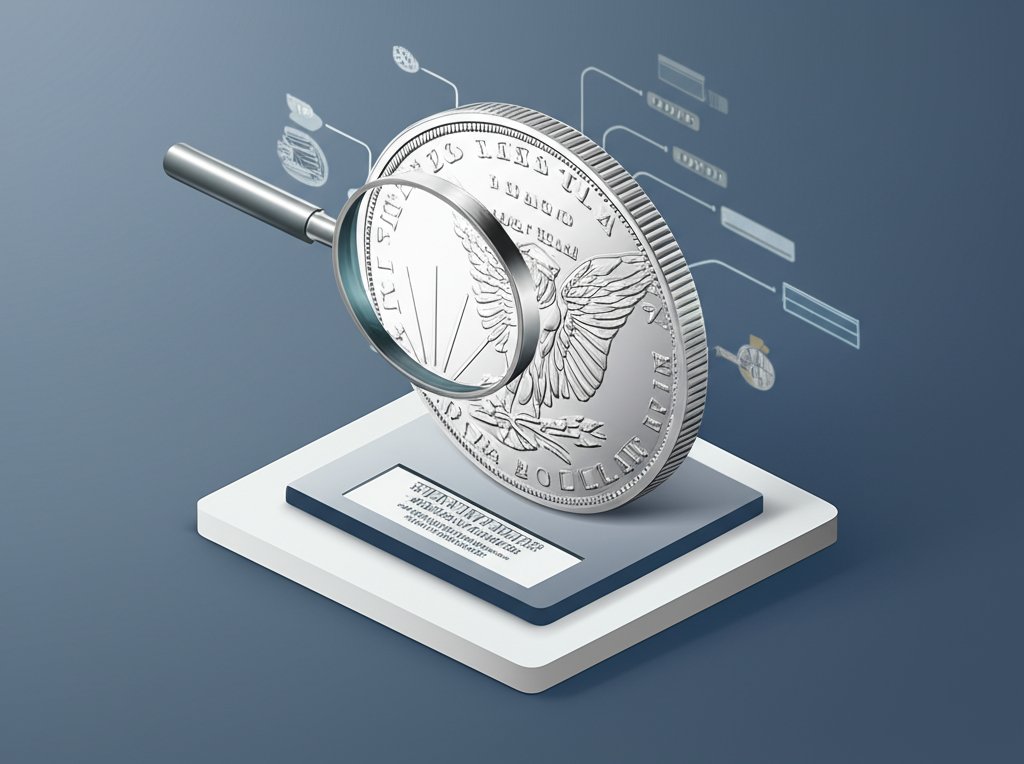
Different series of U.S. silver dollars have distinct silver content, which directly impacts their intrinsic value. Knowing which type you have is the primary key to determining its silver holdings.
Morgan and Peace Silver Dollars (The 90% Standard)
These are arguably the most recognizable and widely collected silver dollars.
- Morgan Silver Dollars (1878-1904, 1921): These classic coins feature Lady Liberty on the obverse and an eagle on the reverse. Each Morgan dollar weighs 26.73 grams and is composed of 90% silver and 10% copper. This composition translates to 0.77344 troy ounces of pure silver.
- Peace Silver Dollars (1921-1935): Introduced to commemorate the end of World War I, Peace dollars share the exact same weight and composition as Morgan dollars. So, a Peace dollar also contains 0.77344 troy ounces of pure silver.
For both Morgan and Peace dollars, their melt value (the value of their silver content) sets a baseline. As of July 3, 2025, with silver trading at $36.78 per ounce, a common Morgan or Peace dollar would have a melt value of approximately $28.46 (0.77344 oz * $36.78/oz). If silver were to rise to $51.57 per ounce (as it did on October 13, 2025, in our example), that melt value would increase to about $39.89. However, even common examples typically trade above their melt value due to collector demand and dealer premiums. Rarer dates, mint marks, or higher grades can push their value into the hundreds or thousands of dollars.
American Silver Eagle (The Pure Bullion Standard)
Introduced much later, the American Silver Eagle (ASE) stands apart as a modern bullion coin.
- American Silver Eagles (1986-Present): These are the official silver bullion coin of the United States. Unlike their historical predecessors, ASEs are minted for their silver content and investment appeal rather than general circulation. Each American Silver Eagle weighs precisely 1 troy ounce (31.103 grams) and is guaranteed to be 99.9% pure silver.
The value of an American Silver Eagle is very directly tied to the current spot price of silver, plus a premium charged by dealers for minting, distribution, and their profit margin. For instance, if silver is at $36.78 per ounce, an ASE might sell for $40-$45, depending on the premium. While some earlier dates or specific finishes (like Proof versions) can carry a higher numismatic premium, the vast majority of ASEs are valued primarily for their exact 1 troy ounce of fine silver.
Early Silver Dollars (Rarity Trumps Melt)
The earliest U.S. silver dollars are generally scarce to exceedingly rare, making their silver content a secondary consideration.
- Flowing Hair Dollars (1794-1795), Draped Bust Dollars (1795-1804), Seated Liberty Dollars (1840-1873): These coins predate the Morgan and Peace dollars and are highly prized by collectors. They also contain 90% silver and 10% copper, similar to later dollars, though their exact weight specifications varied slightly over time. For example, a Seated Liberty dollar (1840-1873) weighs 26.73 grams, yielding 0.77344 troy ounces of silver, just like a Morgan.
However, the sheer rarity and historical significance of these early dollars mean their value is almost entirely driven by numismatic factors – condition, scarcity, and historical appeal – rather than their silver melt value. Even a heavily worn example of an early silver dollar will be worth far more than its silver content.
Eisenhower Dollars (A Modern Twist)
It's important to differentiate later "dollar" coins that are not primarily silver.
- Eisenhower Dollars (1971-1978): These large dollars were produced after silver was removed from circulating coinage. Most Eisenhower dollars found in circulation contain no silver at all. However, special collector versions were minted:
- "Blue Ikes" (1971-1974 S mint mark): These were proof and uncirculated versions packaged in blue envelopes, and they contain 40% silver. Each 40% silver Ike weighs 24.59 grams, yielding 0.3161 troy ounces of pure silver.
- "Brown Ikes" (1973, 1974, 1976 S mint mark): Similar proof and uncirculated versions packaged in brown envelopes, also containing 40% silver.
Identifying these 40% silver Ikes usually involves checking for an "S" mint mark (from San Francisco) and often a slightly different color or luster compared to their base metal counterparts.
Calculating Melt Value: Your First Step
Once you know the silver content of your coin, determining its melt value is a straightforward calculation. This provides a baseline, a minimum value floor for common examples.
Step-by-Step Melt Value Calculation:
- Identify the Coin Type: Determine if it's a Morgan, Peace, American Silver Eagle, or a 40% silver Eisenhower dollar.
- Find the Pure Silver Weight:
- Morgan/Peace: 0.77344 troy ounces
- American Silver Eagle: 1.000 troy ounce
- 40% Silver Eisenhower: 0.3161 troy ounces
- Get the Current Spot Price of Silver: This is crucial and constantly fluctuates. You can find this on financial news sites or precious metals dealer websites.
- Multiply: (Pure Silver Weight in Troy Ounces) × (Current Spot Price per Troy Ounce) = Melt Value.
Example Scenario (using research ground truth):
- Coin: A common 1900 Morgan Silver Dollar.
- Pure Silver Weight: 0.77344 troy ounces.
- Current Spot Price (as of July 3, 2025): $36.78 per troy ounce.
- Melt Value: 0.77344 oz * $36.78/oz = $28.46
- Coin: A common 2020 American Silver Eagle.
- Pure Silver Weight: 1.000 troy ounce.
- Current Spot Price (as of October 13, 2025): $51.57 per troy ounce.
- Melt Value: 1.000 oz * $51.57/oz = $51.57 (plus typical dealer premium).
This melt value represents the absolute minimum that the silver in your coin is worth, assuming it could be melted down. However, for most silver dollars, their true market value is often higher.
When "Melt Value" Isn't the Whole Story
While silver content provides a vital baseline, it's rarely the final word on a silver dollar's value. The world of numismatics introduces factors that can elevate a coin's worth far beyond its intrinsic metal value. For a truly comprehensive understanding of what makes a silver dollar valuable, you need to look beyond the scale and consider what collectors are willing to pay. To dive deeper into these broader valuation principles, you can Learn Silver Dollar Value Factors.
Here's a quick look at how these elements interact with silver content:
Rarity and Mint Marks
Certain dates and mint mark combinations are significantly rarer than others. For example, Carson City (CC) mint mark Morgan dollars are famously desirable and often command substantial premiums. A rare date/mint mark combination can turn a coin with a melt value of $30 into one worth hundreds or even thousands of dollars. In these cases, the silver content is almost incidental; the coin's scarcity is the primary driver of its price.
Condition (Grade)
The state of preservation, or "grade," is paramount. A coin graded "Mint State" (MS-60 and above), meaning it has no wear from circulation, will always be worth significantly more than a heavily circulated coin of the same date and mint mark, even if both have the same silver content. The sharper details, original luster, and lack of damage are highly valued by collectors. Even slight differences in grade can lead to substantial price jumps.
Special Qualities
Beyond standard grading, factors like eye appeal, attractive toning (patina), or special characteristics (e.g., VAM varieties for Morgan dollars) can further enhance a coin's appeal and, consequently, its market value. Conversely, damage like cleaning, scratches, or environmental corrosion can drastically reduce a coin's value, sometimes even below its melt value if the damage is severe.
Practical Playbook for Identifying Silver Content
Knowing the theory is one thing; applying it quickly in the real world is another. Here’s a quick guide to help you identify the silver content of common silver dollars you might encounter:
- Check the Date:
- 1878-1935: Almost certainly a Morgan or Peace silver dollar (90% silver, 0.77344 troy oz).
- 1986-Present: If it's labeled "ONE DOLLAR" and "1 OZ. FINE SILVER," it's an American Silver Eagle (99.9% pure, 1 troy oz).
- 1971-1978 (Eisenhower Dollars):
- No mint mark or "D" mint mark: Probably no silver.
- "S" mint mark: Check if it's a proof or special issue. These can be 40% silver (0.3161 troy oz). They often have a slightly different feel and sound.
- Before 1878 (e.g., Seated Liberty): These are also 90% silver, but their extreme age and rarity mean they are almost certainly numismatic pieces, not just bullion.
- Look for Markings:
- American Silver Eagles: Explicitly state "1 OZ. FINE SILVER" and ".999 FINE" on the reverse.
- Other Dollars: Don't usually have explicit purity markings, relying on historical knowledge.
- Physical Characteristics (for 40% Ikes):
- Weight: 40% silver Ikes weigh 24.59 grams. Non-silver Ikes weigh 22.68 grams. A precise scale can help.
- Rim: The copper-nickel clad layer of non-silver Ikes might show a distinct copper stripe on the edge, which is less pronounced or absent on the 40% silver versions.
- Sound: Tapping a silver coin gently often produces a distinct, higher-pitched "ring" compared to the duller "thud" of a clad coin. This takes practice.
By quickly applying these steps, you can usually determine the likely silver content of a dollar coin within moments.
Quick Answers: Your Silver Dollar FAQs
Collectors often have similar questions about the silver content of these iconic coins. Here are some common clarifications:
What's the difference between "90% silver" and "pure silver" in coin terms?
"90% silver" means the coin is an alloy, 90 parts silver and 10 parts another metal (usually copper), for durability. This is common for circulating coinage like Morgan and Peace dollars. "Pure silver" or "fine silver" refers to silver that is 99.9% (or higher) pure, like in American Silver Eagles, designed for bullion investment and not general circulation.
Do all silver dollars contain silver?
No. While many historical U.S. dollar coins contain silver, modern circulation dollars (like the Susan B. Anthony, Sacagawea, or Presidential dollars) contain no silver. Even among older coins, some special editions of Eisenhower dollars were 40% silver, while their circulation counterparts were not. Always verify the specific type and date.
Can a silver dollar be worth less than its melt value?
Technically, no, if you consider its raw metal content. However, a heavily damaged silver dollar (e.g., deeply scratched, bent, or holed) might trade below its melt value in the numismatic market because collectors don't want it, and a dealer might offer less to account for the effort/cost of melting it or processing it. But the silver itself always retains its melt value.
Is it always better to hold onto a silver dollar for its numismatic value rather than selling it for melt?
Not always, but often. For common date Morgan or Peace dollars in average condition, their value as a collectible (even common ones) usually exceeds their melt value by a small premium. For rarer dates, mint marks, or higher grades, the numismatic value can be many times the melt value. Only consider melting a silver dollar if it's a common date, heavily damaged, and its market price as a collectible is at or below its melt value. Always research its numismatic value first.
How does the price of silver fluctuate, and how often should I check it?
The price of silver is a commodity, traded globally, and can fluctuate daily, even by the minute. Major events, economic news, and market speculation can cause significant swings. If you're looking to buy or sell based on melt value, it's wise to check the current spot price of silver frequently, perhaps even hourly, before making a transaction.
Putting It All Together: Your Silver Dollar Action Plan
Understanding the silver content of your dollar coin is your foundational knowledge. Here’s how to apply it:
- Identify Your Coin: Start by determining if you have a Morgan, Peace, American Silver Eagle, or an early dollar. Be particularly careful with Eisenhower dollars to distinguish between silver and non-silver varieties.
- Calculate Melt Value: Once you know the pure silver content (0.77344 oz, 1 oz, or 0.3161 oz), calculate its melt value using the current spot price of silver. This gives you your minimum expected value.
- Research Numismatic Value: Don't stop at melt value. Even common silver dollars usually trade for a slight premium above their silver content. For any silver dollar, especially older ones, research its potential numismatic value based on its date, mint mark, and condition. Use reputable coin price guides or online resources.
- Consider Your Goals: Are you holding for investment in silver, or do you appreciate the coin's historical and collectible aspects? Your goal will dictate whether you focus on the fluctuating spot price of silver or the more stable (but still variable) numismatic market.
- Seek Expert Opinion: If you have an old, rare-looking, or high-grade silver dollar, consider getting it appraised by a professional numismatist. They can accurately grade the coin and provide a more precise valuation that factors in both its silver content and its collectible appeal.
By following these steps, you'll move beyond simply wondering how much silver is in a silver dollar coin to accurately assessing its true financial potential, whether as a silver asset or a piece of history.