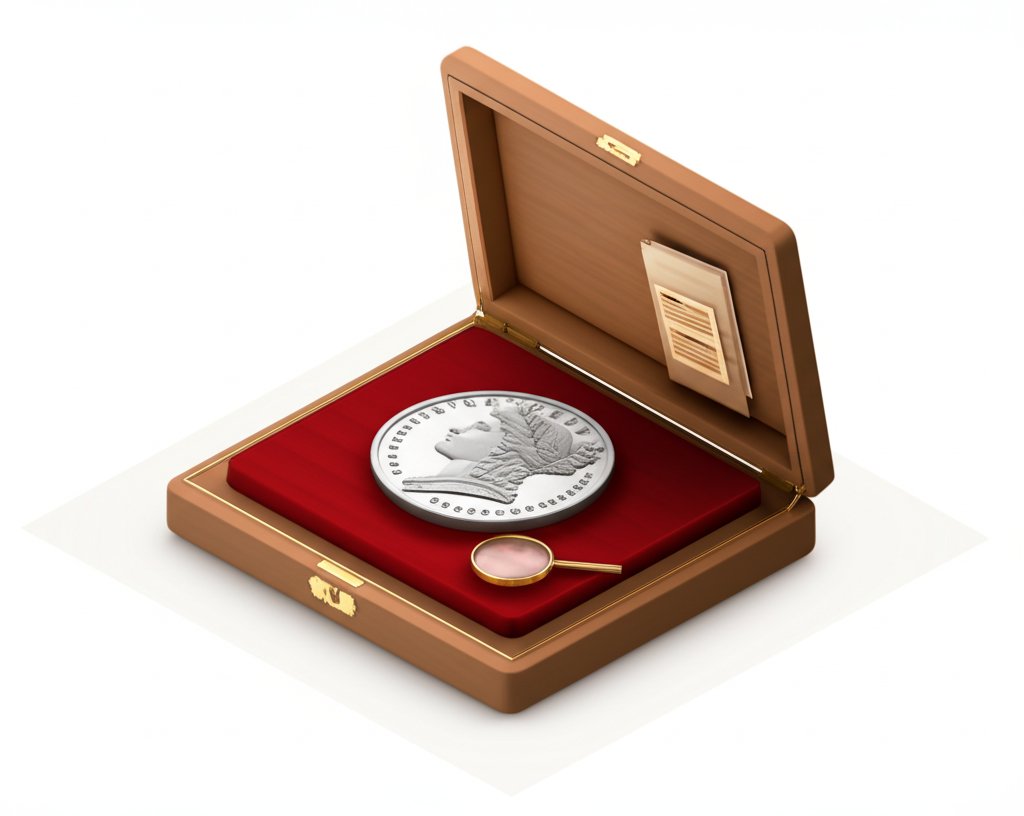
When we talk about "liberty silver dollar value," the conversation quickly shifts from mere metal weight to the fascinating world of numismatics, particularly focusing on the Seated Liberty Dollar. These coins aren't just pieces of silver; they are scarce historical artifacts whose worth is primarily driven by their rarity, condition, and specific characteristics rather than their precious metal content. Unearthing a Liberty Silver Dollar means potentially holding a coin whose value significantly outstrips its melt price, often by hundreds or even thousands of dollars.
At a Glance: Understanding Your Liberty Silver Dollar Value
- Numismatic, Not Bullion: Liberty Silver Dollars are highly collectible; their value is almost entirely numismatic, not based on silver melt price.
- Seated Liberty Focus: The term typically refers to the Seated Liberty Dollar series (1840-1873), the first regularly circulating large US silver dollar.
- Inherent Rarity: Every single issue of the Seated Liberty Dollar is considered rare, even "common" dates.
- Key Value Drivers: Mint mark, date, and condition are paramount, especially for scarce issues like Carson City mints or low-mintage dates.
- Professional Appraisal is Key: Accurate valuation requires expert assessment due to the complexity of rarity and condition nuances.
The Enduring Legacy of the Seated Liberty Dollar
The Seated Liberty Dollar holds a unique place in American coinage. Struck from 1840 to 1873, it was the United States' inaugural regularly circulating silver dollar adhering to the modern, large-sized specifications. Designed by Chief Engraver Christian Gobrecht in the late 1830s, its obverse features a seated figure of Liberty, holding a shield and pole, a motif that resonated with the era's classical artistic preferences.
Over its production run, the Seated Liberty Dollar saw one significant design alteration on its reverse. From 1840 to 1865, the eagle on the reverse flew proudly without a motto. However, following the Civil War, a period of heightened national reflection, the motto "IN GOD WE TRUST" was added above the eagle, appearing on all issues from 1866 until the series concluded in 1873. This subtle change creates distinct varieties that collectors actively seek out, often influencing their respective liberty silver dollar values.
Physically, these dollars shared the robust specifications that would later define other iconic silver dollars like the Morgan and Peace series. Each Seated Liberty Dollar weighs 26.73 grams, measures 38.1 millimeters in diameter, and is composed of 90% silver and 10% copper. This composition translates to a pure silver content of 0.77344 troy ounces, a substantial amount for its time.
Why Liberty Silver Dollar Values Far Exceed Melt
For most Seated Liberty Dollars, discussing their melt value is almost irrelevant. While their silver content means they will always have an intrinsic metallic worth (currently around $21 for 90% silver, depending on spot prices), their numismatic value is overwhelmingly the dominant factor. Unlike common Morgan or Peace Dollars that might trade close to their silver content in lower grades, Seated Liberty Dollars consistently command a significant premium.
This substantial premium stems directly from their inherent scarcity. It's not an exaggeration to say that every issue of the Seated Liberty Dollar is considered rare in the broader context of US coinage. Their relatively low mintages compared to later silver dollars, combined with significant melting events over the centuries, mean that surviving examples are much harder to come by. As a result, even a moderately circulated Seated Liberty Dollar can easily fetch hundreds of dollars, making them highly coveted by collectors and entirely unsuitable for anyone looking purely for a bullion investment.
Decoding Rarity: Key Dates and Mint Marks
Understanding the specific mint mark and date on your Seated Liberty Dollar is the first, crucial step in assessing its potential value. These details unlock its historical context and, more importantly, its rarity profile within the series. Different mints produced vastly different quantities of these coins, and some years saw exceptionally low mintages across all facilities, leading to dramatic fluctuations in liberty silver dollar value.
Here are some of the most sought-after and exceptionally rare dates and mint marks:
- Extremely Low Mintage Dates: All dollars from 1851, 1852, 1854, 1855, and 1858 are considered exceptionally rare across all mints. Finding any of these dates, regardless of mint mark, is a significant event for a collector.
- The Elusive 1866 No Motto: This specific variety, lacking the "IN GOD WE TRUST" motto, is one of the pinnacle rarities of the series. Only two examples are known to exist, and one famously sold for $1,207,500.
- Carson City Mint Issues (CC): Dollars struck at the Carson City Mint (indicated by a "CC" mint mark) are consistently rare and highly desirable. This includes all issues from 1871-CC, 1872-CC, and 1873-CC. Coins from this frontier mint often have a unique charm and story, adding to their allure and value.
- The Scarce 1870-S: The San Francisco Mint's 1870 dollar is another standout rarity that commands substantial prices.
Even "more common" dates within the series, such as the 1871 and 1872 issues from the Philadelphia Mint (which carry no mint mark), are far from inexpensive. In moderately to heavily circulated conditions, these can still sell for $350 to $500. This starkly illustrates that "common" for a Seated Liberty Dollar means "rare and valuable" for most other coin series.
To locate a mint mark, you'll typically look on the reverse side of the coin, usually below the eagle. Philadelphia Mint coins bear no mint mark, while "S" indicates San Francisco, "O" for New Orleans, and "CC" for Carson City. Carefully examining this small detail can be the difference between a nice collectible and a truly extraordinary find.
Condition is King: Grading Your Liberty Silver Dollar
Beyond date and mint mark, the condition, or "grade," of a Seated Liberty Dollar is perhaps the most critical determinant of its final value. Even small differences in wear, surface quality, or strike can lead to monumental price disparities. A coin with sharp details, minimal scratches, and original luster will always fetch a far higher premium than a heavily worn or damaged example of the same date.
Coin grading is a precise discipline, moving through a scale from Poor (P-1) to Perfect Mint State (MS-70). For Seated Liberty Dollars, even grades like Good (G-4) or Very Good (VG-8) can represent significant value due to their inherent rarity. However, as you move into Fine (F-12), Very Fine (VF-20), Extremely Fine (XF-40), About Uncirculated (AU-50+), and especially Mint State (MS-60+), the values can skyrocket. For instance, an uncirculated example of a rare date might be worth ten, fifty, or even a hundred times more than a heavily circulated one.
The nuances of grading include assessing details like the sharpness of Liberty's facial features, the definition of the shield and pole, and the clarity of the eagle's feathers. Collectors meticulously scrutinize these areas, as wear on high points is a tell-tale sign of circulation. It's a field where a truly objective eye and extensive experience are indispensable. If you want to understand more about the universal factors that influence the value of any silver dollar, including how condition is evaluated and why mint marks matter across different series, you can explore the Factors influencing silver dollar value in detail.
Unearthing the Exceptional: Record-Breaking Liberty Dollars
While every Seated Liberty Dollar holds numismatic interest, some examples have achieved legendary status due to their extreme rarity and pristine condition. The aforementioned 1866 Seated Liberty Dollar without the motto "IN GOD WE TRUST" is a prime example. With only two known specimens, its sale for $1,207,500 underscores the upper echelon of liberty silver dollar value. This isn't just about the silver; it's about holding a piece of history that very few others can claim.
Beyond the Seated Liberty series itself, the broader category of "Liberty" themed silver dollars has produced some of the most valuable coins in US history. Take the 1804 Draped Bust Dollar, technically a later strike (from 1834 onwards) but featuring a Liberty design; one sold for $7,680,000. Or the iconic 1794 Flowing Hair Dollar, the very first silver dollar struck by the U.S. Mint, which realized an astonishing $12,000,000. These examples, while not Seated Liberty Dollars, serve to illustrate the potential for monumental value within early American silver coinage featuring the allegorical figure of Liberty. They set a high bar for what a truly rare and historically significant "Liberty" silver dollar can achieve.
Practical Playbook: Valuing Your Seated Liberty Dollar
Accurately determining your Liberty Silver Dollar value requires a methodical approach, balancing careful observation with informed research. Here’s a practical playbook to guide you:
- Identify Date and Mint Mark Precisely:
- Action: Carefully examine your coin under good lighting, perhaps with a magnifier. Identify the year of mintage and any mint mark present (e.g., "S," "O," "CC," or no mark for Philadelphia). Double-check the motto presence (or absence) for 1866 dates.
- Why it matters: This is the foundational step. An incorrect date or missed mint mark can drastically alter your value estimate.
- Assess Condition Conservatively:
- Action: Look for signs of wear on the highest points of the design: Liberty's knee, head, and drapery folds; and the eagle's breast and wing tips. Note any scratches, dents, or cleaning attempts. Be brutally honest in your assessment – most amateur graders overgrade their own coins.
- Why it matters: Condition drives value. A coin in Fine condition might be worth hundreds, while the same coin in Mint State could be worth thousands or tens of thousands.
- Research Comparable Sales and Resources:
- Action: Consult reputable coin pricing guides (e.g., A Guide Book of United States Coins by R.S. Yeoman, often called "The Red Book") or online databases of auction results (e.g., PCGS, NGC price guides). Search specifically for your coin's date, mint mark, and a similar condition.
- Why it matters: Market values fluctuate, and recent sales data provides the most accurate picture. A pricing guide offers a general range, while auction results show what collectors are actually paying.
- Consider Professional Appraisal:
- Action: For any Seated Liberty Dollar suspected of significant value (e.g., hundreds of dollars and up), or if you're unsure of its authenticity or grade, seek out a professional appraisal. A certified numismatist or a reputable coin dealer can provide an expert opinion. For high-value coins, submission to a third-party grading service like PCGS or NGC is highly recommended for authentication and encapsulation.
- Why it matters: Professional appraisal provides confidence, protects against counterfeits, and maximizes your potential return. Their assessment carries weight and is recognized by the collecting community.
Quick Answers: Common Questions on Liberty Silver Dollars
Q: Are all Liberty Silver Dollars valuable?
A: Yes, in a numismatic sense, nearly every Seated Liberty Dollar is valuable. Even the most "common" dates and mints command significant premiums over their silver melt value, often starting in the mid-hundreds of dollars for circulated examples. They are not bullion coins.
Q: What's the difference between a "Liberty Silver Dollar" and a "Morgan Dollar"?
A: "Liberty Silver Dollar" most commonly refers to the Seated Liberty Dollar series (1840-1873), featuring Liberty seated on a rock. A Morgan Dollar (1878-1904, 1921) depicts a different allegorical head of Liberty in profile. They are distinct series from different eras, with different designs, mintage figures, and overall rarity profiles. Seated Liberty Dollars are generally far scarcer and more valuable than most Morgan Dollars.
Q: Can I still find these in circulation today?
A: No. It is extraordinarily unlikely to find a Seated Liberty Dollar in circulation. These coins stopped being minted in 1873, and surviving examples have been carefully preserved by collectors for decades. Any you encounter will almost certainly be from a private collection, an inheritance, or a dealer.
Q: Is a Liberty Silver Dollar a good investment?
A: For serious coin collectors, Seated Liberty Dollars can be excellent investments, appreciating significantly over time due to their inherent rarity and historical appeal. However, they are a numismatic investment, not a bullion investment. Their value is tied to collector demand and rarity, not just the fluctuating price of silver. As with any collectible, market conditions can affect returns.
Your Next Step in Exploring Liberty Silver Dollars
The allure of the Liberty Silver Dollar lies in its rich history and undeniable scarcity. If you suspect you own one, or are considering acquiring one, the journey begins with careful identification and a conservative assessment of its condition. Don't rush into cleaning it or making assumptions about its worth. Instead, leverage reputable resources, compare it to verified sales, and, most importantly, be prepared to consult with a certified professional. Unlocking the true liberty silver dollar value of your coin is a rewarding pursuit that connects you directly to a pivotal era in American monetary history.