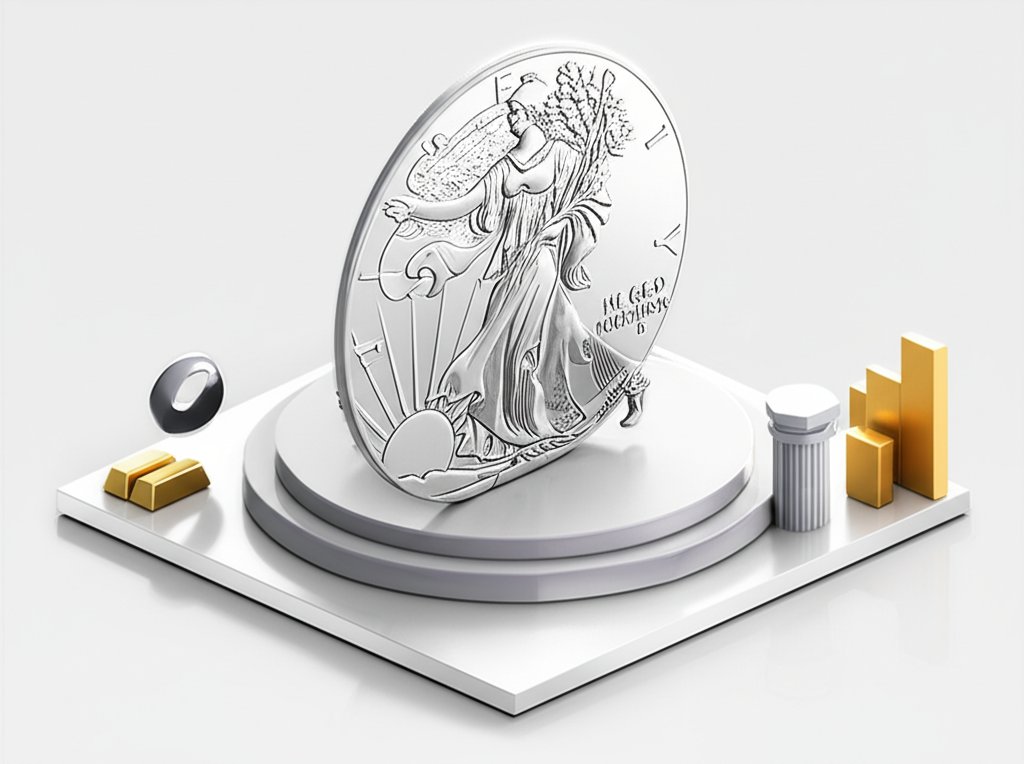
Understanding the true liberty silver dollar worth involves far more than its silver content. These historic coins, minted from 1840 to 1873, are not just precious metal; they are tangible pieces of American history, often commanding significant premiums from collectors. Discerning whether you hold a common piece or a numismatic treasure can mean the difference between a few dollars above melt and a five or even six-figure valuation.
At a Glance: Unlocking Your Liberty Silver Dollar's Value
- Beyond Bullion: Seated Liberty Dollars are primarily numismatic items, meaning their value as collectibles far surpasses their intrinsic silver melt value.
- Key Rarity Factors: Mint marks, specific dates (especially 1851, 1852, 1854, 1855, 1858, 1870-S, and Carson City issues), and the absence of the "IN GOD WE TRUST" motto (for 1866) significantly impact worth.
- Condition is Paramount: Even slight differences in a coin's condition can drastically alter its market price, making professional grading essential for high-value pieces.
- Historical Significance: As the first regularly issued large U.S. silver dollar to modern standards, the series holds a special place in American coinage.
- Expert Appraisal: For an accurate assessment, particularly for potentially rare specimens, consulting a certified numismatist is crucial.
The Legacy of the Seated Liberty Dollar
The Seated Liberty Silver Dollar represents a pivotal moment in American coinage. Introduced in 1840, it was the United States' first regularly circulating large silver dollar, setting the physical standard for future issues like the Morgan and Peace Dollars. Its design, crafted by the U.S. Mint's Chief Engraver in the late 1830s, depicts Liberty seated on a rock, holding a shield and staff, encircled by stars. This imagery resonated with the young nation's ideals, even as its financial landscape evolved.
Throughout its production run until 1873, the Seated Liberty design saw only one major change on the reverse. From 1840 to 1865, the eagle on the reverse appeared without the motto "IN GOD WE TRUST." Following the Civil War, the motto was added above the eagle, appearing on all issues from 1866 until the series concluded in 1873. This seemingly minor alteration creates distinct collecting opportunities and impacts the liberty silver dollar worth significantly for certain dates.
Unpacking the "Worth" Beyond Melt
Physically, a Seated Liberty Dollar contains 0.77344 ounces of pure silver, derived from its 90% silver and 10% copper composition. It weighs 26.73 grams and measures 38.1 millimeters in diameter. While this silver content dictates its baseline melt value—which typically hovers around $21 based on current market prices for 90% silver coins—the numismatic value tells a far more compelling story. For many Seated Liberty Dollars, the collector premium is not just a few extra dollars, but often hundreds, if not thousands, above melt value.
For context, even common dates from the Philadelphia Mint like 1871 and 1872, in merely circulated condition, command prices between $350 and $500. This stark contrast underscores why focusing solely on melt value for these coins misses their primary appeal and true liberty silver dollar worth.
The Rarity Equation: Dates and Mint Marks to Watch
All Seated Liberty Dollars are considered rare to some degree, a testament to their age and the lower mintage figures compared to later series. However, certain dates and mint marks stand out as truly exceptional, pushing their liberty silver dollar worth into extraordinary territory.
- The Elusive Early Dates: Coins from 1851, 1852, 1854, 1855, and 1858 are particularly scarce. Their low original mintages mean very few survived in any condition, making even well-worn examples highly sought after.
- The "No Motto" Anomaly: The 1866 Seated Liberty Dollar without the "IN GOD WE TRUST" motto is one of the series' greatest rarities. While the motto became standard in 1866, a tiny number of coins were struck using the old reverse die. Only two such specimens are known to exist, with one selling for an astonishing $1,207,500. This illustrates how a minute detail can create monumental value.
- Carson City Mint Issues: Coins from the short-lived Carson City Mint (identified by a "CC" mint mark) are consistently desirable across all U.S. coin series. For Seated Liberty Dollars, the 1871-CC, 1872-CC, and 1873-CC issues are prime examples of this desirability, fetching substantial prices. The allure of the "Wild West" mint, coupled with low production numbers, drives their premium.
- The 1870-S: This San Francisco Mint issue is another highlight of the series, prized for its low mintage and relative scarcity, particularly in higher grades.
Even if your coin isn't one of these legendary rarities, knowing its date and mint mark is the first critical step in assessing its potential. Different mints (Philadelphia, San Francisco, Carson City, New Orleans) had varying production levels, directly influencing how common or rare a specific year/mint mark combination might be.
Condition: The Ultimate Value Amplifier
Beyond date and mint mark, a coin's physical condition is arguably the most significant determinant of its liberty silver dollar worth. Coin grading is a specialized field, but even a basic understanding can help you appreciate why two coins of the same date might have vastly different values.
- Circulated vs. Uncirculated: Coins that spent time in circulation (circulated) show wear, losing their original luster and fine details. Uncirculated (or "Mint State") coins, conversely, retain their original brilliance and crisp design elements, commanding significantly higher prices.
- Key Details to Examine: When looking at a Seated Liberty Dollar, pay attention to the definition of Liberty's hair, the folds in her gown, the details on the eagle's feathers, and the sharpness of the stars and lettering. The more detail remaining, the higher the potential grade, and thus, the higher the value.
- Surface Preservation: Scratches, nicks, cleaning, or environmental damage can severely reduce a coin's numismatic value, even if it's a rare date. A cleaned coin, for instance, might appear shiny, but the abrasive process damages the original surface, making it less desirable to serious collectors.
For any Seated Liberty Dollar that appears to be in better-than-average condition, or if it's a known rare date, professional authentication and grading by services like PCGS or NGC is highly recommended. Their impartial assessment provides peace of mind and is often necessary to realize a coin's full market potential.
Expanding Your Knowledge: Beyond the Seated Liberty
While the Seated Liberty Dollar holds a special place, it's one of several iconic U.S. silver dollar designs whose values transcend mere silver content. Other series like the Flowing Hair (1794-1795), Draped Bust (1795-1803), Trade Dollar (1873-1885), Morgan Dollar (1878-1904 & 1921), and Peace Dollar (1921-1928 & 1934-1935) also present incredible numismatic opportunities. Each series has its own unique history, design nuances, and "key dates" that dramatically impact collector desirability. For a broader perspective on the various factors that influence the market for all U.S. silver dollars, you'll find it beneficial to Assess silver dollar value factors. Understanding these overarching principles will deepen your appreciation for how different elements contribute to a coin's ultimate market standing.
Q&A: Common Questions About Liberty Silver Dollars
Q: What is the most valuable Liberty Silver Dollar?
A: The 1866 Seated Liberty Dollar struck without the "IN GOD WE TRUST" motto is the most valuable, with one selling for over $1.2 million. Other top contenders include the extremely rare Carson City issues and very high-grade examples of other scarce dates like the 1870-S.
Q: Are all Seated Liberty Dollars valuable?
A: Yes, all Seated Liberty Dollars are considered numismatically valuable, meaning their worth significantly exceeds their silver melt value. Even common dates in circulated condition typically sell for hundreds of dollars, while rarer dates or higher grades can fetch thousands to hundreds of thousands.
Q: How much silver is in a Seated Liberty Dollar?
A: A Seated Liberty Dollar contains 0.77344 troy ounces of pure silver. Its composition is 90% silver and 10% copper, with a total weight of 26.73 grams.
Q: How do I get my Liberty Silver Dollar appraised?
A: The best way to get an accurate appraisal is to consult a certified coin dealer or professional numismatist. You can find reputable dealers through organizations like the American Numismatic Association (ANA). For potentially high-value coins, consider submitting them to third-party grading services like PCGS (Professional Coin Grading Service) or NGC (Numismatic Guaranty Company) for authentication and grading.
Your Next Steps to Discovering Your Coin's True Worth
Identifying the precise liberty silver dollar worth of your coin is a journey that begins with careful observation and often culminates with expert assessment.
- Identify the Basics: Start by clearly identifying the date and mint mark on your coin. The mint mark (if present) will be on the reverse, below the eagle.
- Assess Initial Condition: Without cleaning it, carefully examine the coin's surfaces for wear, scratches, and overall detail. Compare it to online images of graded examples to get a rough idea of its condition. Remember, even common dates become significantly more valuable in higher, uncirculated grades.
- Research Rarity: Check if your date and mint mark combination falls into the "key date" categories mentioned earlier (e.g., 1851, 1866 no motto, Carson City issues). These are immediate indicators of higher potential value.
- Consult a Professional: For any coin that appears to be a rare date, in excellent condition, or if you're simply unsure, seek out a certified coin dealer. They possess the expertise and resources to accurately identify, grade, and value your Seated Liberty Dollar, helping you maximize its true numismatic worth.
Theliberty silver dollar worthis a captivating blend of history, rarity, and condition. By approaching your coin with knowledge and patience, you're not just evaluating a piece of metal, but uncovering a valuable piece of American heritage.