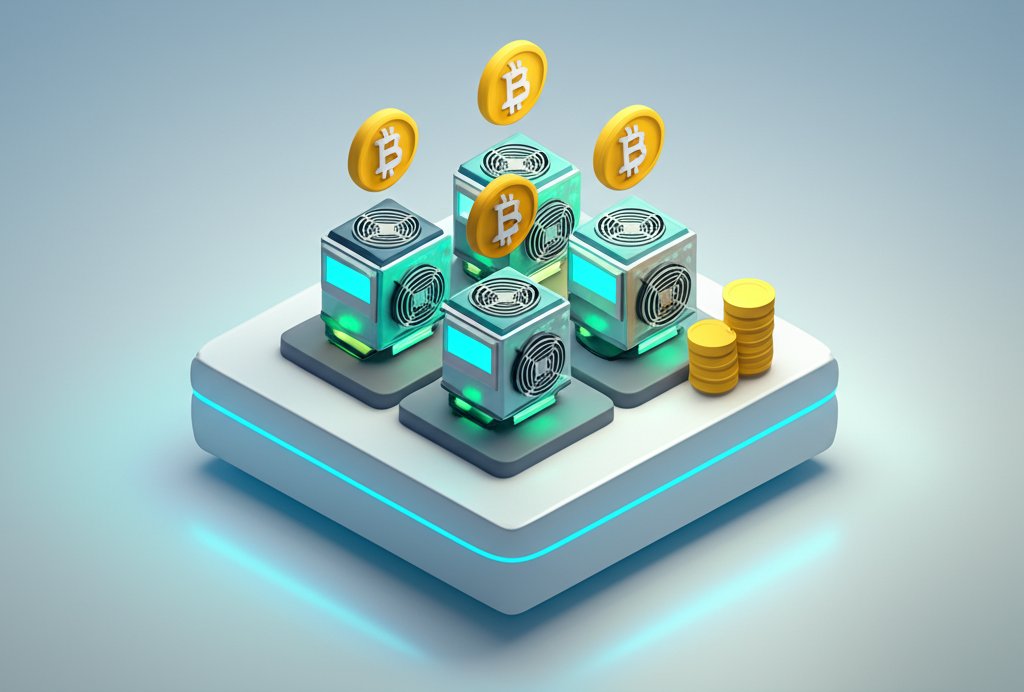
Mining Bitcoin and other cryptocurrencies has become synonymous with massive data centers and industrial-scale operations. But what if you're curious about blockchain technology, eager to understand how it all works, without the hefty investment or the pursuit of significant profit? This is where the world of mini crypto miner devices shines, offering a genuinely fun, low-cost entry point into home blockchain learning and hobbyist exploration. Forget chasing the next big payday; this is about hands-on experience, understanding the mechanics, and maybe even earning a few satoshis along the way.
At a Glance: Your Guide to Home Mini Crypto Mining
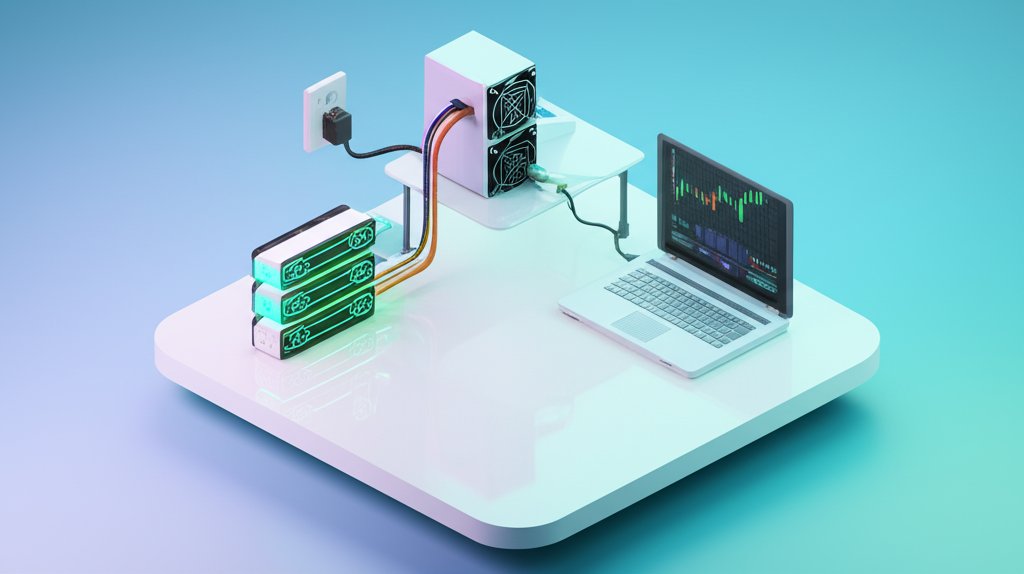
- Hands-on Learning: Discover how blockchain transactions are verified and secured by running your own mini miner.
- Low Entry Barrier: Explore affordable devices designed for minimal power consumption and easy setup.
- Hobbyist Focus: Understand that the primary goal is education and fun, not substantial financial returns.
- Strategic Choices: Learn about solo, pool, and "lottery" mining to match your device and goals.
- Practical Steps: Get a clear walkthrough for choosing, setting up, and monitoring your home mining operation.
- Manage Expectations: Grasp the realities of electricity costs, noise, and the competitive landscape of crypto mining.
Demystifying Home Mining: More Than Just Profit
At its core, crypto mining is the process of verifying transactions on a blockchain by solving complex mathematical problems. A successful miner broadcasts their solution and, if accepted, receives a reward in cryptocurrency. While large-scale operations are laser-focused on maximizing these rewards, the home miner's objective is fundamentally different. For us, it's about education, engaging with technology, and understanding the decentralized nature of cryptocurrencies firsthand.
This shift in focus is crucial. Trying to compete with industrial farms using a home setup for profit is largely unrealistic. Instead, we embrace the learning journey, the satisfaction of contributing to a network, and the sheer novelty of running our own tiny piece of the blockchain.
Understanding Mining Algorithms: SHA256 vs. Scrypt and Beyond
Before diving into specific devices, it's essential to grasp that different cryptocurrencies use different mining algorithms. This dictates which hardware you'll need.
- SHA256: This is the workhorse algorithm for Bitcoin and other coins like DigiByte. It's highly secure but also incredibly competitive, demanding significant computational power. Devices mining SHA256 are often specialized ASICs (Application-Specific Integrated Circuits).
- Scrypt: Used by Litecoin and Dogecoin, Scrypt is generally considered more memory-intensive but less computationally demanding than SHA256, making it somewhat more accessible for home users.
- zkSNARK: Algorithms like zkSNARK, utilized by projects such as Aleo, focus on zero-knowledge proofs, representing newer, more specialized mining opportunities often requiring distinct hardware.
Choosing your algorithm often means choosing the coin you're interested in, which then leads you to the appropriate mining hardware.
Your First Mini Miner: Device Options for Every Home Enthusiast
The landscape of mini crypto miner devices is surprisingly diverse, ranging from simple USB sticks to compact, dedicated ASICs. Each offers a different balance of cost, power, and learning opportunity.
The Ultra-Low Power Lottery Miners: USB & Open-Source Wonders
These devices are the quintessential "mini crypto miner." They consume minimal power, generate negligible heat, and are perfect for lottery mining—a solo mining approach with extremely low odds but equally low operational costs.
- Nerdminer V2 / NM Miner CYD / Lucky Miner LV03: These are prime examples of ultra-low-power lottery miners.
- Nerdminer V2: Often running at around 75 KH/s (kilohashes per second) with a power draw of approximately 1W, this open-source device is a favorite for those wanting to try their luck at solo mining Bitcoin on a shoestring budget. Its appeal lies in its simplicity and the dream of hitting that "block reward lottery."
- NM Miner CYD: Offers a bit more punch at 377 KH/s, still very low power, suitable for the same lottery mining concept.
- Lucky Miner LV03: Similar to the Nerdminer, providing 74 KH/s at 1W, making it another excellent choice for beginner lottery miners.
These are essentially modern-day "digital gold pans," sifting patiently for that infinitesimal chance of a full block reward. - Bitaxe Miners (Open-source): These open-source projects take the mini-miner concept further, offering more hash rate while still being relatively compact and power-efficient compared to full-scale ASICs. They often require a bit more technical tinkering.
- Bitaxe Ultra 204: Delivers around 550 GH/s (gigahashes per second).
- Bitaxe Supra 401: Offers a boost to 733 GH/s.
- Bitaxe Gamma 601: A more powerful option, reaching 1.2 TH/s (terahashes per second).
These devices consume more power than the USB lottery miners but are still modest, making them a step up for those who want a bit more "serious" hashing power for a home setup, perhaps participating in a mining pool.
Compact & Dedicated ASICs: Stepping Up Your Game
When you're ready to commit a bit more power and investment, several compact ASIC miners bridge the gap between hobby devices and industrial machines. They're still small enough for home use but offer significantly higher hash rates.
- Lucky Miners LV06 & LV07: These are more robust SHA256 miners than their LV03 sibling.
- LV06: Provides 500 GH/s, a solid boost for pool mining Bitcoin.
- LV07: Steps up to 1 TH/s, offering even greater potential for consistent, albeit small, payouts from a mining pool.
These are practical options for reliable, low-cost pool mining in a home environment. - Avalon Nano 3S & Mini 3 (Canaan): Canaan, a major ASIC manufacturer, offers some smaller models suitable for home use.
- Avalon Nano 3S: A compact SHA256 miner capable of 6 TH/s at 140W. This offers a noticeable hash rate for its size and power draw, making pool mining a more frequent experience.
- Avalon Mini 3: A more powerful unit, delivering 37.5 TH/s at 800W. Interestingly, this model is marketed with a dual function: a serious home miner that also effectively works as a space heater. This is a great example of repurposing the inevitable heat generated by mining. If you’re exploring devices for maximizing profit, a broader range of options are available, which you can investigate here: Find Most Profitable ASIC Miners.
- FutureBit Apollo BTC: This device is unique, combining a SHA256 miner (3 TH/s) with a full Bitcoin node. Running a full node helps secure the network by validating transactions and blocks, adding an extra layer of contribution and learning beyond just mining.
Altcoin & Niche Miners: Exploring Beyond Bitcoin
Not all mini miners are about Bitcoin. The world of altcoins offers specialized hardware for different algorithms.
- ElphaPex DG Home 1: This is a Scrypt ASIC designed for Litecoin and Dogecoin, delivering 2.1 GH/s at 630W. For those interested in these specific cryptocurrencies, this offers a dedicated, efficient solution for home pool mining.
- IceRiver Aleo AE0: This miner targets the Aleo blockchain, using the zkSNARK algorithm. With a hash rate of 50 Mh/s and 100W power consumption, it's an example of how specialized hardware exists for emerging, privacy-focused cryptocurrencies, catering to a different niche of home miners.
DIY Options: Raspberry Pi + USB Miner
For the truly hands-on learner, pairing a Raspberry Pi with an old USB miner (like a GekkoScience Compac F) can be a low-cost entry point. While the hash rate is extremely low, the educational value of setting up the software, configuring the drivers, and watching it run is immense. This method is often more about the journey of building and configuring than the mining output.
Solo, Pool, or Lottery: Choosing Your Mining Strategy
Once you have a mini crypto miner in mind, your next decision is how you'll participate in the network.
- Solo Mining: You work alone to solve a block. If successful, you receive the entire block reward (e.g., 3.125 BTC in 2025). The catch? With a mini miner, the probability of success is astronomically low. It's essentially winning the jackpot against impossible odds. This is almost exclusively for the dreamers with ultra-low power devices hoping for a "lottery" win.
- Pool Mining: You join a group of miners ("the pool") to combine your computing power. When the pool collectively solves a block, the reward is split proportionally among all participants based on their contributed hash rate. This leads to smaller, but much more frequent and consistent payouts. This is the most practical approach for most compact and dedicated mini ASICs.
- Lottery Mining: This is a variant of solo mining specifically applicable to very low-power devices (like Nerdminers or Lucky Miner LV03). You're solo mining, knowing your chances are minuscule, but the cost of running is so low that it's a fun, nearly free gamble. It's the ultimate hobbyist mining strategy.
Practical Tip: For most mini crypto miners with any noticeable hash rate (e.g., above 1 TH/s), pool mining is the sensible choice for consistent, albeit small, returns. For sub-TH/s USB devices, lottery mining is the fun, low-stakes game.
Setting Up Your Mini Miner: A Practical Walkthrough
Getting your mini crypto miner online is often simpler than you might expect, especially with modern plug-and-play devices.
- Choose Your Device and Coin: Based on your budget, interest, and the algorithm you want to explore, select your miner. For absolute beginners, a Nerdminer V2 or Lucky Miner LV03 is an excellent starting point for lottery mining Bitcoin.
- Power Up & Connect:
- Power: Most mini miners use a standard DC power adapter or even just a USB port. Ensure you have the correct voltage and amperage.
- Network: Many modern mini miners, especially those designed for home use, connect via Wi-Fi. Others might require an Ethernet cable. Follow the device's instructions for connecting to your home network.
- Configure Your Mining Software/Firmware:
- Integrated Web Interface: Many mini miners come with a built-in web interface. You'll access this through your browser by typing the device's IP address (often found via your router's client list or a network scanner).
- Pool Settings: Within this interface, you'll enter the details of your chosen mining pool (e.g., stratum+tcp://us.ss.pool.nicehash.com:3333).
- Wallet Address: You'll also input your cryptocurrency wallet address. This is where your mining rewards will be sent.
- Software (for PC/Raspberry Pi setups): If you're using a PC or Raspberry Pi with a USB miner, you'll typically use software like CGMiner or NiceHash. These programs handle communication with the mining pool and your hardware.
- Start Mining and Monitor: Once configured, your device should start hashing immediately.
- Dashboard: Your mining pool will provide an online dashboard where you can monitor your miner's hash rate, uptime, and estimated earnings.
- Device Status: Most devices also have status lights or a simple display showing their operational state.
Beyond the Device: Software and Environmental Considerations
Running a mini crypto miner also involves a few practical considerations that impact your overall experience.
Software Choices
For more advanced setups or PC-based mining, dedicated software is key:
- CGMiner: A popular, open-source command-line miner that supports various ASICs and FPGAs. It offers extensive control and monitoring.
- NiceHash: A platform that allows you to sell your hash power or direct it to mine the most profitable coin, often paying out in Bitcoin. Many mini miners can easily integrate with NiceHash pools.
Electricity Costs
While a primary benefit of mini miners is their low power consumption, it's still a factor.
- Ultra-low power (1W-5W): These devices might only add a few dollars to your annual electricity bill. For instance, a 1W device running 24/7 uses ~8.76 kWh per year. At $0.15/kWh, that's just $1.31 annually.
- Compact ASICs (100W-800W): These will noticeably increase your bill. An Avalon Nano 3S at 140W uses ~1226 kWh/year, costing around $183 annually at the same rate. An Avalon Mini 3 at 800W would be closer to $1051 annually. Always calculate your local electricity rate against your device's stated power draw to avoid surprises.
Heat and Noise
Mini miners are generally far quieter and cooler than their industrial counterparts, but these factors still exist.
- USB Miners: Virtually silent and generate almost no heat.
- Bitaxe & Lucky Miners (TH/s range): May have small fans, producing a low hum and some localized warmth, similar to a running desktop PC.
- Avalon Mini 3 (800W): While designed to function as a heater, it will certainly generate a noticeable amount of heat and fan noise. Consider its placement carefully.
Expectations vs. Reality: What to Know Before You Plug In
The most important takeaway for anyone entering the mini crypto miner space is to manage expectations.
- Profit is Unlikely: With high network difficulty and the sheer scale of industrial mining, the likelihood of making significant profit from a single, small home miner is extremely low. Even with a compact ASIC, the daily earnings will typically be cents or a few dollars, often not covering electricity if rates are high.
- Focus on Learning: Your real "return on investment" will be the knowledge gained, the satisfaction of contributing to a decentralized network, and the unique experience of running your own mining operation.
- Volatility is Real: Cryptocurrency prices are notoriously volatile. The value of any small earnings you do accumulate can fluctuate wildly.
Case Snippet: The Hobbyist Miner
"Meet Alex, a software engineer who bought a Bitaxe Ultra. He connects it to a mining pool and monitors its performance from his phone. Alex knows he won't get rich, but seeing the hash rate climb, understanding 'shares' from the pool, and occasionally receiving tiny fractions of Bitcoin in his wallet has deepened his understanding of blockchain far more than reading articles ever could. He sees it as a learning tool, a conversation starter, and a tangible connection to a technology he believes in."
Quick Answers: Common Questions About Mini Crypto Miners
Are mini crypto miners profitable?
Generally, no. Mini crypto miners are primarily for learning, hobby, and the remote chance of a lottery win (with ultra-low power devices). The operational costs (electricity) often outweigh the minuscule earnings.
What cryptocurrencies can I mine with a mini miner?
It depends on the miner's algorithm. SHA256 miners (like Bitaxe, Nerdminer, Avalon Nano) mine Bitcoin and similar coins. Scrypt miners (like ElphaPex DG Home 1) mine Litecoin and Dogecoin. Other specialized miners exist for specific algorithms (e.g., IceRiver Aleo AE0 for Aleo's zkSNARK).
How much electricity do mini miners consume?
Very little for lottery miners (e.g., 1W for Nerdminer V2, costing a few dollars per year). More powerful compact ASICs can range from 100W to 800W, which will add a more noticeable amount to your electricity bill (tens to hundreds of dollars annually, depending on your local rates).
Do I need special software to run a mini miner?
Many modern mini miners have integrated firmware accessed via a web interface, simplifying setup. For DIY setups (like Raspberry Pi + USB miner) or more advanced configurations, you might use software like CGMiner or connect to services like NiceHash.
Can I mine Bitcoin solo with a mini miner and realistically expect to find a block?
Theoretically, yes, you can solo mine. Realistically, no, you cannot expect to find a block with a mini miner. The network difficulty for Bitcoin is so high that even powerful compact ASICs have a near-zero chance of solo success. This is why lottery mining is aptly named—it's like buying a lottery ticket.
Your Mini Mining Playbook: Getting Started Today
Ready to dive into the world of home crypto mining? Here’s a quick-start guide:
- Define Your Goal: Are you looking for pure hands-on learning with minimal cost (e.g., Nerdminer, Bitaxe for lottery/small pool mining)? Or a slightly more powerful home ASIC for consistent (but small) pool payouts (e.g., Avalon Nano 3S, Lucky Miner LV07)?
- Select Your Coin & Algorithm: If your goal is to learn Bitcoin, target SHA256 miners. If Litecoin/Dogecoin are your focus, look for Scrypt miners.
- Choose Your Device:
- Ultra-Budget/Lottery: Nerdminer V2, Lucky Miner LV03 (1W)
- Open-Source/Mid-Range Hobby: Bitaxe Ultra/Supra/Gamma (550 GH/s to 1.2 TH/s)
- Compact ASIC/More Consistent Pool Shares: Lucky Miner LV07 (1 TH/s), Avalon Nano 3S (6 TH/s)
- Source Your Device: Check reputable online electronics retailers, cryptocurrency hardware stores, or open-source communities.
- Set Up Your Wallet: Before your miner arrives, set up a secure crypto wallet (e.g., a hardware wallet or a reputable software wallet) for the coin you plan to mine.
- Find a Pool (if not solo mining): Choose a reliable mining pool. Popular options include Slush Pool, F2Pool, and NiceHash.
- Power Up & Configure: Follow the manufacturer's instructions for connecting to power, Wi-Fi, and configuring your pool/wallet settings via the web interface.
- Monitor & Learn: Watch your hash rate, track your shares on the pool dashboard, and observe the fascinating process of blockchain validation.
Embarking on mini crypto mining isn't about getting rich; it's about enriching your understanding. It’s an accessible, tangible way to demystify complex blockchain concepts, turning abstract ideas into a humming, tangible reality in your own home. So, plug in, connect, and enjoy the journey of becoming a hands-on blockchain participant.