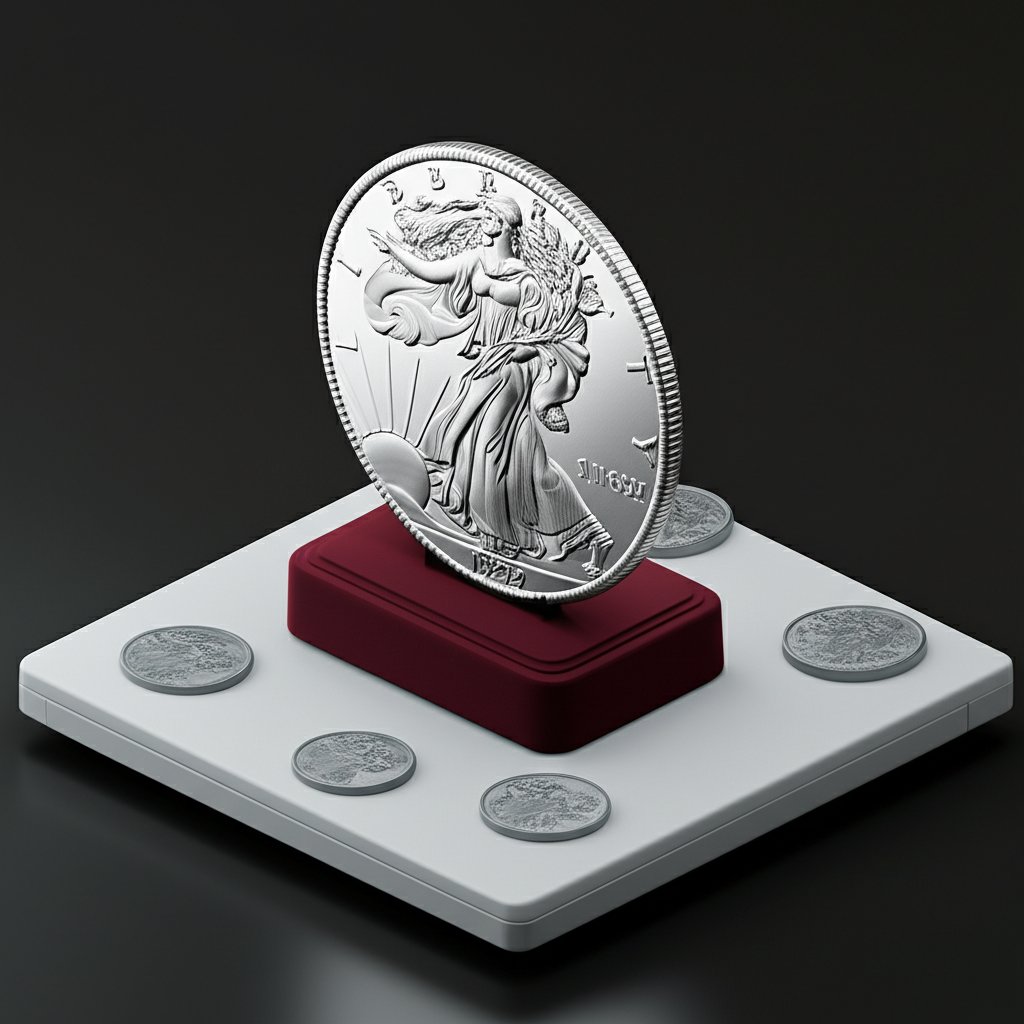
The allure of a silver dollar is undeniable, a tangible piece of history often holding more than just its face value. But understanding the true price of silver dollars today means looking beyond the coin's denomination and diving into a complex interplay of commodity value, rarity, and collector demand. It's not as simple as checking the spot price of silver; a common mistake that can lead you to undervalue a cherished heirloom or overpay for a common piece.
This isn't just about the current market price of silver. It's about discerning what makes a specific silver dollar valuable, whether it's a worn Morgan from the 1800s, a Peace dollar minted post-WWI, or a modern commemorative issue. Each has its own story and its own distinct factors driving its market worth.
At a Glance: What You'll Learn About Silver Dollar Values
- Dual Valuation: How every silver dollar has both a "melt value" (based on its silver content) and a potential "numismatic value" (based on its rarity, condition, and collector demand).
- Key Identification: Which U.S. silver dollars contain actual silver and how much.
- Beyond Spot Price: The multiple factors, including premiums and market sentiment, that influence what you pay or receive.
- Practical Calculation: Step-by-step guidance to estimate your silver dollar's melt value.
- Condition is King: Why a coin's grade can multiply its value far beyond its silver content.
Decoding the Silver in Your Dollar: Purity and Weight
Before we talk about today's price, let's nail down what "silver dollar" truly means in terms of precious metal. Most people think of U.S. silver dollars as the large, iconic coins from pre-1935. These are indeed silver, but not 100% pure.
Historically, U.S. silver dollars (like the Morgan and Peace dollars) minted before 1965 contained 90% silver and 10% copper. This alloy made them more durable for circulation. Modern U.S. dollars, like the Eisenhower dollar or Sacagawea dollar, are clad in copper-nickel and contain no silver for general circulation, though some special collector's editions of Eisenhower dollars were issued in 40% silver.
For the vast majority of collectible silver dollars—specifically Morgan and Peace dollars—you're looking at a standard weight and silver content:
- Gross Weight: Approximately 26.73 grams (or 0.859 troy ounces).
- Pure Silver Content (90%): This means each coin contains roughly 24.057 grams of pure silver.
- Pure Silver in Troy Ounces: 24.057 grams / 31.1035 grams per troy ounce = approximately 0.7735 troy ounces of pure silver.
Understanding that distinction between gross weight and pure silver content in troy ounces is crucial for accurate valuation. If you're dealing with larger quantities of silver or want to understand the fundamental principles behind calculating silver's worth based on its weight, you might find our broader guide on the subject helpful: Calculate 20 pounds silver's worth.
Melt Value: The Foundation of Silver Dollar Worth
The most straightforward way to establish a baseline for the price of silver dollars today is by calculating their "melt value." This is simply the intrinsic value of the silver contained within the coin, determined by its weight, purity, and the current silver spot price.
Let's use a hypothetical silver spot price of $37 per troy ounce (based on mid-2025 estimates from our research context).
Calculating Melt Value Step-by-Step:
- Determine Pure Silver Weight: For a standard 90% U.S. silver dollar, this is approximately 0.7735 troy ounces.
- Find Current Silver Spot Price: Check a reliable source for the live spot price of silver per troy ounce. For our example, we'll use $37.
- Multiply: Pure Silver Weight × Spot Price = Melt Value.
- 0.7735 troy ounces × $37/troy ounce = $28.62
So, at a $37 spot price, a typical 90% U.S. silver dollar has a melt value of approximately $28.62. This is the absolute minimum it should be worth, even if it's heavily worn. Any price below this would indicate a bargain (or a fake, so beware!).
Case Snippet: The Worn Morgan
Imagine you have a very worn 1890 Morgan dollar. It's scratched, dinged, and barely readable. Its numismatic value is minimal. Its price of silver dollars today will primarily be its melt value. If silver is $37/oz, you can confidently estimate its floor at $28.62, plus any small premium a dealer might add for handling "junk silver" (which 90% silver coins are often called when not numismatically valuable).
Beyond Melt: The Numismatic Premium
Here's where the value of a silver dollar can truly skyrocket, making its price of silver dollars today vastly different from its melt value. The "numismatic premium" is the additional value collectors are willing to pay for a coin based on its rarity, historical significance, striking quality, and most importantly, its condition (or "grade").
Even a single point difference in a coin's grade can mean hundreds or thousands of dollars in value. For example, a common date Morgan dollar in "Good" condition might be worth its melt value plus a small premium, perhaps $35-$40. The exact same date and mint mark coin in "Mint State 65" (MS65) or higher could easily fetch several hundred or even thousands of dollars.
What Drives Numismatic Value?
- Rarity: Lower mintages, coins with known errors, or those that survived in small numbers.
- Condition (Grade): This is paramount. Coins are graded on a 70-point scale. Even small imperfections can drastically reduce value.
- "Good" (G): Heavily worn, design outlines visible.
- "Fine" (F): Moderate to considerable wear, major details sharp.
- "Extremely Fine" (EF/XF): Slight wear, nearly all detail present.
- "Uncirculated" (AU/BU/MS): No signs of wear from circulation. MS (Mint State) grades range from MS60 to MS70, indicating increasing perfection.
- Mint Mark: Indicates where the coin was produced (e.g., "O" for New Orleans, "S" for San Francisco, "D" for Denver, no mark for Philadelphia). Some mint marks are rarer for specific years.
- Luster and Toning: Original mint luster is highly prized. Attractive, natural toning (patina) can also add value.
- Demand: Popular series (like Morgan dollars) consistently command higher premiums.
Case Snippet: The Pristine Peace Dollar
Consider a 1921 Peace dollar. The first year of issue, it had a very high relief strike. In average circulated condition, its value might be $50-$70. But find one in MS65, perfectly struck and gleaming, and its price of silver dollars today could easily be in the thousands of dollars, far exceeding its $28.62 melt value.
Factors Affecting the Base Silver Price (Spot Price)
While numismatic value focuses on the coin itself, the melt value component of a silver dollar is directly tied to the global silver spot price. This price is volatile and influenced by several macroeconomic and industry-specific factors:
- Industrial Demand: Silver is a crucial component in electronics, solar panels, medical devices, and other industrial applications. Strong industrial growth drives demand and price.
- Investment Demand: Often considered a "safe-haven asset," silver attracts investors during economic uncertainty, inflation fears, or geopolitical instability. This pushes prices up.
- U.S. Dollar Strength: Silver (and other commodities) are typically priced in U.S. dollars. A stronger dollar makes silver more expensive for buyers using other currencies, potentially dampening demand and lowering its dollar price. Conversely, a weaker dollar can boost silver prices.
- Mining Supply and Production Costs: The amount of silver mined and its cost of extraction directly impacts supply. Discoveries of new deposits or closures of mines can shift prices.
- Economic and Geopolitical Events: Major global events—recessions, wars, pandemics—can cause rapid shifts in both industrial and investment demand, leading to significant price fluctuations. Historically, silver's 25-year range has spanned from lows around $4 per ounce to highs near $49 per ounce, highlighting this volatility.
Understanding these underlying drivers helps you contextualize the melt value component of your silver dollar. When you see the spot price moving, you're seeing these forces at play.
Navigating Premiums, Dealer Spreads, and Transaction Costs
When you buy or sell a silver dollar, you'll rarely transact at the exact spot price. This is due to premiums and dealer spreads, which are essential to how precious metals markets operate.
- Buying Premiums: When you purchase a silver dollar (especially a numismatically valuable one), you'll pay a premium over its melt value. This premium covers:
- Fabrication/Minting Costs: The cost of producing the coin.
- Dealer Overhead: Business expenses, insurance, storage.
- Dealer Profit Margin: How the dealer makes money.
- Rarity/Demand: For numismatic coins, this is the biggest factor. A rare coin will have a much higher premium than a common one, even at the same silver content. Government-minted coins like American Silver Eagles (while not exactly "silver dollars" in the historical sense, they are 1 oz silver coins) typically have higher premiums than privately minted silver rounds or bars.
- Selling (Bid) Price: When you sell a silver dollar, especially to a dealer, they will typically offer you slightly below the current spot price for its silver content (their "bid" price) or significantly less than its potential retail numismatic value. This allows them to make a profit when they resell it. For highly graded, rare coins, dealers will offer a fair price based on market demand, but it will still include their margin.
This bid-ask spread is a normal part of the market. Your goal is to minimize the premium when buying (unless you're buying a rare collector's item where the premium is the value) and maximize the price you receive when selling.
Your Practical Playbook for Valuing Silver Dollars Today
Here’s a step-by-step approach to get a realistic handle on the price of silver dollars today for your coins.
Step 1: Identify Your Coin's Type and Silver Content
- Pre-1965 U.S. Silver Dollars (Morgan, Peace): These are 90% silver, roughly 0.7735 troy ounces of pure silver.
- 1971-1974 Eisenhower Silver Dollars (40% Silver): These were special collector versions, often distinguishable by a "S" mint mark and a slightly different finish. They contain about 0.316 troy ounces of pure silver. Regular Ike dollars are clad and contain no silver.
- Modern American Silver Eagles: While not technically "dollars" in the historical sense, these are 1 troy ounce of .999 pure silver. Their value is largely tied to spot price plus a consistent premium.
- Commemorative Silver Dollars: The U.S. Mint occasionally releases commemorative silver dollars (.900 or .999 fine). Check the mint's specifications for exact silver content.
Action: Physically inspect your coin. Check the date and any mint mark.
Step 2: Calculate the Melt Value (The Floor)
- Find Pure Silver Weight: Use the figures above. For a 90% silver dollar, it's 0.7735 troy ounces.
- Get Live Spot Price: Use a reputable precious metals site (e.g., Kitco, JM Bullion, APMEX) for the real-time silver spot price.
- Multiply:
(Pure Silver Weight in Troy Ounces) * (Current Silver Spot Price per Troy Ounce) = Melt Value.
Action: Do the calculation. This is your baseline.
Step 3: Assess Numismatic Potential (The Upside)
This is the most subjective and impactful step for value beyond melt.
- Identify Date and Mint Mark: Crucial for determining rarity. (e.g., 1893-S Morgan dollar is extremely rare; an 1881-S Morgan is very common).
- Rough Grade Assessment:
- Is it heavily worn? (G, VG, F) – Likely closer to melt value.
- Are details sharp but some wear present? (VF, XF, AU) – Could have a modest premium.
- Does it look like it just came from the mint, with no wear and original luster? (MS) – High potential for significant numismatic value. Do not clean it!
- Consult a Price Guide: Purchase a current copy of "A Guide Book of United States Coins" (the "Red Book") or use online resources like PCGS.com or NGCcoin.com. Look up your coin's date, mint mark, and estimated grade. Compare images to your coin.
Action: Use resources to get a preliminary idea of collector value based on date, mint mark, and condition.
Step 4: Account for Premiums and Market Dynamics
- Buying: Expect to pay 10-30% (or significantly more for rare grades) above melt value for circulated silver dollars from dealers. For specific key dates or high-grade coins, the premium is virtually the entire value.
- Selling: Dealers might offer 5-10% below melt for common, worn silver dollars to account for their profit. For higher-value numismatic coins, they'll offer a percentage of the retail value, allowing for their overhead and profit.
Action: Factor in these typical spreads when considering transactions. If selling a high-value coin, consider getting it professionally graded.
Quick Answers to Common Silver Dollar Questions
Are all U.S. "silver dollars" actually made of silver?
No. While many historical U.S. dollars like the Morgan and Peace dollars are 90% silver, later circulating dollars like the Eisenhower (post-1971), Susan B. Anthony, Sacagawea, and Presidential dollars are clad (copper-nickel) and contain no silver. Only specific collector's versions of the Eisenhower dollar (marked "S" for San Francisco and often in special packaging) contain 40% silver.
What's the difference between melt value and collector value?
Melt value is the intrinsic worth of the pure silver content in the coin, calculated by its weight, purity, and the current spot price of silver. Collector value (or numismatic value) is the additional amount collectors are willing to pay for the coin due to factors like its rarity, historical significance, mint mark, and especially its condition/grade. A coin's collector value can be many times its melt value.
Should I clean my old silver dollar?
Absolutely not. Cleaning a coin, even gently, will almost certainly damage its surface, destroy its original luster, and significantly reduce its numismatic (collector) value. Professional graders can easily detect cleaning, which often results in a lower grade and a much lower selling price. Leave it as is.
Where can I get an accurate grade for my silver dollar?
For truly valuable or potentially valuable silver dollars, professional grading services like the Professional Coin Grading Service (PCGS) or the Numismatic Guaranty Corporation (NGC) are the industry standard. They encapsulate coins in tamper-proof holders with their official grade. This service costs money but is essential for authenticating and maximizing the value of higher-end coins. For more common coins, general assessment using a Red Book or online guides is sufficient.
Why does the price of silver dollars today change so much?
The price fluctuates due to a combination of factors. The underlying spot price of silver is volatile, driven by industrial demand, investment trends (like safe-haven buying), the strength of the U.S. dollar, and global events. Beyond that, the numismatic value can also shift based on collector demand for specific dates or series, the discovery of new hoards, or changes in the popularity of the hobby.
Your Next Steps: Smart Valuation
Understanding the price of silver dollars today means appreciating both their commodity value and their potential as collectible artifacts. Always start by calculating the melt value; this sets your minimum. Then, research the numismatic potential by identifying its date, mint mark, and condition.
For common, circulated silver dollars, the value will likely hover just above their melt price. For rare dates, specific mint marks, or coins in exceptional, uncirculated condition, their value can far exceed their silver content, sometimes by hundreds or even thousands of dollars. Be patient, do your homework, and don't hesitate to consult with reputable coin dealers or professional grading services for expert opinions on potentially valuable pieces. Your silver dollar isn't just a chunk of metal; it's a window into history, and its true worth often lies in that story.