
Understanding the true price silver per pound can feel like deciphering a secret code, especially when you encounter terms like "troy ounce" and "avoirdupois pound." Many assume it’s a straightforward multiplication of the spot price by 16 ounces, only to discover their calculation is significantly off. This isn't just a trivial error; it can impact how you value your silver assets or plan your next investment.
At a Glance: What You'll Master Here
- The Crucial Distinction: Why "troy weight" is different from everyday "standard weight."
- Accurate Calculations: How to correctly calculate the value of silver per standard pound.
- Purity Matters: How silver's fineness directly affects its per-pound value.
- Market Influences: The key factors that drive the fluctuating price of silver.
- Navigating Premiums: Understanding the extra costs (and discounts) when buying or selling physical silver.
- Avoiding Common Pitfalls: Practical tips to ensure your calculations are always spot-on.
Unpacking the Silver Standard: Troy vs. Avoirdupois
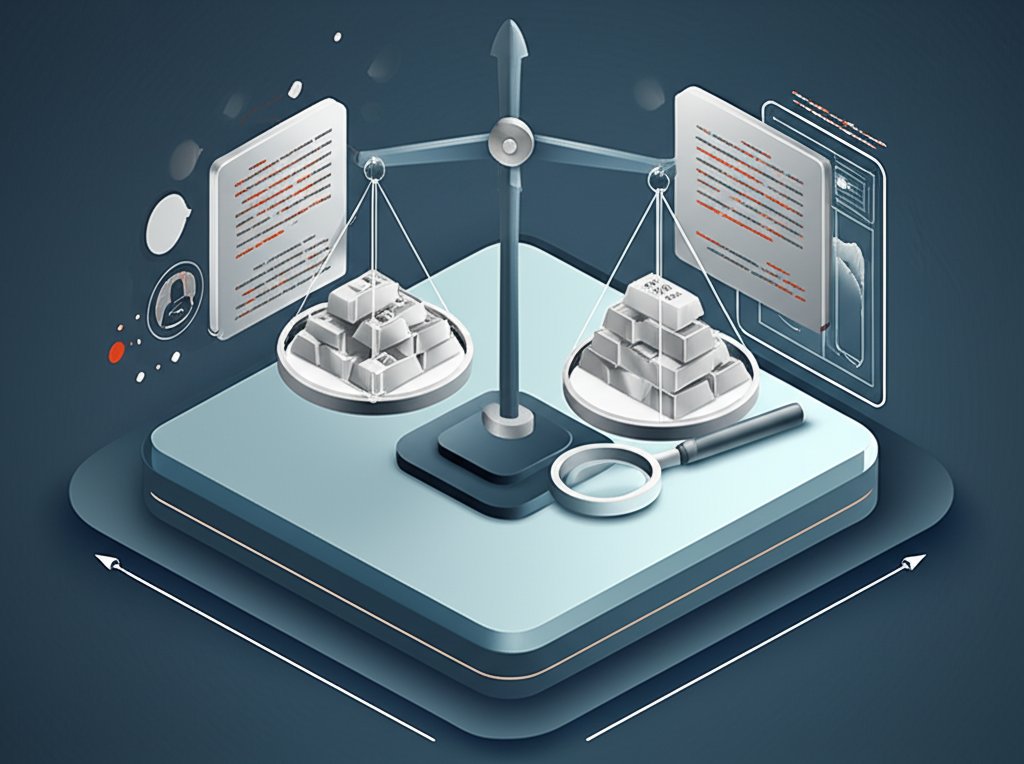
The most significant hurdle in calculating the price silver per pound is understanding the dual systems of weight. Unlike your groceries, precious metals like silver are almost universally measured using the troy weight system, while everyday items use the avoirdupois weight system. Ignoring this distinction leads to the most common—and costly—calculation error.
Think of it like different languages: both use "ounce" and "pound," but they mean different things.
- The Troy Ounce: This is the global standard for precious metals. It weighs approximately 31.1 grams. When you hear the "spot price" of silver, it's always quoted per troy ounce.
- The Standard (Avoirdupois) Ounce: This is what you encounter daily. It weighs about 28.35 grams, making it lighter than a troy ounce.
- The Troy Pound: A less common unit, it contains 12 troy ounces and weighs roughly 373.2 grams.
- The Standard (Avoirdupois) Pound: This is the pound we use for everything else – 16 standard ounces, weighing approximately 453.6 grams.
Here’s the critical takeaway: a standard (avoirdupois) pound of silver does not contain 16 troy ounces. Instead, it contains approximately 14.58 troy ounces. This is the foundational number for accurate calculation.
Deconstructing the Calculation: Your Silver per Pound Formula
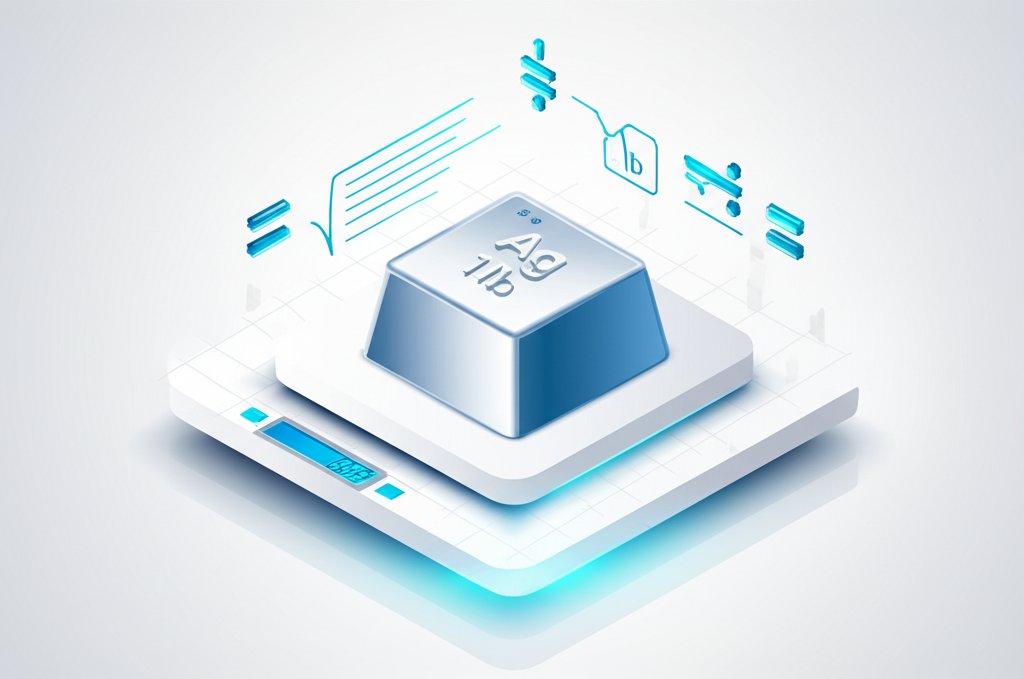
Once you grasp the troy vs. standard pound difference, calculating the price silver per pound becomes straightforward. Let's walk through it with a real-world example, using a hypothetical mid-2025 spot price of $37 per troy ounce.
Step-by-Step for a Standard (Avoirdupois) Pound of Pure Silver
- Identify the Current Spot Price: This is the market value of one troy ounce of pure silver (.999 fineness). For our example, let's use $37 per troy ounce.
- Determine Troy Ounces per Standard Pound: As established, one standard (avoirdupois) pound contains approximately 14.58 troy ounces.
- Perform the Multiplication: Multiply the number of troy ounces in a standard pound by the current spot price.
- Calculation: 14.58 troy ounces × $37/troy ounce ≈ $539.46
- Result: So, one standard pound of pure silver is worth approximately $540.
Common Pitfall: A frequent mistake is to multiply the spot price by 16 (assuming 16 troy ounces in a standard pound). If you did that, your calculation would be 16 × $37 = $592, which is significantly overstating the value.
What About a Troy Pound?
While less common for general inquiries, if you ever encounter a "troy pound" of silver, the calculation is simpler:
- A troy pound contains exactly 12 troy ounces.
- Calculation: 12 troy ounces × $37/troy ounce = $444.
- Result: A troy pound of pure silver would be worth $444.
This distinction is crucial, especially when discussing larger quantities of silver. For broader calculations and context, understanding how these weights scale up is vital, and you can delve deeper into how these calculations apply to larger quantities, like 20 pounds of silver, by checking out our guide on Calculate 20 lbs silver worth.
The Purity Puzzle: Why Fineness Changes the Value
The value we've calculated so far assumes "pure" silver, typically .999 fineness (meaning 99.9% pure silver). However, not all silver is equally pure. The fineness of your silver directly impacts its actual per-pound worth.
Here’s how different purities influence the price silver per pound:
- Fine Silver (.999): This is bullion-grade silver, used in investment bars and rounds. Its value is 100% of the calculated spot price.
- Example: At $37/troy oz, one standard pound of .999 fine silver is worth ~$540.
- Sterling Silver (.925): Commonly found in jewelry, flatware, and decorative items. It contains 92.5% silver and 7.5% other metals (usually copper) for durability.
- Calculation: 0.925 × $540 (value of pure pound) ≈ $499.50
- Result: One standard pound of sterling silver is worth approximately $500.
- Coin Silver (.900 or 90%): Pre-1965 U.S. dimes, quarters, half dollars, and dollars are often referred to as "junk silver" and contain 90% silver and 10% copper.
- Calculation: 0.90 × $540 (value of pure pound) ≈ $486
- Result: One standard pound of 90% silver is worth approximately $486.
Practical Tip: Always verify the fineness of any silver you're assessing. It's usually stamped on bullion, jewelry, or readily available information for coins.
What Drives the Silver Price: Market Dynamics Explained
The price silver per pound isn't static; it fluctuates constantly with market forces. Understanding these drivers helps you anticipate potential movements and make informed decisions. Historically, silver prices have seen significant swings, from lows of around $4 per troy ounce (2001-2002) to peaks near $49 per troy ounce (April 2011). Our current example of $37 per ounce (as of August 2025) sits at the higher end of this historical range, indicating strong market conditions.
Here are the primary factors influencing the spot price:
- Industrial Demand: Silver is an essential industrial metal, used in electronics, solar panels, medical applications, and more. Strong economic growth typically boosts industrial demand, pushing prices up. Conversely, an economic slowdown can reduce demand.
- Investment Demand (Safe-Haven Asset): Like gold, silver is often seen as a "safe-haven" asset during times of economic uncertainty, inflation, or geopolitical instability. When investors seek to preserve wealth, they often flock to precious metals, driving up prices.
- Strength of the U.S. Dollar: Silver (and gold) prices often have an inverse relationship with the U.S. Dollar. A stronger dollar makes silver more expensive for holders of other currencies, potentially dampening demand and pushing prices down. A weaker dollar makes it cheaper, often leading to price increases.
- Mining Costs and Supply Levels: The cost to extract silver from the ground and the overall global supply influence its price. Higher mining costs or dwindling supply can push prices up, while new discoveries or increased production can put downward pressure.
- Global Economic and Geopolitical Events: Major events, from pandemics to wars to significant policy changes, can create uncertainty that prompts investment in safe-haven assets, influencing silver prices.
The Reality of Buying and Selling: Premiums and Spreads
The spot price is the raw market value of silver. However, when you buy physical silver, you'll always pay more than the spot price, and when you sell, you'll generally receive less. This difference accounts for what's known as the "premium" and the "spread."
Understanding Premiums (When Buying)
The premium is the extra cost above the spot price that covers fabrication, distribution, dealer overhead, and profit margins. Premiums vary significantly based on the type of product, its size, and the dealer.
- Government-Minted Coins (e.g., American Silver Eagles, Canadian Silver Maples): These often carry the highest premiums, typically around 20% above spot. This is due to their recognized purity, government backing, security features, and collectors' value.
- Example: If the spot is $37/troy oz, you might pay $44.40 ($37 + 20%) per troy oz for an American Silver Eagle.
- Private Minted Bullion (Generic Silver Rounds, Bars): These include silver bars (e.g., 1 oz, 10 oz, 100 oz) and generic silver rounds produced by private mints. Premiums are generally lower, often around 8% above spot.
- Example: For a 1 oz private silver round at $37/troy oz spot, you might pay $39.96 ($37 + 8%).
- Larger Bars (e.g., 100 oz): Generally, the larger the silver unit, the lower the per-ounce premium. Dealers can process these more efficiently, passing on some savings.
- Rarity and Collectibility: For numismatic coins, the premium can be far higher, based on their rarity, condition, and historical significance, often eclipsing the melt value (the silver content value).
The Bid-Ask Spread (When Selling)
When you sell silver to a dealer, they typically buy it at their "bid" price, which is usually a few percentage points below the current spot price. This difference between the spot price and what a dealer will pay is their margin for holding inventory and managing risk.
- Example: If spot is $37/troy oz, a dealer might offer you $36.00 (a bid price) per troy oz for your silver, while selling it for $39.00 (an ask price) to another customer.
Key Takeaway: Always factor in premiums when calculating your total cost per pound or ounce, and understand the bid-ask spread when evaluating your selling price. Don't mistake the spot price for the actual transaction price.
Practical Playbook: Implementing Your Knowledge
Now that you understand the nuances of the price silver per pound, here’s a playbook for applying this knowledge effectively:
- Always Start with the Spot Price: Check a reputable source (e.g., Kitco, JM Bullion, APMEX) for the real-time spot price of silver (per troy ounce). This is your foundation.
- Convert to Troy Ounces: If you have silver measured in standard pounds, immediately convert it:
Standard Pounds × 14.58 = Total Troy Ounces. - Factor in Purity: Multiply your total troy ounces by the silver's fineness (e.g., 0.999 for fine, 0.925 for sterling, 0.90 for coin silver). This gives you the actual troy ounces of pure silver you possess.
- Calculate Melt Value: Multiply the pure troy ounces by the spot price. This is the intrinsic metal value.
- Account for Premiums/Spreads:
- Buying: Add the applicable premium percentage (e.g., 8-20%) to the melt value.
- Selling: Expect to receive 1-5% below the melt value, depending on the dealer and product.
- Use a Scale: For physical silver, especially if it's not clearly marked bullion, a precise digital scale (that measures in grams or troy ounces) is invaluable for verifying weight.
Case Snippet: Valuing a "Junk Silver" Haul
Imagine you've inherited a box of pre-1965 U.S. quarters, weighing 5 standard pounds in total. The current spot price of silver is $37/troy oz.
- Standard Pounds to Troy Ounces: 5 lbs × 14.58 troy oz/lb = 72.9 troy ounces (gross weight).
- Factor in Purity: Pre-1965 U.S. coins are 90% silver. So, 72.9 troy oz × 0.90 = 65.61 troy ounces (actual pure silver content).
- Calculate Melt Value: 65.61 troy oz × $37/troy oz = $2,427.57.
- Consider Selling: When you sell to a dealer, they might offer you 2-3% below this melt value. So, you might receive around $2,354 – $2,379.
This multi-step approach ensures you arrive at an accurate and realistic valuation.
Quick Answers: Your Silver Price FAQs
Is the price of silver per pound the same everywhere?
The spot price of silver (per troy ounce) is generally uniform across global markets, though slight variations can occur between exchanges. However, the price you pay or receive per pound will vary based on dealer premiums, local taxes, shipping costs, and the specific form/purity of the silver.
Why do some sources list "silver per ounce" and others "silver per troy ounce"?
When discussing precious metals, "ounce" almost always implicitly means "troy ounce." However, some general news outlets or less precise sources might just say "ounce," which can lead to confusion if it's mistaken for a standard avoirdupois ounce. Always assume "troy ounce" for precious metal prices.
How often does the price silver per pound change?
The underlying spot price of silver per troy ounce is constantly fluctuating during market hours, moving second by second. Therefore, the calculated price silver per pound also changes just as frequently.
Is it cheaper to buy silver in larger quantities?
Generally, yes. Larger bullion items (e.g., 100 oz bars) often have a lower premium per troy ounce compared to smaller items (e.g., 1 oz rounds or coins). This is because the fabrication and handling costs are spread across more silver content.
Are there any taxes on buying or selling silver?
Sales tax on precious metals varies by state and country. Some jurisdictions exempt bullion, while others tax it. Capital gains tax may also apply when you sell silver for a profit, depending on your local regulations and holding period. Always check with a tax professional or your local tax authority.
Your Path Forward: Smart Silver Valuations
Navigating the world of precious metals, particularly understanding the true price silver per pound, requires precision and an appreciation for the specific language of the industry. The critical insight lies in recognizing the difference between a standard pound and its equivalent in troy ounces, then factoring in purity and market premiums.
By applying these simple yet crucial principles—starting with the accurate troy ounce conversion (14.58 troy ounces per standard pound), assessing purity, and acknowledging premiums and spreads—you’re well-equipped to calculate the value of your silver holdings with confidence. This knowledge empowers you to make smarter decisions, whether you're buying, selling, or simply inventorying your assets.