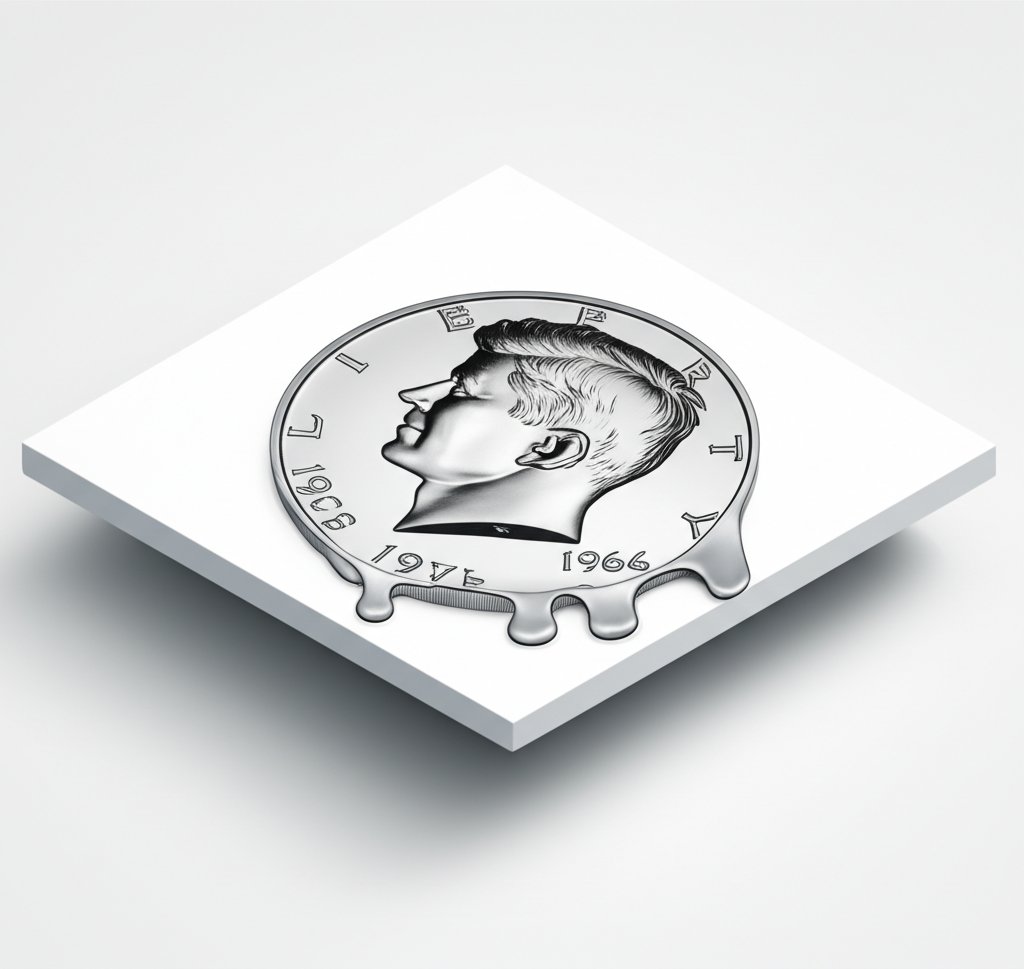
When you hold a 1964 Kennedy half dollar, you're not just holding a piece of pocket change; you're often holding a tangible asset. Many people search for the scrap weight of a 1964 silver dollar, but it's important to clarify from the outset: the common valuable silver coin from 1964 that people refer to is actually the half dollar, not a dollar coin. No regular issue silver dollars were minted for circulation in 1964. This specific half dollar, however, marks a significant moment in U.S. coinage history, being the last regular issue half dollar struck with 90% silver. Its intrinsic value, driven by that silver content, often far exceeds its 50-cent face value, making its "scrap weight" a crucial factor for anyone holding one. Understanding this value requires a bit of knowledge about its metallurgy and the dynamic silver market.
At a Glance: What You'll Learn About Your 1964 Silver Half Dollar
- 90% Silver Content: Discover the exact silver purity and why it matters.
- Precise Silver Weight: Understand its measured 11.4 grams or 0.362 troy ounces of pure silver.
- Melt Value Calculation: Learn the simple formula to determine its intrinsic worth based on current silver prices.
- The 1964 Distinction: See why this year is unique compared to subsequent Kennedy halves.
- Beyond Scrap: Get a quick sense of when numismatic value might outweigh melt value.
- Actionable Steps: Practical guidance to assess your coin's silver value today.
The Last of Its Kind: Why 1964 Kennedy Halves Are Special
The year 1964 stands as a watershed moment for U.S. coinage. It was the final year that circulating dimes, quarters, and half dollars were minted with 90% silver. The Coinage Act of 1792 originally defined the U.S. dollar and its fractional components by a specific weight and purity of silver, establishing a system where a half dollar literally contained half the silver of a dollar. This tradition continued for well over a century and a half.
However, rising silver prices in the early 1960s made the intrinsic value of these coins start to exceed their face value. People began hoarding them, leading to coin shortages. To combat this, the U.S. Treasury transitioned to clad coinage – a layered sandwich of copper and nickel – for dimes and quarters starting in 1965. The Kennedy half dollar, however, received a unique interim treatment: from 1965 to 1970, it was minted with 40% silver, then transitioned to a copper-nickel clad composition from 1971 onward, containing no silver at all. This makes the 1964 Kennedy half dollar a true outlier and a treasure for those seeking silver.
Decoding the Scrap Weight: Silver Content and Purity
When we talk about the scrap weight of a 1964 silver dollar (meaning, the 1964 silver half dollar), we're specifically interested in the pure silver contained within the coin. A standard 1964 Kennedy half dollar has:
- Total Weight: 12.5 grams
- Silver Purity: 90% fine silver
- Copper Content: 10% copper (used to give the coin durability and hardness)
From these figures, we can calculate the exact amount of pure silver.
The Pure Silver Calculation
To find the actual silver weight, we multiply the total weight by the silver purity:
12.5 grams (total weight) * 0.90 (silver purity) = 11.25 grams of pure silver
This translates to approximately 0.3617 troy ounces of pure silver. For practical purposes and common calculations, many refer to it as 0.362 troy ounces. This 0.362 troy ounce figure is the key number you need to remember for determining the coin's melt value.
Calculating the Melt Value: Your Coin's Intrinsic Worth
The "melt value" is simply the worth of the precious metal content if the coin were to be melted down. For your 1964 silver half dollar, this is straightforward once you know the silver weight and the current market price of silver.
The Formula for Melt Value
Here's how to calculate the melt value of your 1964 half dollar:Melt Value = Pure Silver Weight (in troy ounces) × Current Spot Price of Silver (per troy ounce)
Using our established pure silver weight:Melt Value = 0.362 troy ounces × Current Spot Price of Silver
A Practical Example
Let's say the current spot price of silver is $25.00 per troy ounce.Melt Value = 0.362 troy ounces × $25.00/troy ounce = $9.05
This means that, at a silver spot price of $25.00, your 1964 Kennedy half dollar is intrinsically worth $9.05, regardless of its face value. This represents a significant premium over its 50-cent denomination, highlighting why these coins are sought after by silver stackers and investors. You can see how the melt value of these pre-1964 silver half dollars far surpasses that of modern, non-silver versions, by more than 40 times in many cases.
Monitoring Silver Spot Prices: A Dynamic Value
The value of your 1964 half dollar is directly tied to the fluctuating global market price of silver. This price changes constantly throughout the trading day.
Where to Check Silver Prices
- Financial News Websites: Major financial news outlets (e.g., Bloomberg, Reuters, Kitco, CNN Money, Wall Street Journal) typically have live precious metals tickers.
- Precious Metal Dealers: Many online bullion dealers display current spot prices prominently on their websites.
- Coin Dealer Websites: Reputable coin dealers often provide real-time or frequently updated precious metals prices.
When checking, ensure you are looking at the "spot price" for silver, usually quoted per troy ounce. Some sites might list "bid" and "ask" prices; the spot price is generally what you're interested in for a quick melt value estimate.
Beyond the Melt: When to Look for Numismatic Value
While the silver content drives the base value of a 1964 half dollar, some coins can be worth significantly more than their melt value due to their condition, rarity, or specific minting characteristics. This is where numismatic value comes into play.
- Condition (Grade): Coins in uncirculated or exceptionally high grades, especially those with strong luster and minimal wear, can command a premium from collectors. Professional grading services like PCGS or NGC assign numerical grades that heavily influence a coin's numismatic value.
- Errors and Varieties: Occasionally, minting errors (e.g., double dies, off-center strikes, planchet errors) or specific die varieties can make a coin rare and highly desirable to collectors. The 1964 Kennedy half dollar has known varieties, though major errors are less common than for some other series.
- Proof Coins: Some 1964 Kennedy half dollars were issued as proof coins, characterized by a mirror-like finish and sharp details. These were sold directly to collectors and typically carry a higher premium than their circulating counterparts, even in similar condition.
If you believe your 1964 half dollar might be in exceptional condition or possess a rare characteristic, it's always wise to consult a professional numismatist or experienced coin dealer before considering selling it based solely on its melt value. For a deeper dive into identifying valuable half dollars beyond their silver content, you might want to learn how to Determine half dollar value through other factors like rarity and condition.
Your Practical Playbook: Assessing Your 1964 Silver Half Dollar
Here's a step-by-step guide to determine the silver value of your 1964 half dollar and decide your next move.
Step 1: Verify the Year
This might seem obvious, but it's crucial. Only 1964 Kennedy half dollars contain 90% silver. Kennedy halves from 1965-1970 contain 40% silver, and those from 1971 onward contain no silver. Always double-check the date on the coin.
Step 2: Confirm Authenticity (Visual Inspection)
While counterfeits of common 90% silver coins are less prevalent than for rare coins or bullion, a quick visual check can offer reassurance. Genuine 1964 half dollars should have the expected weight (12.5 grams total), diameter (30.6 mm), and thickness (2.15 mm). The reeded edge should be uniform. A tell-tale sign of a non-silver half dollar is a visible copper stripe on the edge for clad coins (1971+), which will not be present on a 1964 coin. The 40% silver coins (1965-1970) have a different "look" to their edge, appearing less bright and with a slightly duller gray color than the 90% silver coins.
Step 3: Weigh Your Coin (Optional but Recommended for Bulk)
If you have multiple 1964 half dollars or want to be absolutely precise, using a digital scale that measures in grams or troy ounces is beneficial. A 90% silver 1964 half dollar should weigh approximately 12.5 grams (gross weight). If it deviates significantly (e.g., 11.3 grams for a 40% silver or 11.0 grams for a modern clad), you might have misidentified the coin or have one that's heavily worn.
Step 4: Check the Current Silver Spot Price
Before making any decisions, get an up-to-the-minute silver spot price from a reliable source. Remember, this price can change rapidly.
Step 5: Calculate the Melt Value
Multiply the pure silver content (0.362 troy ounces) by the current spot price. This gives you a baseline for your coin's intrinsic worth.
Step 6: Assess for Numismatic Potential
- Is it in exceptional condition? Look for strong luster, no scratches, dents, or signs of wear on the high points of the design.
- Does it have a "D" mint mark? 1964 Kennedy halves were minted in Philadelphia (no mint mark) and Denver (D mint mark). Both are common, but slight differences in mintage numbers can sometimes affect value.
- Is it a Proof coin? Proof coins have a mirror-like field and frosted devices. They were not intended for circulation. These usually have higher premiums.
If you suspect your coin has numismatic value, get a second opinion from a reputable coin dealer or consider professional grading.
Step 7: Make an Informed Decision
Based on the melt value and any potential numismatic premium, you can decide whether to:
- Hold it: If you believe silver prices will rise or if you're collecting.
- Sell for melt value: To a precious metals dealer, coin shop, or online buyer specializing in "junk silver."
- Sell for numismatic value: To a collector or a dealer specializing in graded coins.
Quick Answers: Common Questions About the 1964 Silver Half Dollar
Is a 1964 half dollar always worth more than face value?
Yes, due to its 90% silver content, a 1964 Kennedy half dollar's melt value is consistently many times its 50-cent face value, even with low silver prices.
How much silver is in a 1964 silver dollar?
This is a common phrasing, but as clarified, the valuable silver coin from 1964 is the half dollar. A 1964 Kennedy half dollar contains 0.362 troy ounces (or 11.25 grams) of pure silver. There were no circulating U.S. silver dollar coins issued in 1964.
What's the difference between scrap value and collector value?
Scrap value (or melt value) is the intrinsic worth of the precious metal content of the coin. Collector value (or numismatic value) is determined by factors like rarity, condition, demand, historical significance, and minting errors, and can often be significantly higher than the melt value, especially for rare or high-grade coins.
Where can I check current silver prices?
Reliable sources include major financial news websites (e.g., Kitco, Bloomberg), online bullion dealers, and specialized precious metal market trackers. Always look for the "spot price" of silver per troy ounce.
Are all 1964 Kennedy halves 90% silver?
Yes, all U.S. Kennedy half dollars minted for circulation or as proofs in 1964 contain 90% silver. This is a defining characteristic for that specific year. However, note that 1965-1970 Kennedy halves contain 40% silver, and 1971-present contain no silver.
Your Next Move: Maximize Your Silver's Potential
Understanding the scrap weight of a 1964 silver dollar (specifically, the half dollar) is your first step toward making an informed decision about your coin. You now know that your 1964 Kennedy half dollar contains a significant amount of pure silver—0.362 troy ounces—making its melt value a reliable baseline for its worth.
Before you sell, take a moment to:
- Confirm the year: Absolutely ensure it's a 1964 half dollar.
- Check current silver prices: Get the latest spot price.
- Perform the melt value calculation: This gives you a concrete dollar figure.
- Consider numismatic potential: Does it look exceptional, or could it be a rare variety? If so, get an expert opinion.
Armed with this knowledge, you can confidently evaluate your 1964 silver half dollar, whether you're looking to sell it for its precious metal content, add it to a collection, or simply appreciate it as a valuable piece of American history.