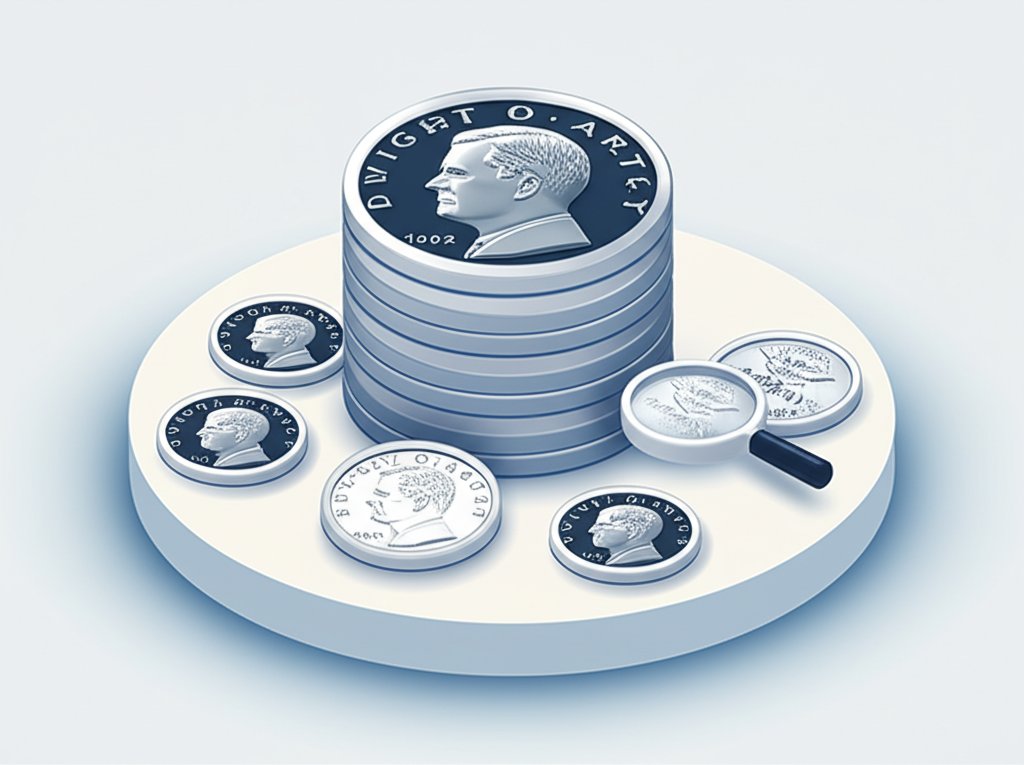
If you're sifting through a forgotten coin jar or inheriting a collection, the glint of an old dollar coin can instantly spark the question: "Is this one of those silver coins worth money?" For Eisenhower dollars, often affectionately called "Ike Dols," the answer is a fascinating mix of yes, no, and "it depends." While the majority of these large, majestic coins are common clad copper-nickel, a select few are indeed minted with a precious 40% silver content, making them highly sought after by collectors and valuable beyond their face value. Unearthing these silver treasures requires a keen eye and a bit of specific knowledge, but it's a rewarding hunt.
At a Glance: Spotting Silver Eisenhower Dollars
- Dates Matter Most: Only 1971-1976 Eisenhower dollars can be silver. 1977 and 1978 are never silver.
- Mint Mark is Key: Look for an "S" mint mark (San Francisco) above the date on the obverse.
- Special Editions Only: Silver Ikes were struck only as proof or uncirculated coins, typically sold in special packaging by the U.S. Mint.
- "Bicentennial" Nuance: Bicentennial (1776-1976) silver Ikes also have the "S" mint mark and were special issues.
- 40% Silver Content: Unlike older 90% silver coins, these contain 40% silver, influencing their weight and appearance.
- Beyond Silver: Even non-silver (clad) Eisenhower dollars can be valuable if they're in extremely high grades or rare varieties.
The Eisenhower Dollar Story: More Than Just a Dollar
Minted from 1971 to 1978, the Eisenhower dollar was the last large-sized dollar coin intended for general circulation in the United States. Designed by Chief Engraver Frank Gasparro, its obverse features a dignified portrait of President Dwight D. Eisenhower, while the reverse depicts an eagle landing on the moon, inspired by the Apollo 11 mission patch. Despite their striking appearance, these hefty coins never truly caught on in everyday commerce, finding their primary use in places like Las Vegas casinos.
The vast majority of Eisenhower dollars you'll encounter are composed of a copper-nickel alloy, often referred to as "clad." These common pieces, while historically interesting, usually hold little value beyond their face value unless they're in exceptionally high uncirculated grades. However, a crucial detail separates the common from the collectible: a select portion of these coins were deliberately minted with a precious metal content, specifically 40% silver. Identifying these silver exceptions is your direct path to finding silver coins worth money within the Eisenhower series.
Unmasking the Silver: Your Step-by-Step Guide to Eisenhower's Precious Few
Knowing which Eisenhower dollars contain silver isn't a guessing game; it follows a clear set of rules established by the U.S. Mint. Let's walk through how to identify these valuable pieces.
Step 1: Check the Date – The Critical First Filter
The very first thing you need to do is examine the date on the coin. This immediately narrows down your search dramatically.
- 1971-1976: These are the only years an Eisenhower dollar can contain 40% silver. If your coin falls within this date range, proceed to the next step.
- 1776-1976 (Bicentennial): This special dual-date coin, celebrating the Bicentennial of American independence, was minted in 1975 and 1976. Some of these are 40% silver, but only specific types (see Step 2 and 3).
- 1977 and 1978: If your Eisenhower dollar is dated 1977 or 1978, you can stop right here. All dollar coins from these two years are made of copper-nickel clad and contain absolutely no silver. They are not silver coins worth money based on metal content.
Step 2: Locate the Mint Mark – The "S" is Your Silver Signal
Once you've confirmed your coin's date is within the potential silver range (1971-1976 or 1776-1976), your next stop is the mint mark. This tiny letter, found above the date on the obverse side of the coin, tells you where it was produced.
- The "S" Mint Mark: For Eisenhower dollars, the "S" mint mark (San Francisco) is your primary indicator for potential silver content.
- 1971-S through 1976-S: These are the specific issues where 40% silver Eisenhower dollars were produced.
- 1776-1976-S (Bicentennial): Bicentennial dollars with an "S" mint mark also have 40% silver variants.
- Other Mint Marks ("D" and no mint mark):
- "D" Mint Mark (Denver): All "D" mint mark Eisenhower dollars are copper-nickel clad and contain no silver.
- No Mint Mark (Philadelphia): Dollars struck at the Philadelphia Mint (which have no mint mark) are also copper-nickel clad and contain no silver.
So, if your coin is dated 1971-1976 (or 1776-1976) and has an "S" mint mark, you're on the right track!
Step 3: Recognize the Finish and Packaging – Proofs and Uncirculated Editions
This is a critical distinction that many novice collectors miss. Not all "S" mint mark Eisenhower dollars from 1971-1976 are silver. The 40% silver versions were produced exclusively as special collector's editions:
- Proof Coins: These are specially struck coins, characterized by highly polished fields (the flat areas) and frosted, sharp details (the raised designs). They often have a mirror-like surface. Proof coins are typically sold by the U.S. Mint in protective plastic cases or sets, not for general circulation. If your "S" mint mark Ike dollar is a proof coin, it's 40% silver.
- Uncirculated Coins (Silver Clad): Often referred to as "Silver Clad" or "Blue Ikes" (due to their original blue packaging) or "Brown Ikes" (due to brown packaging for proofs), these were also special collector's issues. While not as flashy as proofs, they have a sharper strike and better luster than regular circulating coins. They were also sold in special government-issued packaging and were never intended for circulation. If your "S" mint mark Ike dollar is an uncirculated version from these years and was sold as a special issue, it's 40% silver.
The Crucial Takeaway: If you find an Eisenhower dollar with an "S" mint mark in casual circulation, it's highly unlikely to be silver. The silver versions were not released for general use; they were sold directly to collectors. It would be an extreme rarity to find one in pocket change. This brings up an important point for other denominations, too; for example, many people wonder, Are 1970 silver dollars real? The answer there, like for many circulating dollar coins, is often about specific mintages and not about finding silver in a regular coin roll.
Step 4: Understanding the "40% Silver" Composition
The 40% silver content in these Eisenhower dollars is different from the 90% silver found in U.S. coins minted before 1965. This difference impacts their appearance and how they feel.
- What 40% Silver Means: These coins consist of an outer layer that is 80% silver and 20% copper, bonded to an inner core that is 21% silver and 79% copper. The net result is 40% silver and 60% copper.
- Visual Cues: Unlike 90% silver coins which have a solid, uniform silver color on their edge, 40% silver Eisenhower dollars will often show a faint copper line or a slightly different coloration along their reeded edge, though it's less pronounced than the obvious copper stripe on a copper-nickel clad coin. This makes visual identification solely by the edge less reliable for beginners.
- Weight Difference: Silver is denser than copper-nickel.
- A 40% silver Eisenhower dollar weighs approximately 24.59 grams.
- A copper-nickel clad Eisenhower dollar weighs about 22.68 grams.
While this difference is noticeable if you have a known silver one to compare, a precise digital scale is the most accurate way to confirm weight. Don't rely on estimations; use a scale. - The "Ring" Test: Some collectors claim silver coins have a distinct "ring" when gently tapped. While true for 90% silver, the 40% silver content makes the sound less pure and therefore less reliable as a definitive test for Ikes. Avoid dropping coins to test them, as this can cause damage and reduce value.
In summary for identifying silver: Your most reliable method is confirming the date (1971-1976 or 1776-1976), the "S" mint mark, and the coin's proof or special uncirculated finish (often still in its original government packaging).
Beyond Silver: When Clad Eisenhower Dollars Still Hold Value
While the focus here is on silver coins worth money, it's important to acknowledge that not all valuable Eisenhower dollars contain silver. Certain copper-nickel clad Ikes can also fetch significant premiums, especially for collectors seeking rare varieties or exceptionally high-grade examples.
- High-Grade Clad Coins: The U.S. Mint often experienced production difficulties with the large Eisenhower dollars, leading to many coins having nicks, scratches, or weak strikes. As a result, clad Eisenhower dollars in truly pristine, uncirculated condition (graded MS-65 or better by professional grading services) are surprisingly scarce and can be quite valuable. Examples graded MS-68 or higher have been known to trade for over $1,000. These are typically found only in original rolls or mint sets that were carefully preserved.
- Key Varieties: The Eisenhower series also boasts a few notable varieties that add collectible interest and value. The most famous is the 1972 Type 2 "Friendly Eagle" (also known as the "Earth" variety), where the earth in the reverse design appears to have an additional small island off the coast of Florida. This variety is less common and highly sought after by collectors, regardless of its metal content. Keeping an eye out for such nuances can turn a seemingly ordinary clad coin into a valuable find.
Your Practical Playbook for Identifying Silver Ikes
Putting theory into practice means a methodical approach. Here's a quick reference for examining your Eisenhower dollars:
- Segregate by Date: First, pull aside any Eisenhower dollars dated 1977 or 1978. These are definitively not silver.
- Focus on 1971-1976 (and 1776-1976): For these coins, proceed to the next step.
- Check for "S" Mint Mark: Turn the coin over to the obverse (Eisenhower's face). Look above the date for a small "S."
- If no "S" (meaning Philadelphia) or a "D" (meaning Denver), it's a clad coin. Unless it's an exceptionally high grade or a known variety, its value is likely face value.
- If there's an "S" mint mark, continue.
- Evaluate Finish and Origin:
- Is it in original government packaging? (e.g., a plastic proof case, blue envelope for uncirculated, or brown box for silver proofs) – If so, and it's an "S" mint mark from 1971-1976 (or Bicentennial), it's almost certainly 40% silver.
- Is it a dazzling, mirror-like coin with frosted devices (a proof)? If so, and it's an "S" mint mark from 1971-1976 (or Bicentennial), it's 40% silver.
- Is it a circulating coin, dull from wear and tear, or not particularly pristine? Even if it has an "S" mint mark, it's overwhelmingly likely to be a regular copper-nickel clad coin that somehow got mixed in. Silver Ikes were not intended for circulation and would retain their pristine appearance if they were truly silver.
- Confirm Weight (Optional but Recommended): If you believe you have a potential silver "S" mint mark Ike, weigh it with a precise digital scale.
- 40% Silver Ike: ~24.59 grams
- Copper-Nickel Clad Ike: ~22.68 grams
A significant difference confirms your find.
Quick Answers: Dispelling Common Eisenhower Dollar Myths
Are all "S" mint mark Eisenhower dollars silver?
No. While the "S" mint mark is a requirement for silver Eisenhower dollars, it doesn't guarantee silver content. Only "S" mint mark coins issued as proofs or special uncirculated editions from 1971-1976 (including the Bicentennial 1776-1976) contain 40% silver. Many "S" mint mark clad coins were also made for circulation and are not silver.
How can I tell the difference between a 40% silver Ike and a copper-nickel clad one without a scale?
Visually, it can be subtle. The most reliable non-scale indicators are the coin's date (1971-1976 range only), the "S" mint mark, and whether it exhibits the characteristics of a proof coin (mirror fields, frosted devices) or was originally sold in special government packaging as an uncirculated collector's piece. The edge of a 40% silver Ike might show a slightly less prominent copper band than a regular clad coin, but this is not always clear.
Is a 1976 Bicentennial dollar always silver?
No. Just like other Eisenhower dollars, only Bicentennial dollars with an "S" mint mark that were issued as proofs or uncirculated collector editions are 40% silver. Bicentennial dollars from Philadelphia (no mint mark) and Denver ("D" mint mark) are copper-nickel clad.
What's the typical value of a 40% silver Eisenhower dollar?
The value of a 40% silver Eisenhower dollar is primarily tied to the fluctuating price of silver bullion. Beyond that, its value depends on its condition (grade) and any specific varieties. Generally, a raw 40% silver Ike will be worth a few dollars over the current spot price of its silver content. Graded examples in high condition can command higher premiums from collectors.
Is it worth getting a silver Eisenhower dollar professionally graded?
For most individual 40% silver Eisenhower dollars, especially if they are raw (ungraded) and not in exceptional condition, the cost of professional grading might outweigh the potential increase in value. However, if you have a coin that appears to be in incredibly high uncirculated or proof condition, or a known rare variety, grading could be a worthwhile investment to authenticate and establish its market value.
Your Next Steps: Turning Potential into Knowledge (and Value)
Identifying valuable silver coins worth money within the Eisenhower dollar series is a matter of knowing exactly what to look for. Start with the date, confirm the mint mark, and then critically assess the coin's finish and history. If you've found a potential silver Ike:
- Handle with Care: Always hold coins by their edges to avoid transferring oils from your skin, which can damage their surface.
- Verify Weight: If you have access to a precise digital scale, confirm the weight (24.59 grams for 40% silver).
- Research Current Silver Prices: Understand that the base value of your silver Ike will fluctuate with the market price of silver.
- Consider an Expert Opinion: If you believe you have a truly high-grade silver Ike or a rare variety, consult with a reputable coin dealer or professional numismatist for an accurate appraisal. They can help you understand its full market potential beyond just its silver content.
With these steps, you'll be well-equipped to distinguish the truly valuable Eisenhower dollars from their more common counterparts, transforming your casual curiosity into informed collecting.