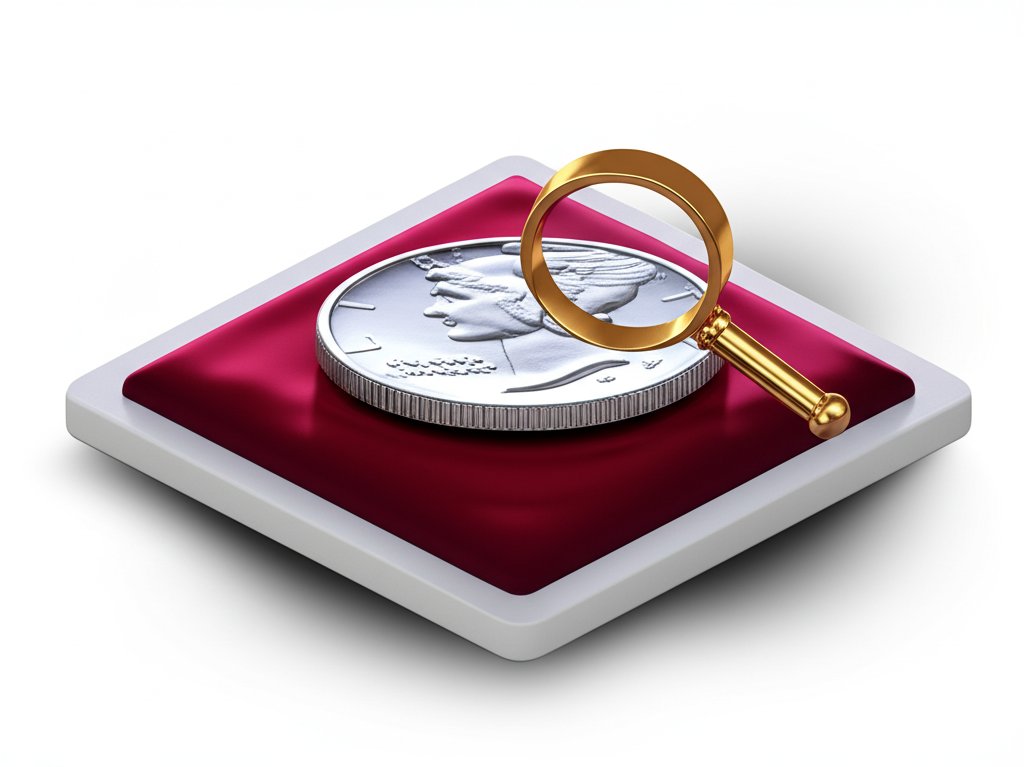
The chime of a silver dime hitting a counter is unmistakable – a crisp, higher-pitched sound compared to its modern clad counterparts. For anyone holding one of these historical coins, the immediate question arises: what is my silver dime price? It’s a question that quickly moves beyond face value, diving into a fascinating world where metal content, market fluctuations, and collector demand all play a role in determining its true worth.
At a Glance: Decoding Your Silver Dime's Worth
- Year Matters Most: Dimes minted in the U.S. before 1965 are 90% silver.
- Melt Value is Key: A dime's primary value often comes from its silver content, tied directly to the live silver spot price.
- Collectible Potential: Rarity, condition, and specific mint marks can push a dime's value significantly above its melt value.
- Weight as a Clue: Silver dimes weigh more than their modern clad equivalents, a useful identification trick.
- Pure Silver Content: Each 90% silver dime contains 0.0723 troy ounces of pure silver.
Unpacking the Silver Dime Price Puzzle

Understanding the value of your silver dime requires looking at two main components: its inherent melt value and its potential numismatic (collector) value. Often, these values are quite different, and knowing which applies to your specific coin is crucial.
The Foundation: Melt Value and Silver Spot Price
At its core, the silver dime price is heavily influenced by the prevailing market price of silver. U.S. dimes minted in 1964 and earlier are composed of 90% silver and 10% copper. This means they are not pure silver, but their silver content is substantial enough to make them valuable.
Each of these 90% silver dimes contains approximately 0.0723 troy ounces of pure silver. To determine its melt value, you simply multiply this constant by the current spot price of silver. For instance, if the live spot price of silver is $53.29 per troy ounce, a single 90% silver dime would have a melt value of roughly $3.8529 (0.0723 oz * $53.29/oz). This price is dynamic and fluctuates with the global silver market, often updating every 15 minutes when the market is open. This is the minimum value you can generally expect for a silver dime, assuming it isn't rare or in exceptional condition.
Beyond Melt: Numismatic Value and Collectibility
While melt value sets a floor for your silver dime's worth, many dimes command a higher silver dime price due to their collectibility. This is where factors like rarity, condition (grade), mint mark, and even errors come into play.
- Rarity: Some years or mint marks are naturally scarcer than others. A lower mintage figure generally translates to higher demand from collectors.
- Condition (Grade): The state of preservation is paramount. A dime with sharp details, original luster, and minimal wear will fetch a far higher price than a heavily circulated, worn-out example, even if both have the same silver content. Coins are graded on a scale, with terms like "Good," "Fine," "Extremely Fine," and "Uncirculated" indicating their condition.
- Mint Marks: A small letter on the coin (like 'D' for Denver or 'S' for San Francisco) indicates where it was minted. Some mint marks for specific years are rarer and more desirable.
- Errors and Varieties: Occasionally, minting errors occur, creating unique and highly sought-after coins. For instance, while generally not silver, accidental 1965 or 1966 dimes struck on silver planchets (intended for 1964) are incredibly valuable anomalies.
Consider a 1964 silver dime. Its melt value might be around $3.85, but if it's in a well-preserved, collectible condition, its market value could easily reach up to $10 or more. The difference often reflects collector interest rather than just the metal's worth. For a deeper dive into these nuances and to understand the frameworks for assessing numismatic potential, consult a comprehensive Silver dime value guide.
Identifying Your Silver Dimes: The Year and Weight Test
Before you can determine the silver dime price, you need to confirm it's actually silver! Here's how to distinguish them:
The "Pre-1965" Rule
This is the golden rule: any U.S. dime minted in 1964 or earlier is 90% silver. This includes Roosevelt dimes (1946-1964), Mercury dimes (1916-1945), and Barber dimes (1892-1916). Dimes minted in 1965 and later are made of a copper-nickel clad composition (a copper core sandwiched between two layers of copper-nickel alloy) and contain no silver, with the rare exception of some silver proof issues or aforementioned error strikes.
The Weight Difference: Silver vs. Clad
If a dime's date is obscured or you want a definitive test, weight is your friend.
- 90% Silver Dimes (e.g., Roosevelt, Mercury): These typically weigh 2.50 grams. (Note: While some sources might cite 2.70 grams, the 2.50-gram standard aligns consistently with the stated 0.0723 troy ounces of pure silver content per dime).
- Clad Dimes (1965 and later): These weigh 2.268 grams.
The difference might seem slight, but with a precise digital scale, it's a clear indicator. You can also look at the coin's edge. Silver dimes will have a solid silver-colored edge, while clad dimes will show a distinctive copper stripe in the middle of their edge.
Practical Playbook for Valuing Your Silver Dimes
Here’s a step-by-step guide to help you determine the silver dime price of your coins:
Step 1: Identify the Year and Type
First, sort your dimes by year. Any dime dated 1964 or earlier automatically qualifies as 90% silver. If you have dimes from 1965 onward, they are generally clad and not silver, unless they are specific silver proofs (often marked with an 'S' mint mark and a shinier finish) or extremely rare error coins.
Step 2: Weigh Your Dime (If Unsure)
If a dime's date is unclear, or if it's a 1965 or 1966 coin you suspect might be an error, use a digital scale accurate to at least two decimal places.
- 2.50 grams: Likely a 90% silver dime.
- 2.268 grams: Definitely a clad (non-silver) dime.
- Also, observe the edge for the tell-tale copper stripe of clad dimes.
Step 3: Calculate Current Melt Value
For your identified silver dimes:
- Find the current spot price of silver online (many financial news sites or precious metals dealers offer live prices).
- Multiply the silver spot price by 0.0723 (the troy ounces of pure silver in one dime).
- Example: If silver is $53.29/oz, then 0.0723 oz/dime * $53.29/oz = $3.8529 per dime.
This gives you a baseline for the silver dime price.
Step 4: Assess Numismatic Potential
This is where you look for value beyond the silver content.
- Examine Condition: Is the coin heavily worn or still sharp with visible details? Original luster can significantly increase value.
- Check for Key Dates/Mint Marks: Certain years or mint marks are scarcer. For example, some Mercury dime dates (like 1916-D, 1921, 1921-D) are highly collectible even in lower grades.
- Look for Errors: While rare, doubling in the legends, re-punched mint marks, or off-center strikes can add significant value.
If you believe you have a dime in exceptional condition or a potentially rare variety, it's wise to consult a detailed coin price guide or even seek an appraisal from a reputable coin dealer.
Case Snippet: A Tale of Two Dimes
Imagine you find two rolls of dimes.
- Roll A: Contains 50 well-circulated 1964 Roosevelt dimes. Each dime's silver dime price will be close to its melt value, perhaps a few cents more from a dealer buying in bulk.
- Roll B: Contains 20 1930s Mercury dimes, some in surprisingly good condition. While many will be valued by melt, you might find a 1931-S or a 1931-D that, even with some wear, holds a premium collector value far exceeding its silver content. One pristine 1938-S in uncirculated condition could be worth many times its melt value. This illustrates why the numismatic assessment is critical.
The "How Many Silver Dimes Make an Ounce?" Question
This is a common question, and understanding the answer helps contextualize the overall silver dime price for bulk holdings. When we talk about "an ounce" in the context of precious metals, we almost always mean a troy ounce of pure silver.
As established, each 90% silver dime contains 0.0723 troy ounces of pure silver. To determine how many dimes are needed to accumulate one troy ounce of pure silver, you perform a simple calculation:
1 troy ounce (pure silver) / 0.0723 troy ounces (pure silver per dime) = approximately 13.83 dimes.
Therefore, you need roughly 14 silver dimes to have one troy ounce of pure silver content. If the spot price of silver is $53.29 per troy ounce, then those 14 dimes combined would have a melt value of approximately $53.79 (14 dimes * $3.8529/dime). This makes silver dimes an accessible way to own fractional amounts of physical silver.
Quick Answers: Your Silver Dime Price FAQs
What year are silver dimes?
U.S. dimes minted in 1964 and earlier contain 90% silver. This includes Roosevelt dimes (1946-1964), Mercury dimes (1916-1945), and Barber dimes (1892-1916). Additionally, special proof dimes from later years can also be 90% silver.
How much is a 1964 silver dime worth?
A 1964 silver dime's value is primarily driven by its silver melt content, which, with silver around $53.29/oz, currently sits at approximately $3.85. However, in collectible conditions, its value can increase, with some examples fetching up to $10 or more depending on grade.
How much does a silver dime weigh?
A 90% silver dime (pre-1965) typically weighs 2.50 grams (approximately 0.088 ounces). For comparison, a modern clad dime weighs 2.268 grams (0.080 ounces), which is a key difference for identification.
Are all pre-1965 dimes silver?
Yes, generally speaking, all U.S. dimes dated 1964 and earlier are composed of 90% silver and 10% copper. There are no known regular issue exceptions for these dates.
How do I sell my silver dimes?
You have a few options for selling:
- Local Coin Dealers: Offer competitive prices, especially for bulk silver or collectible pieces.
- Online Precious Metals Buyers: Many dealers specialize in buying "junk silver" (circulated silver coins whose value is primarily melt).
- Online Marketplaces (e.g., eBay): Good for individual, higher-value collectible dimes, but requires more effort in listing, shipping, and handling.
- Coin Shows: Allows direct interaction with multiple dealers to get competing offers.
Always get a few quotes, especially for coins you suspect might have numismatic value.
Your Next Step for Unlocking Silver Dime Value
The journey from a pocket change find to understanding your silver dime price is both educational and potentially rewarding. Start by systematically identifying your coins by year, then utilize a precise scale for any ambiguous pieces. Once you've confirmed their silver content, calculate their melt value using a live silver spot price. Finally, don't overlook the potential for numismatic value; a quick check for key dates, mint marks, and overall condition can reveal a hidden treasure worth far more than its silver content alone. Whether you're holding a few random finds or a cherished collection, knowing these steps empowers you to accurately assess your silver dimes' true worth.