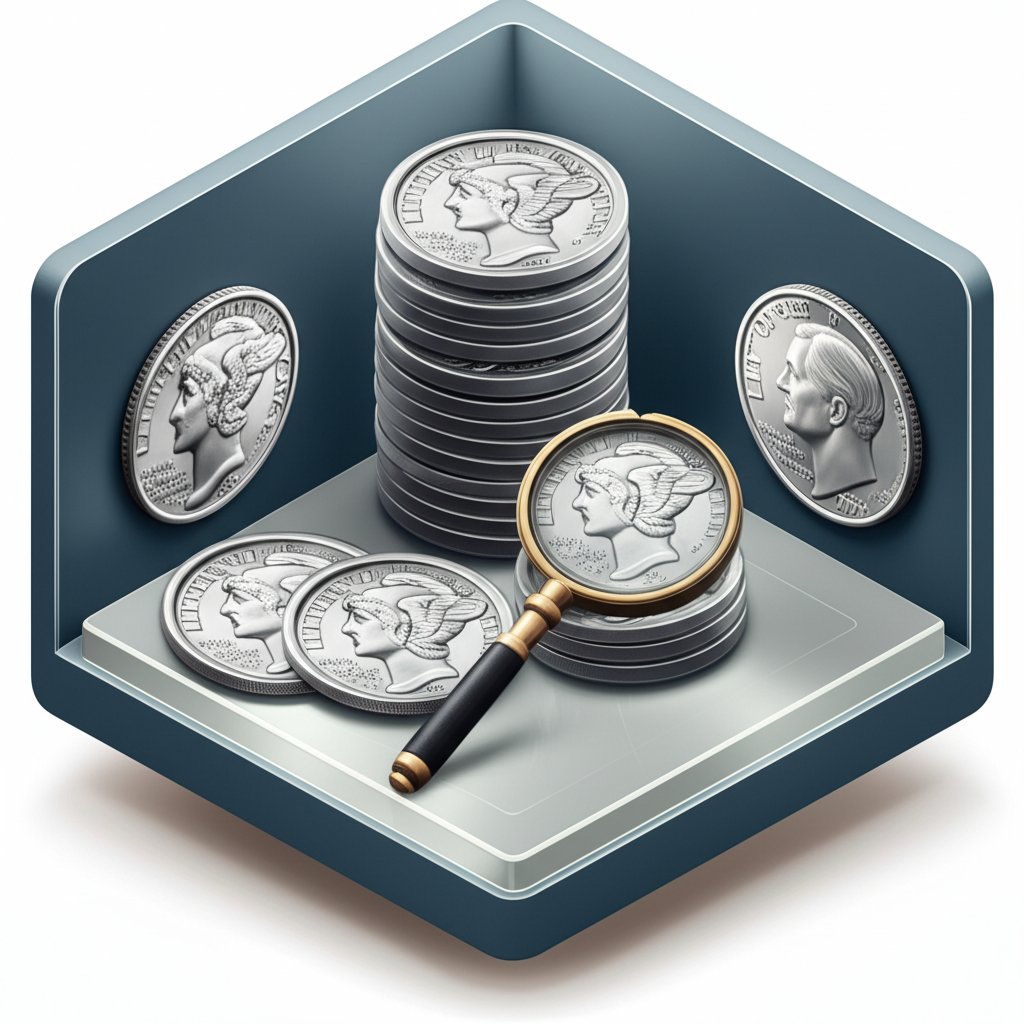
Stumbling upon an old dime can spark a simple question: "Is this just ten cents, or is it worth more?" For many, the answer to "How much are silver dimes worth?" is often surprisingly significant, extending far beyond their humble face value. These small silver discs hold not only intrinsic metal value but also a rich history and collectible appeal that can make certain examples worth hundreds, thousands, or even millions of dollars.
Unlocking the true potential of your silver dime collection—whether it's a handful inherited from a grandparent or a promising find from a coin roll—requires understanding a few key principles. This guide dives deep into identifying, evaluating, and ultimately determining the real worth of these cherished pieces of American numismatic history.
At a Glance: What You'll Learn About Your Silver Dimes
- Identify Silver Dimes Quickly: Learn the crucial visual and physical checks to distinguish silver from clad coins.
- Understand Value Drivers: Discover how melt value, rarity, and condition combine to determine a dime's true worth.
- Key Dates and Mint Marks: Pinpoint the specific examples that command significant premiums.
- Essential Evaluation Tools: Equip yourself with the right instruments for accurate assessment.
- Practical Next Steps: Get clear guidance on how to calculate value, protect your coins, and prepare for potential sale.
The Anatomy of a Silver Dime: A Brief History and Composition
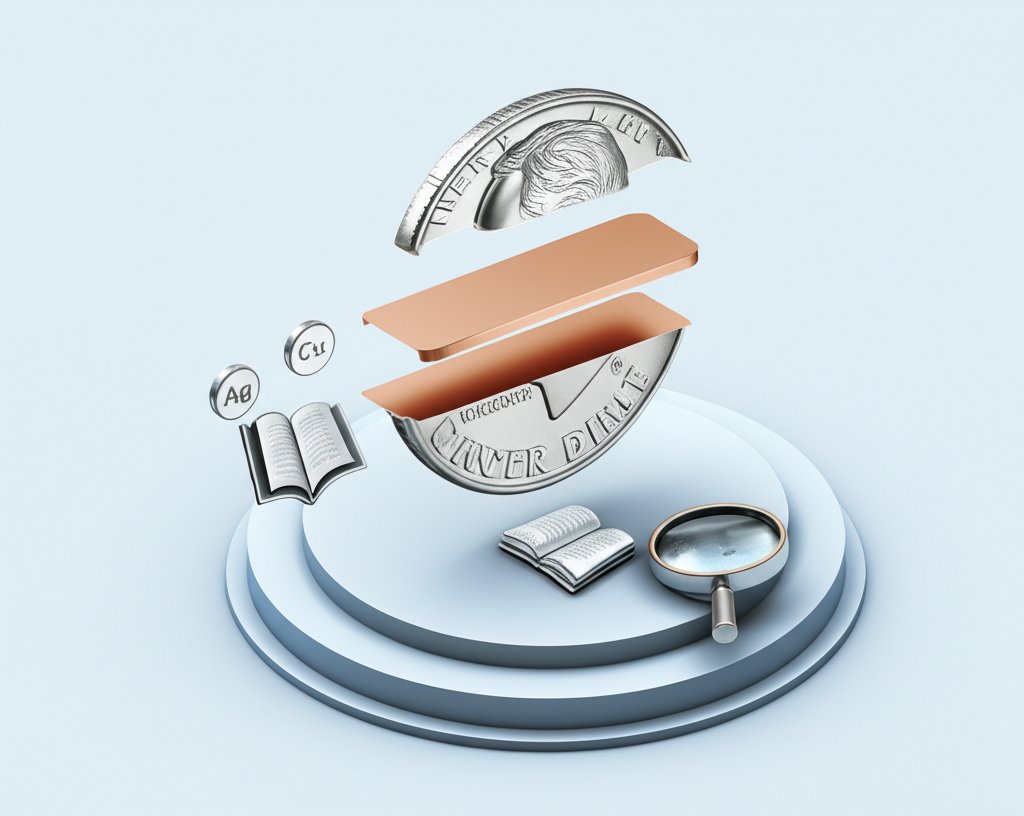
Before diving into value, it's essential to understand what makes a "silver dime" truly silver. From its inception in 1796 until 1964, the U.S. dime was predominantly silver. Specifically, dimes minted up to and including 1964 were composed of 90% silver and 10% copper.
This composition changed abruptly after 1964 due to rising silver prices, transitioning to a "clad" coinage made of a copper core bonded between two layers of copper-nickel. This change effectively marked the end of circulating silver dimes, making all dimes dated 1964 and earlier a potential treasure. Each pre-1965 silver dime weighs 2.5 grams, has a diameter of 17.9 mm, a thickness of 1.35 mm, and contains approximately 0.0723 troy ounces of pure silver.
There are three primary designs for U.S. silver dimes, each with its unique aesthetic and collectible aspects:
- Barber Dime (1892–1916): Designed by Charles E. Barber, these dimes feature a classical Liberty head on the obverse and an eagle on the reverse. They were minted in Philadelphia (no mint mark), Denver (D), New Orleans (O), and San Francisco (S).
- Mercury Dime (1916–1945): Officially known as the "Winged Liberty Head" dime, this elegant coin by Adolph A. Weinman depicts Liberty wearing a winged cap. It's often mistakenly identified as the Roman god Mercury. Mint marks for this series are found on the reverse and include Philadelphia (no mint mark), Denver (D), and San Francisco (S).
- Roosevelt Dime (1946–Present): Designed by John R. Sinnock, this series honors President Franklin D. Roosevelt. Only the Roosevelt dimes minted from 1946 to 1964 contain 90% silver. Their mint marks (P, D, S) are located on the reverse, often near the bottom of the torch.
Understanding these types is your first step in determining how much your silver dimes are worth. Each series has its own set of rare dates and varieties that can significantly influence value beyond just their silver content.
Decoding the Core Value: Silver Content (Melt Value)

At its most fundamental level, the worth of a silver dime is anchored by its melt value—the intrinsic value of the silver it contains. This is often the floor for how much your silver dimes are worth, especially for common dates in circulated condition.
As established, every U.S. silver dime (1964 and earlier) contains approximately 0.0723 troy ounces of pure silver. To calculate its melt value, you simply multiply this constant by the current spot price of silver.
Melt Value Calculation:0.0723 (troy ounces of silver per dime) x Current Silver Spot Price (per troy ounce) = Melt Value per Dime
Example:
If the current market price for silver is $30 per troy ounce:0.0723 oz x $30/oz = $2.169
So, in this scenario, a common silver dime is worth roughly $2.17 based purely on its silver content. This calculation provides a baseline, often referred to as "junk silver" value, particularly for large quantities where rarity or condition aren't factors.
Many coin dealers and collectors often use a shorthand: approximately 14 silver dimes equate to one troy ounce of silver, or "$1.40 in face value of silver dimes equals one troy ounce of silver." This quick calculation is useful for bulk transactions, allowing for rapid estimations when dealing with rolls or bags of silver coinage. Tracking real-time silver prices via financial news sites or bullion dealer websites is essential for an accurate melt value assessment.
Beyond the Melt: Rarity and Condition Drive Premium Value
While melt value provides a floor, the true potential for how much silver dimes are worth often lies in factors like rarity, condition, and unique historical attributes. These elements can elevate a dime's value from a few dollars to thousands, or even millions.
Year and Mint Mark: The Scarcity Factor
The year a dime was minted and the specific mint where it was produced (indicated by a mint mark) are critical in determining its rarity. Some years had significantly lower mintages, while others experienced high demand or specific events that made surviving examples scarce.
Key Dates and Mint Mark Examples:
- 1894-S Barber Dime: This is arguably the most famous and valuable silver dime. Only 24 were originally minted at the San Francisco mint, and only nine are known to exist today. One specimen holds the record for a silver dime at auction, fetching an incredible $2.16 million. This coin's rarity is legendary, making it a pinnacle for collectors.
- 1916-D Mercury Dime: A true "key date" in the Mercury series, only 264,000 of these were minted in Denver. Finding one in any condition is rare, with high-grade examples achieving prices over $207,000 at auction. The 1921-D Mercury Dime is another scarce variety highly sought after by collectors.
- 1949 Roosevelt Dime: While not as rare as the Barber or Mercury key dates, the 1949 Roosevelt dime, particularly those in exceptionally high grades, can command significant premiums. One high-quality specimen graded MS68FB (Mint State 68, Full Bands) set an auction record of $13,200, showcasing that even later silver dimes can be highly valuable when condition is superb.
- Other Noteworthy Barber Dimes: Keep an eye out for 1895-O (New Orleans), 1896-S (San Francisco), and 1904-S (San Francisco) Barber dimes. These dates, too, have low mintages and can be quite valuable.
- 1945-S Micro-S Mercury Dime: This is an example of a variety or "error" coin where the mint mark "S" is unusually small, making it a distinct and collectible variation within the series.
Identifying the year and mint mark is crucial for every silver dime you encounter. A standard 10x jeweler's loupe will be indispensable for clearly reading these small details.
The Art of Preservation: Coin Condition (Grading)
A coin's condition, or "grade," profoundly impacts its market value. A rare coin in poor condition might still be valuable, but the same coin in pristine, uncirculated condition can be worth exponentially more. Coin grading assesses the amount of wear, luster, and detail remaining on the coin's surfaces.
Professional grading services, such as the Professional Coin Grading Service (PCGS) and the Numismatic Guaranty Corporation (NGC), are trusted third parties that authenticate and grade coins, encapsulating them in tamper-evident holders. A coin certified by one of these services typically fetches a higher price due to verified authenticity and grade.
Basic Grading Concepts:
- Good (G) or Fair (F): Significant wear, most details are gone, but date and mint mark are usually visible. Often valued primarily for melt value, unless a key date.
- Very Good (VG) or Fine (F): Moderate wear, some major details are still visible, lettering is clear.
- Extremely Fine (EF or XF): Light wear on the highest points, good detail, and some original luster may be present.
- About Uncirculated (AU): Traces of wear on only the highest points, most original luster intact.
- Uncirculated (Mint State - MS): No trace of wear, full original luster. Graded on a scale from MS60 to MS70 (MS70 being perfect).
- "Full Bands" (FB) or "Full Split Bands" (FSB): For Mercury and Roosevelt dimes, this designation signifies that the horizontal bands on the fasces (Mercury dime reverse) or the torch (Roosevelt dime reverse) are clearly separated and fully defined. This is a premium attribute that can significantly increase value, as seen with the 1949 Roosevelt Dime MS68FB mentioned earlier.
Learning to appreciate subtle differences in wear and luster will help you understand why two dimes of the same date and mint mark can have vastly different values.
Unconventional Finds: Errors and Historical Significance
Beyond standard rarity and condition, certain anomalies can transform an ordinary dime into a highly valuable collectible.
- Error Coins: These are coins that exhibit mistakes during the minting process. Examples include off-center strikes, double dies (where the design is impressed twice), re-punched mint marks, or planchet errors (issues with the blank coin itself). The 1945-S "Micro-S" Mercury dime, where the mint mark is unusually small, is a well-known variety that commands premium prices. Identifying legitimate errors often requires specialized knowledge and careful examination.
- Historical Significance: While less common for dimes than for earlier, larger coinage, a coin tied to a specific historical event or a famous collection can sometimes gain added value. This is typically a niche area, but it adds another layer to understanding how much silver dimes are worth.
Practical Playbook: Your Dime Evaluation Toolkit
Determining how much silver dimes are worth doesn't have to be intimidating. With a few basic tools and a systematic approach, you can accurately identify and estimate the value of your finds.
Identifying Your Silver Dime: A Step-by-Step Guide
The first hurdle is always identification: is it silver, and what kind of silver dime is it?
- Check the Date (The Golden Rule):
- Any U.S. dime dated 1964 or earlier is 90% silver. This is your absolute first check. Dimes dated 1965 and later are clad (copper-nickel).
- Examine the Edge (The Easiest Visual Check):
- Hold the dime on its side and look at its edge.
- Silver dimes (pre-1965): Will have a solid, consistent silvery-grey color all the way around the edge.
- Clad dimes (1965+): Will clearly show a distinct copper stripe running through the middle of the edge. This is the fastest and most reliable visual test.
- Perform the Magnet Test (A Quick Confirmation):
- Place a strong magnet near the dime.
- Silver dimes: Are not magnetic and will not react to the magnet.
- Clad dimes: Are made of a copper-nickel composition. While primarily copper (which is non-magnetic), the nickel content can sometimes cause a very slight, almost imperceptible attraction, or at least a different "feel" compared to pure silver. The key takeaway is that true silver will never stick to a magnet.
- Confirm Physical Specifications (For Precision):
- If you have doubts or want to be absolutely sure, physical measurements can confirm genuine silver dimes.
- Weight: Use a digital scale. A silver dime should weigh exactly 2.5 grams. Clad dimes typically weigh 2.27 grams.
- Diameter: Use calipers. A silver dime should measure 17.9 mm.
- Thickness: Using calipers, a silver dime should be 1.35 mm thick.
- Any significant deviation from these measurements could indicate a fake, a foreign coin, or a damaged specimen.
- Identify the Type and Design:
- Barber Dime (1892-1916): Lady Liberty's head with a cap, facing right, on the obverse. Eagle on the reverse.
- Mercury Dime (1916-1945): Winged Liberty head facing left on the obverse. Fasces (bundle of rods) on the reverse.
- Roosevelt Dime (1946-1964 for silver): President Roosevelt's profile facing left on the obverse. Torch, olive branch, and oak branch on the reverse.
- Locate the Mint Mark (Crucial for Rarity):
- Barber Dimes: Mint mark (D, O, S) is on the reverse, below the eagle. Philadelphia (P) coins have no mint mark.
- Mercury Dimes: Mint mark (D, S) is on the reverse, to the left of the fasces bundle, near the bottom. Philadelphia (P) coins have no mint mark.
- Roosevelt Dimes: Mint mark (P, D, S) is on the reverse, above the "ONE" and to the left of the torch.
Your Essential Evaluation Toolkit: - 10x Jeweler's Loupe: For inspecting fine details like mint marks, dates, and signs of wear.
- Digital Scale: Accurate to at least 0.1 grams, ideally 0.01 grams, for checking weight.
- Digital Calipers: For precise diameter and thickness measurements.
- Coin Reference Guide/App: A reputable guide like "A Guide Book of United States Coins" (the "Red Book") or reliable online coin databases can provide mintage figures, values for different grades, and information on varieties.
- Online Bullion Tracker: To monitor the current spot price of silver for melt value calculations.
Calculating Melt Value and Estimating Collectible Worth
Once your silver dime is identified, the next step is to put a number on its potential worth.
- Calculate the Melt Value:
- Look up the current silver spot price.
- Multiply that price by 0.0723 troy ounces (the silver content of one dime). This gives you the minimum value for your coin.
- Estimate Collectible Worth (The Premium Factor):
- Consult Reference Guides: Use your Red Book or online databases to find your specific dime's year, mint mark, and type. These resources will list values for different grades (e.g., G-4, F-12, XF-40, MS-60+).
- Assess Condition: Carefully examine your coin using your loupe. Compare its features (wear on high points, luster, clarity of details) against grading descriptions or comparison images online. Be honest in your assessment; most uncertified "finds" will be in circulated condition.
- Check Auction Results: For potentially valuable coins, search recent completed auction results on platforms like eBay (filter by "Sold Items"), Heritage Auctions, or other specialized numismatic auction sites. Look for coins of the exact same date, mint mark, and comparable condition. This gives you a real-world market price.
- Consider Professional Grading: If you believe you have a key date, rare variety, or a high-grade example of a common date that could be worth hundreds or thousands, it is highly recommended to submit it to PCGS or NGC for professional grading. The cost of grading is an investment, but it authenticates the coin and confirms its grade, significantly boosting its marketability and value.
For a broader understanding of how these elements fit into the wider world of coin collecting and historical context, you can Understand your silver dime's worth in our comprehensive guide.
Protecting Your Investment: Storage and Documentation
Once you've identified and evaluated your silver dimes, proper care is paramount. Mishandling can decrease a coin's condition and, consequently, its value.
- Proper Storage:
- Avoid PVC (Polyvinyl Chloride) Soft Plastic Flips: PVC contains chemicals that can leach out over time and damage coins, causing a green, sticky residue.
- Use Mylar Flips (2x2): These inert polyester flips are safe for long-term storage and allow you to view both sides of the coin.
- Archival Coin Tubes: For larger quantities of common silver dimes, archival-safe plastic tubes are an excellent way to store them securely without individual handling.
- Slabs for Graded Coins: Professionally graded coins come in sealed, inert plastic "slabs" designed for long-term preservation.
- Digital Inventory:
- Create a detailed digital spreadsheet or use a specialized coin inventory app.
- Record each coin's:
- Date and mint mark
- Type (Barber, Mercury, Roosevelt)
- Identified condition/grade
- Estimated value (melt and/or collectible)
- Purchase price (if applicable)
- Notes on any unique features or errors
- Photos (front, back, edge)
- This inventory is invaluable for insurance purposes, tracking your collection's growth, and facilitating future sales.
Quick Answers: Common Questions About Silver Dimes
Are all dimes before 1965 silver?
Yes, every U.S. dime minted with a date of 1964 or earlier is composed of 90% silver and 10% copper. Dimes dated 1965 and later are made of a copper-nickel clad composition.
How can I tell if my dime is valuable beyond its silver content?
Beyond melt value, a silver dime's worth increases significantly with rarity (low mintage dates/mint marks), excellent condition (especially uncirculated grades with "Full Bands"), and known errors or varieties. You'll need to research specific dates and mint marks and carefully assess the coin's condition using a loupe and reference materials.
What's the fastest way to identify a silver dime?
The two quickest methods are checking the date (pre-1965) and examining the coin's edge. Silver dimes have a solid, consistent silvery-grey edge, while post-1964 clad dimes will show a distinct copper stripe in the middle of their edge. A magnet test can also confirm: silver is non-magnetic.
Where's the best place to sell my silver dimes?
- For common silver dimes (melt value): Local coin shops or online bullion dealers offer quick, straightforward transactions, though you might receive slightly less than the full spot price due to dealer margins.
- For rare or high-grade silver dimes: Reputable numismatic dealers, specialized online auction platforms (like Heritage Auctions, Stacks & Bowers), or eBay (for coins authenticated or graded) can yield higher prices. However, these options require more research, effort, and potentially professional grading to maximize value. Be wary of quick cash offers that don't consider collectible premiums.
Your Next Steps: Unlocking the Worth of Your Silver Dimes
The journey to discover how much silver dimes are worth is a rewarding one, blending historical appreciation with the thrill of discovery. Start with a methodical approach:
- Sort by Date: Separate all dimes 1964 and earlier from those dated 1965 and later. The latter are only worth face value.
- Edge Test: Quickly check the edges of your pre-1965 dimes for the solid silver appearance.
- Loupe and Research: For each silver dime, use your loupe to identify the date and mint mark. Consult a coin reference guide or online database to check mintage figures and typical values for that specific coin.
- Condition Assessment: Carefully evaluate the coin's condition. If it's a key date or appears to be in exceptional, uncirculated condition, consider professional grading.
- Melt Value vs. Collectible Value: Decide whether your dime's value is primarily driven by its silver content or if it holds a significant numismatic premium.
Every silver dime tells a story, and with a little knowledge, you can uncover its true worth. Whether you're building a collection, making a savvy sale, or simply learning about these fascinating relics, the insight gained from evaluating your silver dimes is valuable in itself.