
Understanding the forces that shape a silver dollar price chart is crucial for anyone looking to navigate the precious metals market, whether you’re a serious investor, a dedicated numismatist, or simply curious about that old coin collection. These charts aren't just historical data; they're dynamic indicators reflecting a coin’s melt value, numismatic premium, and market sentiment, often oscillating wildly on both short and long timeframes.
At a Glance: Navigating the Silver Dollar Market
- Dual Valuation: A silver dollar's price is a blend of its intrinsic silver melt value and its numismatic (collector) value, with the latter often dictating significant premiums.
- Key Chart Components: Learn to identify spot price trends, numismatic premiums, market volume, and how these interact across different time horizons.
- Influencing Factors: Spot silver price, coin condition, rarity, historical significance, and overall economic climate all play critical roles in value shifts.
- Strategic Use: Leverage price charts to inform buying decisions, identify optimal selling points, and understand market cycles for specific silver dollar series.
- Avoid Pitfalls: Don't confuse generic silver value with specific coin value; always account for grading, authenticity, and dealer spreads.
The Dual Nature of Silver Dollar Value
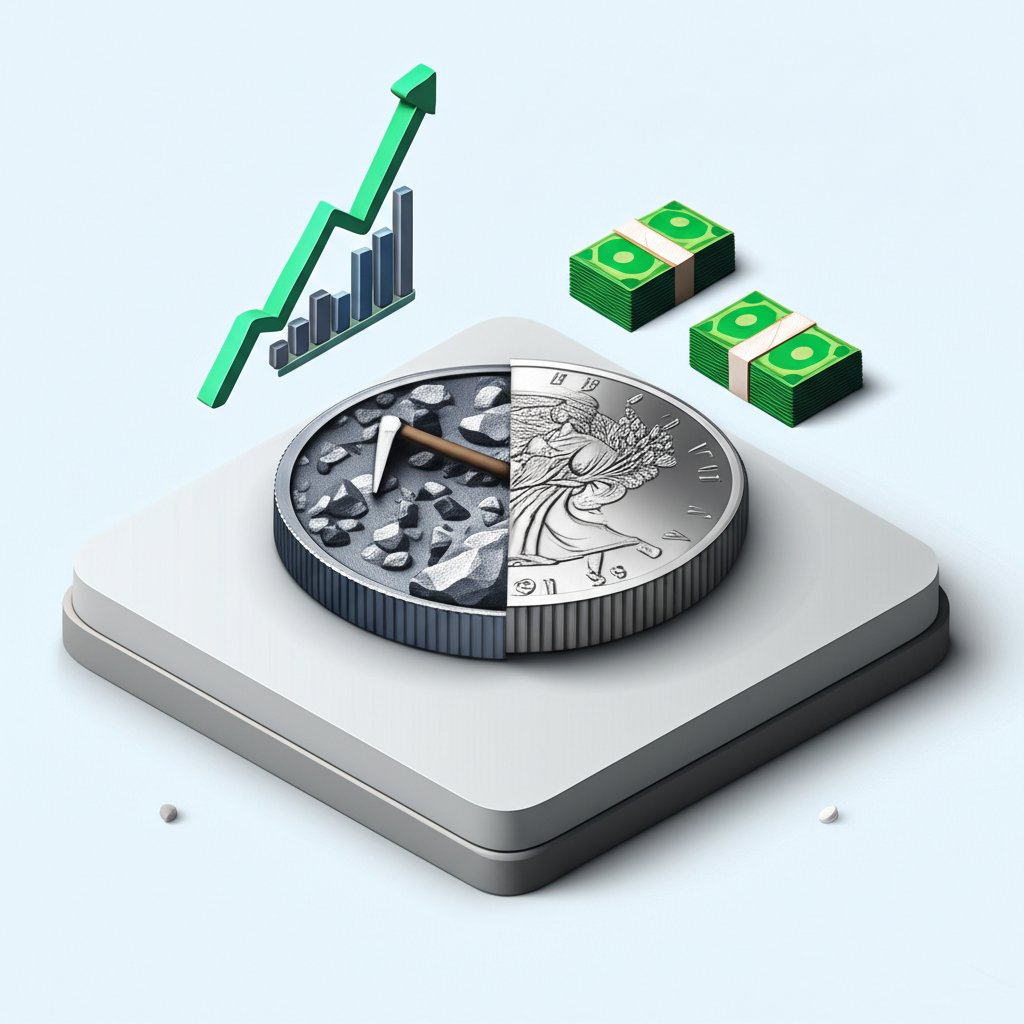
When you look at a silver dollar price chart, you're not just looking at a single commodity. You're observing the interplay of two distinct value drivers: its melt value and its numismatic value. Grasping this distinction is foundational.
The melt value is purely tied to the silver content of the coin. For instance, most pre-1965 U.S. silver dollars (like Morgans and Peace dollars) contain approximately 0.7734 troy ounces of pure silver. Multiply that by the current spot price of silver, and you have its melt value. This figure sets the absolute floor for the coin's price. If silver's spot price skyrockets, even a common, heavily worn silver dollar will see its melt value rise, pulling up its overall market price.
However, the numismatic value is where things get interesting. This value is assigned by collectors based on factors like rarity, historical significance, aesthetic appeal, and, critically, the coin's condition or grade. A silver dollar in "Mint State 65" (MS-65) condition, for example, will command a significantly higher premium over its melt value than an "About Good 3" (AG-3) coin, even if they're the exact same date and mint mark. This premium is what the silver dollar price chart really reflects beyond the basic bullion value.
Deconstructing the Silver Dollar Price Chart

A reliable silver dollar price chart isn't just a line graph; it's a dynamic tool offering a window into market sentiment and historical performance. To effectively use one, you need to understand its components.
First, identify the timeframe. Are you looking at a 24-hour snapshot, a 30-day trend, or a multi-year historical perspective? Short-term charts are excellent for timing immediate buys or sells based on daily spot price fluctuations, while long-term charts reveal overarching trends, illustrating how numismatic premiums have held up (or declined) over decades.
Next, pay attention to the specific coin series. A chart for "generic silver dollars" will typically track melt value, perhaps with a slight premium. But a chart for "1893-S Morgan Dollar (MS-65)" will show vastly different price points and volatility due to its extreme rarity and collector demand. Most useful charts allow you to specify the coin type, date, mint mark, and even grade.
Finally, look for volume indicators. While less common for numismatic charts than for stocks, some advanced platforms or auction aggregators will show buying and selling activity. High volume accompanying a price spike or dip can indicate strong conviction in the market, whereas low volume might suggest price movements are more easily manipulated or less representative of broad demand.
Key Factors Driving Silver Dollar Price Fluctuations
Understanding the forces that cause a silver dollar price chart to ebb and flow is paramount for informed decisions. These aren't isolated events but a complex web of interconnected drivers.
The most obvious driver is the spot price of silver. As mentioned, this dictates the melt value baseline for every silver dollar. When global economic uncertainty rises, or inflation fears loom, silver's spot price often increases as investors flock to safe-haven assets, which in turn lifts the floor for silver dollar values. Conversely, a strong dollar or rising interest rates can suppress spot prices.
Beyond the metal itself, numismatic demand and supply are powerful forces. A sudden surge in popularity for a specific coin series (perhaps due to media attention or a major auction result) can drive up premiums dramatically. Conversely, a large cache of a seemingly rare coin coming onto the market can depress its value. Rarity, particularly for specific dates, mint marks, and high grades, ensures a consistently higher premium. A classic example is the 1893-S Morgan dollar, which remains one of the most expensive U.S. regular issue coins due to its extremely low mintage and survival rate in higher grades.
Economic indicators and sentiment also play a significant role. During periods of economic prosperity, discretionary spending on hobbies like coin collecting tends to increase, boosting numismatic premiums. In recessions, collectors might sell off parts of their collections, increasing supply and potentially lowering prices, especially for less rare items. Geopolitical events can also sway the market, affecting both spot prices and investor confidence.
Lastly, coin grading and authentication services provide a critical layer of trust and standardization, impacting chart data. A coin certified by a reputable third-party grading service (like PCGS or NGC) will almost always command a higher and more stable price than an ungraded equivalent, as its condition and authenticity are guaranteed. The chart often reflects prices for graded coins in specific conditions.
Practical Application: Using the Chart for Buying and Selling
Now, let's turn these insights into actionable strategies. A silver dollar price chart isn't just for academic interest; it's a guide for real-world transactions.
When you're buying silver dollars, use the chart to identify potential entry points. Look for periods where a coin's price, relative to its intrinsic melt value, seems historically low, or when its premium has temporarily dipped without a fundamental change in rarity or demand. For instance, if the spot price of silver has recently spiked, but the numismatic premium on a common-date Morgan dollar hasn't caught up yet, it might be a good time to acquire some. Always compare the chart price to what dealers are currently asking; understand that dealers build in margins for their overhead and expertise.
Conversely, for selling, the chart helps you identify optimal exit points. If a specific coin's premium has seen a significant, sustained rise, or if the spot price of silver has hit a multi-year high, it might be the right moment to liquidate some holdings. Long-term charts are particularly useful here, showing historical resistance and support levels. If your goal is primarily bullion value, tracking the spot silver price on the chart is paramount. If it's a numismatic piece, you'll want to also monitor auction results and dealer offerings for similar graded coins.
Consider a scenario: You own an AU-58 (Almost Uncirculated) 1928 Peace dollar. You'd track the chart specifically for this coin, in this grade. If you notice a steady increase in auction prices for similar examples over the last 12-18 months, coupled with a stable or rising silver spot price, you might decide it’s an opportune time to list it for sale.
Understanding how a How much is 20 lbs silver? overall portfolio is valued also hinges on knowing these individual coin values. Premiums on individual silver dollars, especially numismatic ones, can significantly amplify or diminish the total worth of a substantial silver holding compared to just its bullion weight.
Pitfalls and Common Misconceptions
While powerful, relying solely on a silver dollar price chart without understanding its nuances can lead to costly mistakes.
One common pitfall is confusing generic silver value with specific coin value. A chart showing "silver dollar melt value" will be very different from one for an "MS-65 1895 Morgan Dollar." The latter will show prices potentially thousands of times higher than melt, while the former will track much closer to the commodity price. Always ensure you're looking at the chart for the exact type and condition of the coin you're interested in.
Another error is underestimating the impact of grading. An ungraded coin, even if you personally believe it to be in high condition, will almost always trade at a discount compared to a professionally graded coin. The chart reflects prices for graded coins, so comparing your raw coin to a chart price for a graded example isn't an apples-to-apples comparison. Authentication costs and grading fees should always be factored into your financial calculations.
Furthermore, not accounting for dealer spreads and transaction costs can skew your perception of value. The prices you see on charts are often based on wholesale transactions or auction results, which may not include the premium a retail dealer adds for their service, inventory, and expertise. Similarly, if you're selling, you'll incur fees, shipping, and insurance costs, or you'll get a lower "buy" price from a dealer than the "sell" price they list. These spreads can be significant, especially for common-date bullion coins.
Finally, avoid over-reliance on short-term fluctuations. While day-to-day changes can be exciting, silver dollars, especially numismatic ones, are generally long-term investments. Chasing every small spike or dip on a chart can lead to emotional decisions and unnecessary transaction fees. Focus on broader trends and fundamental value rather than trying to time the absolute peak or trough.
Practical Playbook: Implementing Your Chart-Driven Strategy
Armed with a deeper understanding, here’s a step-by-step approach to using silver dollar price charts effectively:
- Identify Your Coin: Be precise. What exactly are you tracking? Date, mint mark, series (e.g., 1890-CC Morgan Dollar).
- Determine Its Grade: If your coin is graded, use that specific grade (e.g., MS-64). If raw, estimate the grade as accurately as possible, acknowledging the inherent uncertainty.
- Find a Reputable Chart Source: Utilize sites that aggregate auction data, dealer listings, or provide historical pricing specifically for graded coins (e.g., PCGS, NGC price guides, specialized numismatic aggregators). Generic bullion sites are fine for melt value, but not for numismatic premiums.
- Analyze Timeframes:
- Short-Term (1 day – 3 months): Look for immediate entry/exit points driven by spot price swings or sudden market interest.
- Medium-Term (6 months – 2 years): Identify trends, support, and resistance levels. Is the premium increasing or decreasing?
- Long-Term (5+ years): Understand historical performance, assess long-term growth potential, and evaluate investment viability.
- Calculate Melt Value vs. Numismatic Premium: Always calculate the current melt value. Subtract this from the chart price to understand the dollar amount of the numismatic premium. Track how this premium changes over time.
- Compare Against "Real-World" Prices: Cross-reference chart data with current dealer listings and recent auction results for identical coins. This gives you a more accurate picture of what you'd actually pay or receive.
- Set Your Strategy: Based on your analysis, decide your buy/sell targets. If buying, what's the maximum premium you're willing to pay? If selling, what's your minimum acceptable price?
Example Scenario: You're considering buying an 1881-S Morgan Dollar. You check a reputable numismatic price guide and see an MS-63 example charting around $150. Silver spot price is $25/oz. The coin has about 0.7734 oz silver, so its melt value is ~$19.34. This means the premium is over $130. You then look at current dealer sites; they're asking $160-$170 for similar graded coins. Your strategy: you decide you'll offer no more than $155, understanding the dealer markup.
Quick Answers: Common Silver Dollar Price Chart Questions
Where can I find reliable silver dollar price charts?
For accurate numismatic values, rely on established coin grading services like PCGS (Professional Coin Grading Service) and NGC (Numismatic Guaranty Corporation) which offer comprehensive price guides and historical data for graded coins. For melt value and generic silver coin prices, sites like Kitco, JM Bullion, or APMEX offer real-time spot prices and basic bullion product pricing.
How does a coin's condition (grade) affect its chart value?
Condition is paramount. A silver dollar price chart will show vastly different lines for the same coin at different grades. For example, an MS-65 (Mint State) Morgan dollar will typically chart much, much higher than an AU-50 (About Uncirculated) or AG-3 (About Good) example, even if they're the same date and mint mark. Professional grading standardizes this, making chart comparisons reliable.
Are all silver dollars worth tracking on a price chart?
Not necessarily for their numismatic value. Common-date, heavily circulated silver dollars often trade very close to their melt value, with a minimal numismatic premium. For these, tracking the general silver spot price chart is usually sufficient. It's the rarer dates, mint marks, and higher-grade examples where specialized silver dollar price charts become invaluable for tracking premiums.
How do I account for dealer premiums and transaction costs?
Price charts generally reflect wholesale or auction prices. When buying from a dealer, expect to pay a premium above the chart price (their profit margin). When selling to a dealer, expect to receive less than the chart price. Always factor in potential shipping, insurance, and grading fees if you're sending coins off for authentication or selling them through an auction house.
Your Next Steps: Charting a Course for Silver Dollar Success
Mastering the silver dollar price chart isn't about memorizing numbers; it's about understanding the complex interplay of intrinsic metal value and collector-driven demand. Your immediate action should be to identify the specific silver dollars you own or are interested in acquiring, pinpoint their exact grade, and then locate the most relevant, reputable price charts.
Start by tracking a few specific coins over a week or two, noting daily changes in both spot price and the coin's quoted premium. This hands-on observation will quickly build your intuition for market movements. Remember, patience and diligent research are your greatest assets in navigating the fascinating world of silver dollars. By consistently monitoring these charts, you empower yourself to make informed decisions that align with your investment and collecting goals.