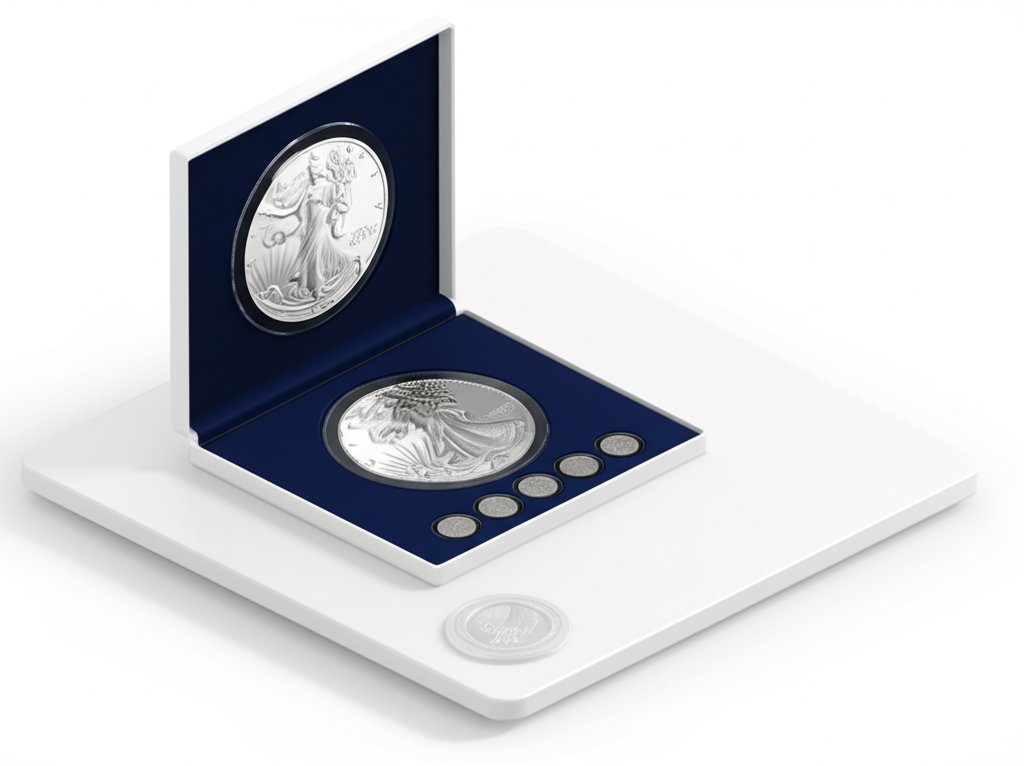
Ever wondered if those pristine coin sets tucked away in your closet are worth more than their face value? You're not alone. Delving into the world of uncirculated coins value can uncover hidden treasures, especially when it comes to official U.S. Mint sets. These carefully preserved collections offer a unique snapshot of American coinage, and understanding their true worth requires a keen eye for detail, a grasp of history, and a touch of market savvy.
This guide will equip you with the knowledge to identify, evaluate, and care for your uncirculated mint sets, helping you transform curiosity into confident collecting or selling.
At a Glance: Key Takeaways
- Original U.S. Mint uncirculated sets have been produced since 1947, containing pristine examples of that year's circulating coinage.
- Not all sets are created equal: The earliest sets (1947-1958) and the 1970-S Small Date Lincoln Cent set are significantly more valuable due to low mintage.
- Condition is paramount: To retain maximum uncirculated coins value, keep sets in their original, sealed U.S. Mint packaging.
- Special finishes like the 1965-1967 "Special Mint Sets" (SMS) and 2005-2010 "satin finish" add unique character but don't automatically guarantee high value.
- Mintage figures are crucial indicators of rarity; generally, lower mintage means higher potential value.
- Private assemblies for 1950, 1982, and 1983 are not official Mint sets and typically hold less value.
What Exactly Are Uncirculated Mint Sets?
Let's start with the basics. An "uncirculated" coin is one that has never entered general circulation. It retains its original mint luster and shows no signs of wear from handling or use. The United States Mint began issuing official uncirculated mint sets in 1947, offering collectors a complete collection of that year's circulating coins for every denomination, struck at each active mint facility.
These sets are a fascinating time capsule. They contain coins just as they appeared when they left the Mint, before they could be scuffed by cash registers or worn smooth by pockets. Each coin within an official set is, by definition, an uncirculated specimen.
What's Not Included in These Sets?
It's important to clarify what these sets aren't. They do not include:
- Proof specimens: These are specially struck coins, often with mirror-like fields and frosted devices, intended for collectors. Proofs come in separate "Proof Sets."
- Commemorative coins: These are special issues designed to honor specific people, places, or events, also typically sold separately by the Mint.
- "Official" sets for 1950, 1982, and 1983: The U.S. Mint did not produce official uncirculated mint sets in these three years. Any sets you encounter from these dates were assembled by private individuals using circulation strike coins, and as such, generally command less premium than official Mint-sealed products.
For those eager to Discover US Mint coin values, understanding these distinctions is the first step in accurate appraisal.
The Anatomy of Value: What Makes an Uncirculated Coin Set Valuable?
The value of your uncirculated mint sets hinges on several interconnected factors. Think of it like a recipe where each ingredient contributes to the final outcome.
1. Rarity: The Mintage Factor
This is arguably the most critical component. The fewer sets the U.S. Mint produced in a given year, the rarer they are, and typically, the higher their potential value. The ground truth research confirms this by noting that sets from 1947 to 1958 are "worth considerably more than common sets" due to their extremely low original mintage figures. The 1970-S Small Date Lincoln Cent set is another prime example of a low-mintage variant that significantly boosts a set's value.
Later sets, especially from the mid-1960s through the late 1970s, often had mintages in the millions. While still uncirculated, their abundance means they generally trade much closer to their original issue price or even just their face value plus a small premium for the convenience of a complete set.
2. Condition: Original Packaging is Key
An uncirculated coin is only as good as its condition. For official mint sets, this means preserving the original U.S. Mint packaging. These often came in cellophane sleeves, plastic holders, or cardboard folders designed to protect the coins.
Why is original packaging so important?
- Authentication: It confirms the coins are genuine and came directly from the Mint as a set.
- Protection: It shields coins from environmental damage (fingerprints, scratches, toning from exposure).
- Historical context: It's part of the complete collectible item.
Sets, especially those from 1947 to 1958 and the coveted 1970-S Small Date Lincoln Cent set, should absolutely be kept in their original U.S. Mint packaging to maximize their value. Any damage to the packaging, or removal of coins from their original seals, can significantly diminish their appeal to serious collectors.
3. Special Treatments and Finishes
While most uncirculated coins in these sets received no special treatment beyond being newly struck and never circulated, there were notable exceptions:
- 1965-1967 Special Mint Sets (SMS): During a coin shortage, the Mint temporarily halted proof set production. Instead, they issued "Special Mint Sets." Coins in these sets received a slightly different finish, often described as having a satin-like luster, falling somewhere between a typical business strike and a full proof coin. They are distinct and collected as their own category.
- 2005-2010 Satin Finish: Coins included in uncirculated sets during these years featured a "satin finish," giving them a distinctive matte appearance. This was a deliberate aesthetic choice by the Mint for these specific sets.
These special finishes contribute to the unique character of these sets, but their impact on value primarily depends on their mintage and collector demand for that specific finish rather than the finish itself making them automatically more valuable.
Deciphering Rarity: A Look at Mintage Figures
Understanding mintage figures is fundamental to assessing uncirculated coins value. Generally, lower numbers indicate higher rarity and, often, higher market value. Here's a breakdown of U.S. Mint uncirculated set mintage figures over the decades, highlighting key periods.
The Early Birds: True Rarities (1947-1958)
These are the gems of uncirculated sets. Their exceptionally low mintages make them highly sought after.
- 1947 PDS: 5,000 sets
- 1948 PDS: 6,000 sets
- 1949 PDS: 5,000 sets
- 1951 PDS: 8,654 sets
- 1952 PDS: 11,499 sets
- 1953 PDS: 15,538 sets
- 1954 PDS: 25,599 sets
- 1955 PDS: 49,656 sets
- 1956 PD: 45,475 sets
- 1957 PD: 34,324 sets
- 1958 PD: 50,314 sets
Notice the stark difference compared to later years. If you have any of these early sets, especially in pristine, original packaging, you likely possess some significant uncirculated coins value.
Growing Popularity: Mid-Century Expansion (1959-1964)
Mintage began to climb as coin collecting gained broader appeal.
- 1959 PD: 187,000
- 1960 PD: 260,485
- 1961 PD: 223,704
- 1962 PD: 385,285
- 1963 PD: 606,612
- 1964 PD: 1,008,108
The SMS Era and Beyond (1965-1970)
The "Special Mint Sets" filled the gap during a proof set hiatus, and general uncirculated sets continued with significant production. The 1970-S Small Date is a crucial exception in terms of value.
- 1965 S SMS: 2,360,000
- 1966 S SMS: 2,261,583
- 1967 S SMS: 1,863,344
- 1968 PDS: 2,105,128
- 1969 PDS: 1,817,392
- 1970 PDS Large Date: 2,038,134 (Note: The much rarer Small Date is the key variant here, usually found within these sets. Check your 1970-S cents carefully!)
Mass Production: The 1970s and 1980s (Excluding 1982, 1983)
These decades saw high mintages, generally meaning lower premiums today unless a specific variety or error is present.
- 1971 PDS: 2,193,396
- 1972 PDS: 2,750,000
- 1973 PDS: 1,767,691
- 1974 PDS: 1,975,981
- 1975 PD: 1,921,488
- 1976 S Silver Clad 3 Coin Set: 4,908,319 (a special bicentennial issue)
- 1976 PD: 1,892,513
- 1977 PD: 2,006,869
- 1978 PD: 2,162,609
- 1979 PD: 2,526,000
- 1980 PDS: 2,815,066
- 1981 PDS: 2,908,145
- No official sets in 1982 or 1983.
- 1984 PD: 1,832,857
- 1985 PD: 1,710,571
- 1986 PD: 1,153,536
- 1987 PD: 2,890,758
- 1988 PD: 1,646,204
- 1989 PD: 1,987,915
- 1990 PD: 1,809,184
The Modern Era: Fluctuation and Recent Decline (1991-Present)
Mintages show some fluctuation but generally trend downwards in the 21st century, with some very recent years approaching rarity levels not seen since the 1960s.
- 1991 PD: 1,352,101
- 1992 PD: 1,500,143
- 1993 PD: 1,297,431
- 1994 PD: 1,234,813
- 1995 PD: 1,038,787
- 1996 PD With W Dime: 1,457,949 (The "W" dime is a significant bonus for this set!)
- 1997 PD: 950,473
- 1998 PD: 1,187,325
- 1999 PD: 1,243,867
- 2000 PD: 1,490,160
- 2001 PD: 1,116,915
- 2002 PD: 1,139,388
- 2003 PD: 1,001,532
- 2004 PD: 842,507
- 2005 PD: 1,160,000 (Satin Finish begins)
- 2006 PD: 847,361
- 2007 PD: 895,628
- 2008 PD: 745,464
- 2009 PD: 784,614
- 2010 PD: 583,897 (Satin Finish ends)
- 2011 PD: 533,529
- 2012 PD: 392,224
- 2013 PD: 376,844
- 2014 PD: 345,813
- 2015 PD: 314,060
- 2016 PD: 296,582
- 2017 PDS: 286,823
- 2018 PD: 257,531
- 2019 PD: 346,117
- 2020 PD: 211,787
- 2021 PD: 228,399
- 2022 PD: 249,776
- 2023 PD: 171,251 (Current lowest mintage set since the 1960s!)
These figures underscore why some sets are merely curiosities, while others are prized possessions in the numismatic world. The dramatic drop in recent mintage figures suggests that newer sets might become more desirable over time, though it will take decades for demand to catch up.
Safeguarding Your Treasures: Caring for Uncirculated Mint Sets
Maintaining the pristine condition of your uncirculated mint sets is paramount for preserving their value. Here’s how to ensure your coins remain in top shape.
1. Keep Them Sealed in Original Packaging
This cannot be stressed enough. The U.S. Mint's original cellophane or plastic packaging is designed to protect the coins from environmental contaminants and physical damage. Breaking the seal often reduces the set's collector appeal and its associated uncirculated coins value.
2. Handle with Care
If you absolutely must handle a coin outside its packaging (e.g., for closer inspection or grading), always use cotton gloves. Fingerprints contain oils that can permanently etch into a coin's surface, causing unsightly blemishes that significantly diminish its grade and value.
3. Store Properly
- Cool, dry place: Avoid attics, basements, or garages where temperature and humidity can fluctuate wildly. This can lead to toning, spots, or even corrosion.
- Away from direct sunlight: UV light can cause plastic packaging to degrade and may affect the coins over long periods.
- Acid-free containers: If placing sets in storage boxes, ensure they are made from acid-free materials.
4. Avoid Cleaning Coins
Never, ever clean an uncirculated coin. Cleaning, even with specialized solutions, can strip away the coin's original luster and leave microscopic scratches, irrevocably damaging its surface and drastically reducing its value. What might look like tarnish or dirt to you is often original toning that collectors may find desirable. Let a professional numismatist assess and handle any necessary conservation.
Selling Your Uncirculated Mint Sets: Best Practices
When it comes time to part with your collection, a strategic approach will help you get the best possible uncirculated coins value.
1. Sort and Organize by Year
As highlighted by our ground research, for optimal value, you should sort and organize your sets by year. This allows for quick identification of the most valuable sets (like those pre-1958) and streamlines the evaluation process. It also demonstrates to a potential buyer that you are a serious and organized seller.
2. Identify Key Sets and Varieties
Thoroughly check for the high-value sets:
- 1947-1958 PDS sets: These are your top-tier items.
- 1970-S Small Date Lincoln Cent: This is a key variety found within the 1970-S sets. A common "Large Date" set might be worth only a few dollars, while a verified "Small Date" cent within the set can dramatically increase its value. Learn to distinguish between the two; there are many visual guides online.
- 1996 PD With W Dime: The inclusion of the West Point mint mark dime makes this set particularly desirable.
If you believe you have one of these, or any other potentially rare variety or error, consider professional authentication or grading.
3. Get an Appraisal
Before selling, especially for valuable sets, seek an appraisal from a reputable coin dealer or numismatic expert. They can accurately assess the condition and authenticity, providing an informed estimate of current market value. Membership in organizations like the American Numismatic Association (ANA) can be a good indicator of a dealer's credibility.
4. Choose Your Selling Venue
- Local Coin Dealers: Good for quick sales, but they need to buy at a wholesale price to make a profit, so you might not get top retail value.
- Online Marketplaces (eBay, specialized forums): Can yield higher prices, but require more effort on your part (photography, listing, shipping, dealing with buyers) and often involve fees.
- Coin Shows: Excellent for reaching a broad base of collectors and dealers, allowing for direct comparison and negotiation.
- Auction Houses: Best for genuinely rare and high-value sets, as they have access to an affluent collector base, but they charge significant commissions.
Remember that recent mint sets can often be purchased from the U.S. Mint or coin dealers near their original issue price. So, don't expect a windfall for common, modern sets unless they contain a known error or variety.
Common Questions About Uncirculated Coins Value
Q: Are all uncirculated coins valuable?
A: Not necessarily. While "uncirculated" implies a higher grade than circulated coins, value is ultimately determined by rarity, demand, and overall condition. Many uncirculated coins from high-mintage modern sets are worth only slightly more than their face value.
Q: How do I know if my 1970-S Lincoln Cent is a Small Date or Large Date?
A: This is a crucial distinction. On a 1970-S Small Date cent, the "7" in 1970 is lower than the "9" and "0," and the "LIBERTY" on the obverse is generally weaker. In contrast, the "7" on a Large Date is roughly aligned with the "9" and "0," and "LIBERTY" is stronger. Visual comparison guides online are invaluable for this specific identification.
Q: Can I send my uncirculated sets to a grading service?
A: Yes, you can. Professional grading services like PCGS (Professional Coin Grading Service) or NGC (Numismatic Guaranty Company) will grade the individual coins within your set and encapsulate them. This is typically recommended for key, high-value coins or sets, as the cost of grading can be substantial. For common sets, grading may not be cost-effective.
Q: Do original Mint shipping boxes add value?
A: While the interior packaging is paramount, some collectors do appreciate having the original outer shipping boxes, especially for older sets or bulk purchases. It generally doesn't add significant monetary value unless the set itself is exceptionally rare and pristine.
Your Next Steps in Exploring Uncirculated Coins
Whether you're holding onto your sets for sentimental reasons or considering their potential as an investment, understanding the nuances of uncirculated coins value is a rewarding endeavor. Start by identifying what you have, carefully inspect for condition, and consult reputable resources or experts for appraisal.
Your collection of uncirculated mint sets is more than just a stack of coins; it's a piece of history, frozen in time. With the right knowledge and care, you can ensure their legacy—and their value—endures.