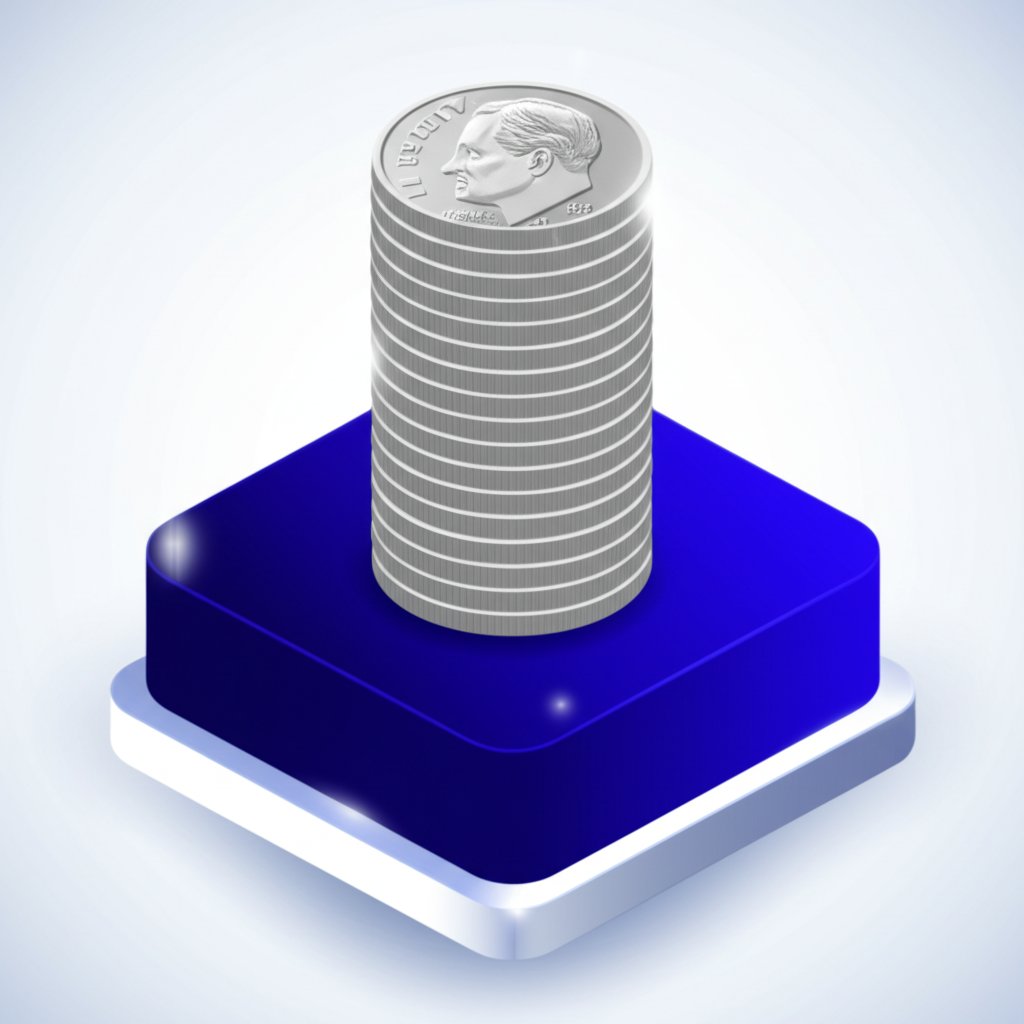
Finding a seemingly ordinary dime from decades past can be an exciting moment, especially when you realize it might be one of those coveted valuable silver dimes. While every U.S. dime minted before 1965 contains precious silver, some carry a premium far beyond their metal content. Understanding what distinguishes these treasures from their more common counterparts is key to unlocking their true worth.
At a Glance: Deciphering Valuable Silver Dimes
- Silver Content is Just the Start: All pre-1965 dimes are 90% silver, but rarity and condition often drive value much higher than melt price.
- Key Factors: Value hinges on melt value (silver content), rarity (date, mint mark, mintage figures), and physical condition.
- Identifying Silver: Look for the lack of a copper stripe on the coin's edge, and verify weight and non-magnetism.
- Condition is King: Pristine, well-struck examples (especially those with "Full Bands") command significantly higher prices.
- Rarity Hotspots: Certain dates and mint marks, like the 1894-S Barber or 1916-D Mercury Dimes, are exceptionally valuable.
- Never Clean Coins: Cleaning, even gentle, irreversibly damages a coin's surface and destroys collector value.
The Allure of Silver Dimes: More Than Just Ten Cents
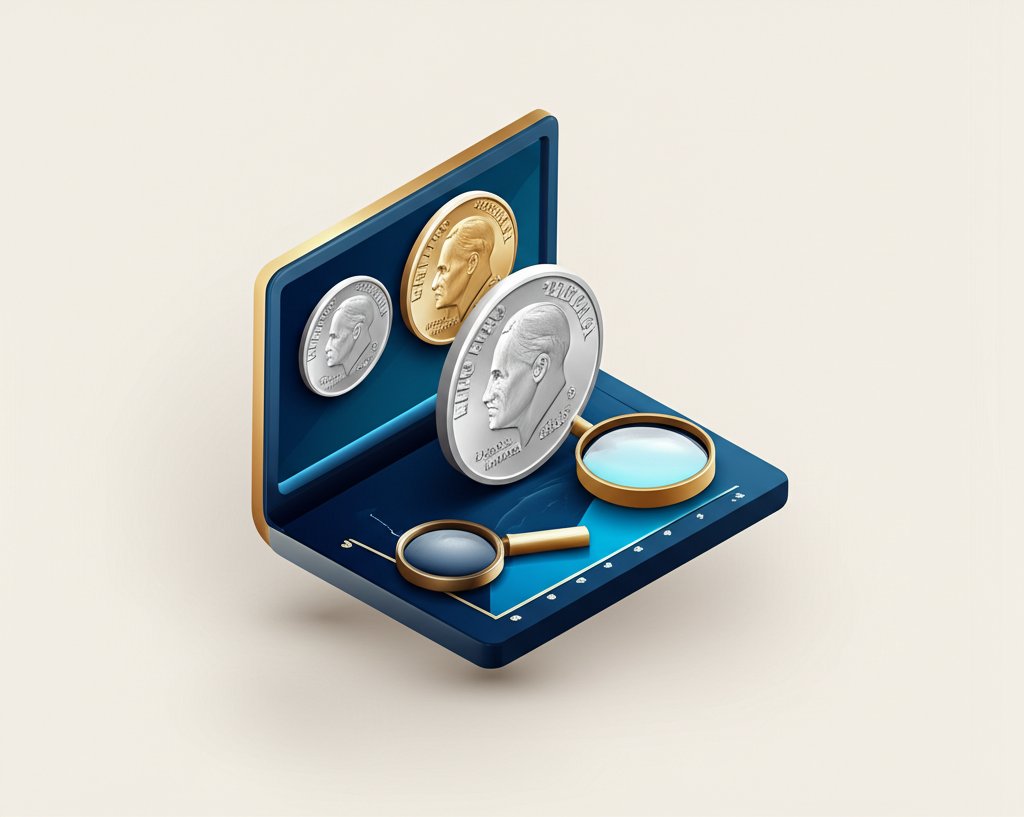
For generations, the dime has been a ubiquitous symbol of small change. But until 1964, these ten-cent pieces were more than just currency; they were small discs of 90% silver and 10% copper. This composition made them inherently valuable, even when silver prices were low. Then, in 1965, rising silver costs led to a significant shift: dimes became clad, composed of a copper core sandwiched between layers of copper-nickel. This change instantly transformed all pre-1965 dimes into historical artifacts and, more importantly for collectors, potentially valuable silver dimes.
Each of these older dimes, regardless of its specific date or mint mark, contains approximately 0.07234 troy ounces of pure silver. This "melt value" provides a baseline worth, fluctuating daily with the global silver market. However, for a select few, this melt value is merely the entry point. Their true value stems from a confluence of factors that turn a simple ten-cent piece into a sought-after numismatic prize.
Silver Dimes: The "Why" Behind Their Value
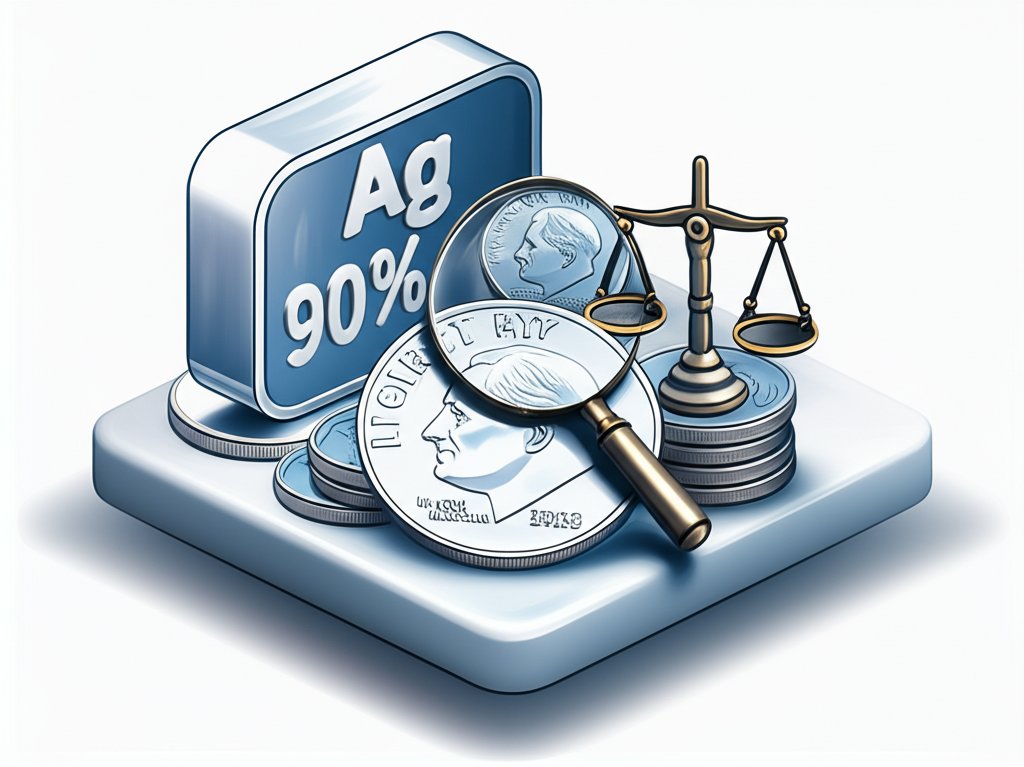
Unpacking the value of silver dimes involves looking beyond their inherent silver content. Three primary pillars support and often dramatically elevate a coin's worth: melt value, rarity, and condition.
Melt Value: The Indispensable Baseline
At its core, a pre-1965 silver dime's value starts with its silver content. With roughly 0.07234 troy ounces of pure silver, its melt value is calculated by multiplying this amount by the current market price of silver. This figure represents the absolute minimum an uncollectible silver dime is worth, simply for its metal. For common dates in worn condition, this melt value often represents the bulk of its worth.
For instance, if silver is trading at $25 per troy ounce, a silver dime's melt value is roughly $1.81. While this is modest, it's significantly more than ten cents, which is why these coins are often pulled from circulation by astute collectors and dealers.
Rarity: The Scarcity Premium
Beyond the metal itself, scarcity is a powerful driver of value. A coin's rarity is determined by several factors:
- Original Mintage: How many were initially produced? Lower mintage figures naturally lead to fewer surviving examples.
- Survival Rate: How many of the original mintage still exist today? Many coins were lost, melted down, or heavily worn over time.
- Specific Date and Mint Mark Combinations: The U.S. Mint operated at various locations, each stamping its coins with a unique mint mark (e.g., "D" for Denver, "S" for San Francisco, no mark for Philadelphia). Certain combinations are far scarcer than others.
Consider the 1916-D Mercury Dime. With an original mintage of just 264,000 pieces, it's a key date in the series. Even in heavily worn condition, a 1916-D Mercury Dime can fetch hundreds or even thousands of dollars, a testament to its scarcity. This significant premium is paid not for its silver content, but for its historical rarity and its place in completing a collection.
Condition: The Eye of the Beholder (and Grader)
The physical state of a coin, its "condition," plays an enormous role in its value. A coin's condition is assessed based on how much detail remains from the original strike and how much wear it has sustained through handling. Professional grading services like PCGS (Professional Coin Grading Service) or NGC (Numismatic Guaranty Corporation) use a 70-point scale, with higher numbers indicating better preservation.
A coin that appears uncirculated, with all its original luster and sharp details, will be far more valuable than the same coin in worn condition. Key features on certain coins, like the "Full Bands" on the fasces (a bundle of rods tied with an axe) on a Mercury Dime's reverse, can exponentially increase value. This indicates an exceptionally strong strike and virtually no wear, signifying a premium example.
Case Snippet: The 1949 Roosevelt Dime with Full Bands (FB)
While many 1949 Roosevelt Dimes exist, a particular variant with "Full Bands" on the fasces on the reverse side is highly sought after. This specific detail indicates a coin struck with exceptional pressure and preserved without wear to those delicate areas. Such a coin, graded as "Full Bands" by a professional service, can command hundreds or even thousands of dollars, whereas a regular 1949 dime in similar circulated condition might only be worth a few dollars over melt. It's a prime example of how condition, tied to specific visual cues, can elevate a common date into a valuable silver dime.
Identifying Your Silver Dime: First Steps to Unlocking Its Potential
Before diving into rarity guides or condition assessments, you need to confidently identify whether your dime is indeed silver. This crucial first step determines if you have a valuable silver dime candidate at all.
The Visual Tell: No Copper Stripe
The easiest way to tell a pre-1965 silver dime from a post-1964 clad dime is to examine its edge. Gently tip the coin on its side.
- Silver Dime (Pre-1965): The edge will appear uniform, a consistent silver color.
- Clad Dime (Post-1964): You will clearly see a distinct copper-colored stripe running through the middle of the coin's edge.
This simple visual inspection quickly filters out the vast majority of circulating dimes. Remember, while all dimes from 1965 onwards are clad, there were no silver dimes produced for general circulation with a 1965 date, making that year a clean break.
Verifying Physical Characteristics
Once you've confirmed a silver edge, a few quick physical checks can further verify its authenticity:
- Weight: A 90% silver dime should weigh approximately 2.5 grams. While minor variations exist, a significant deviation could indicate a fake or a clad coin. A digital scale is invaluable here.
- Diameter and Thickness: Silver dimes have a diameter of about 17.9 mm and a thickness of approximately 1.35 mm. Use calipers for precise measurement.
- Magnet Test: Silver is non-magnetic. If your dime sticks to a magnet, it is not a genuine silver coin. This is a quick and effective authenticity check.
Detailed Visual Inspection with a Loupe
Now that you've confirmed your dime is indeed silver, it's time for a closer look. A 10x jeweler's loupe is your best friend here.
- Date and Mint Mark: These are paramount. The date is typically on the obverse (front), and the mint mark (a small letter like "D" or "S") is usually on the reverse (back), though its exact placement varies by series. For Barber Dimes, it's below the eagle. For Mercury Dimes, it's on the reverse to the left of the fasces. For Roosevelt Dimes, it's on the reverse above and to the left of the "E" in "ONE."
- Key Details for Condition: Examine the high points of the coin for wear.
- Barber Dimes: Look at Liberty's hair, the eagle's breast feathers, and the tips of the leaves.
- Mercury Dimes: Pay attention to the details in Liberty's hair, the fasces bands, and the horizontal lines in the axe. The presence of "Full Bands" on the fasces is a major value booster.
- Roosevelt Dimes: Check Roosevelt's ear, hair, and the integrity of the torch's vertical bands and horizontal lines on the fasces. Again, "Full Bands" on the fasces is a critical detail.
Understanding these identifying features and how to properly inspect your coin lays the groundwork for further research into its potential value. For a broader perspective on assessing various silver coins, you might find our main resource helpful: Guide to Silver Dime Value.
Beyond the Basics: Unveiling Truly Valuable Silver Dimes
While all pre-1965 silver dimes have inherent value, certain series and specific dates stand out dramatically. Knowing what to look for can turn a casual find into a significant discovery.
Barber Dimes (1892-1916): A Rarity Hunter's Dream
Designed by Charles E. Barber, these dimes feature a classical Liberty head on the obverse and a heraldic eagle on the reverse. They are generally scarce due to their age and lower mintages compared to later series. Most Barber Dimes in any condition are worth more than their melt value.
Case Snippet: The Mythical 1894-S Barber Dime
This is the holy grail of U.S. dimes, perhaps one of the most famous and expensive coins in existence. Only 24 were ever minted, and it's believed only nine survive today. The circumstances of its mintage are somewhat mysterious, adding to its allure. An 1894-S Barber Dime in good condition can easily command prices well over $2 million, making it the ultimate example of a valuable silver dime driven by extreme rarity. While you're highly unlikely to find one, its story illustrates the incredible power of scarcity.
Mercury Dimes (1916-1945): Art and Investment
Often considered one of the most beautiful U.S. coin designs, the Mercury Dime (officially the "Winged Liberty Head" dime) features a depiction of Liberty wearing a winged Phrygian cap, often mistaken for the Roman god Mercury. Their design and historical significance (spanning two World Wars and the Great Depression) make them highly collectible.
Key Date Spotlight: 1916-D Mercury Dime
This dime, with its "D" mint mark for Denver, holds the lowest mintage for a circulation Mercury Dime at just 264,000 pieces. Even in heavily circulated condition (e.g., Good-4), a 1916-D can be worth thousands of dollars. The value skyrockets for examples in higher grades, especially those with "Full Bands" on the reverse. Identifying the "D" mint mark for this year is critical; it's located on the reverse, to the left of the fasces. Its scarcity makes it a top-tier valuable silver dime.
Other notable Mercury Dimes include the 1921 and 1921-D (also low mintages), and generally, any Mercury Dime with clear "Full Bands" on the fasces will command a premium.
Roosevelt Dimes (1946-1964): Hidden Gems in Plain Sight
The Roosevelt Dime, introduced in 1946 shortly after President Franklin D. Roosevelt's death, is the most common series of silver dimes. Millions were minted annually, meaning most pre-1965 Roosevelt Dimes are primarily worth their melt value. However, certain dates and, more importantly, specific conditions can elevate their worth considerably.
Valuable Variation: The 1949 Roosevelt Dime with Full Bands (FB)
For Roosevelt Dimes, the term "Full Bands" refers to the distinct, complete horizontal and vertical lines on the torch and fasces on the coin's reverse. This detail is often the first to wear down. A 1949 Roosevelt Dime, particularly with the "D" or "S" mint mark, graded by PCGS or NGC as "Full Bands" (often denoted as "FB" or "FT" for Full Torch), is a significant rarity. While a regular 1949-D or 1949-S in circulated condition might be worth just a few dollars, a certified "Full Bands" example can be worth hundreds or even thousands. This illustrates that for more common silver series, condition, specifically the preservation of delicate details, often trumps raw rarity in determining significant value.
Other "Full Bands" Roosevelt Dimes that command premiums include certain dates from the 1950s and early 1960s, notably the 1950-D, 1951-S, and 1955-D. Always check for those crisp, distinct bands!
Your Practical Playbook for Appraising Valuable Silver Dimes
Having identified your silver dime and glimpsed the potential for significant value, it’s time to methodically appraise its worth. This isn’t a quick guess but a careful, step-by-step process.
Step 1: Accurate Identification is Paramount
Before anything else, be absolutely certain of the coin's identity.
- Date: Clearly read the year of mintage.
- Mint Mark: Locate and correctly identify the mint mark (or lack thereof, which typically signifies Philadelphia). Common mint marks are 'D' for Denver and 'S' for San Francisco. Use your 10x loupe for clarity.
- Series: Confirm whether it's a Barber, Mercury, or Roosevelt dime. Each series has its own set of key dates and unique value drivers.
Mistakes in identification, especially with mint marks, are common pitfalls that can lead to wildly inaccurate value assessments.
Step 2: Assessing Condition (Your DIY Grade)
This is perhaps the most challenging step for the novice but critical for understanding potential value.
- Use Good Lighting and a Loupe: Examine the coin under bright, direct, but not harsh, light. The 10x loupe is essential for seeing fine details.
- Look for Wear: Compare your coin's details to online grading guides or coin books that show images of coins in various states of wear (e.g., Good, Fine, Very Fine, Extremely Fine, About Uncirculated, Uncirculated).
- "Good" (G): Major design elements are clear but worn smooth. Lettering is legible.
- "Fine" (F): More detail is visible, but still significant wear.
- "Very Fine" (VF): Most major details are clear, but high points show clear wear.
- "Extremely Fine" (XF/EF): Light wear on highest points, significant detail remains, some luster might be present.
- "About Uncirculated" (AU): Traces of wear on a few high points, but significant original luster.
- "Uncirculated" (UNC/MS): No signs of wear, full original luster (though toning can occur).
- Specific Features: Remember to look for series-specific features like "Full Bands" on Mercury or Roosevelt dimes. Their presence (or absence) can dramatically alter value.
- Damage Check: Note any scratches, dents, cleaning marks, or rim damage. Even slight damage can significantly reduce a coin's collector value.
Crucial Advice: Never Clean Your Coins! This cannot be stressed enough. Cleaning a coin, no matter how gently, damages its original surface and destroys its natural patina, or "toning." This irreversible damage almost always reduces a coin's numismatic value, often drastically. A dirty, uncleaned coin with original surfaces is always preferred by collectors over a "shiny" but damaged one.
Step 3: Researching Market Value
With identification and a preliminary condition assessment, you can now research its market value.
- Check Current Silver Spot Price: First, calculate your coin's melt value (0.07234 troy ounces × current silver price). This is your baseline.
- Consult Price Guides: Use reputable online coin price guides (like those from PCGS, NGC, or specialized coin sites) or physical coin guidebooks (e.g., "The Red Book" – A Guide Book of United States Coins). Be sure to use current editions, as prices fluctuate.
- Compare to Sold Listings: Look at recent auction results or dealer sales for coins identical to yours in terms of date, mint mark, and comparable condition. This is key; comparing an XF coin to an AU price will lead to disappointment.
- Factor in Rarity: For key dates or rare varieties, expect prices to be well above melt value, even in lower grades.
Step 4: When to Seek Professional Grading
For coins you suspect are genuinely valuable (potentially hundreds or thousands of dollars), professional third-party grading by PCGS or NGC is often a wise investment.
- Authentication: They verify the coin's authenticity.
- Standardized Grading: Their experts provide an objective, standardized grade, which is crucial for maximizing value and confidence in a sale.
- Market Acceptance: Graded coins in "slabs" (sealed plastic holders) are more liquid and command higher prices in the collector market.
However, professional grading costs money. It's generally not economical for common silver dimes worth only a few dollars over melt value, as the grading fee would exceed any potential increase in value.
Quick Answers to Common Questions about Valuable Silver Dimes
Navigating the world of silver dimes often brings up common questions and misconceptions. Here are some quick, clear answers.
Q: Are all dimes before 1965 valuable?
A: All dimes minted for circulation from 1796 to 1964 contain 90% silver, so they possess an intrinsic "melt value" based on the current price of silver. However, not all are considered "valuable" in the collector sense. Many common dates in circulated condition will only be worth slightly more than their melt value. True collector value comes from rarity (low mintage dates/mint marks) and exceptional condition.
Q: What does "Full Bands" mean, and why is it important for a dime's value?
A: "Full Bands" (often abbreviated FB or FT for Full Torch on Roosevelt dimes) refers to the complete, unbroken horizontal and vertical lines visible on the fasces (the bundle of rods on the reverse of Mercury and Roosevelt dimes) or the torch (for Roosevelt dimes). This detail is typically the first to wear down during circulation. A coin with "Full Bands" indicates a strong strike from the mint and minimal wear, signifying a superior quality coin that commands a significant premium from collectors. For certain dates, especially later Roosevelt dimes, this feature can increase value from a few dollars to hundreds or even thousands.
Q: Should I clean my old silver dimes to make them look better?
A: Absolutely not! Cleaning a coin, even with soft cloths or common household cleaners, will permanently damage its surface. It removes the natural toning and patina that builds up over decades, leaving behind hairline scratches and an unnatural luster. This damage irreversibly diminishes a coin's numismatic and collector value. Always leave coins in their original, "as-found" condition.
Q: How much is the average pre-1965 silver dime worth?
A: For most common dates in circulated condition, the value of a pre-1965 silver dime is typically driven by its melt value – roughly 0.07234 troy ounces of silver multiplied by the current spot price. Depending on the silver market, this usually translates to $1.50 to $2.50 per dime. However, specific dates, mint marks, and higher conditions (especially uncirculated or "Full Bands" examples) can increase this value significantly, ranging from tens to hundreds or even millions of dollars for extreme rarities.
Q: Are there any silver dimes from 1965 or later?
A: No, dimes struck for general circulation from 1965 onwards are made of a copper-nickel clad composition and contain no silver. However, special proof sets minted for collectors by the U.S. Mint did include 90% silver dimes for certain years from 1992 to present. These are not circulating coins and are easily identifiable within their original mint packaging.
Discovering Your Own Valuable Silver Dimes: A Path Forward
The hunt for valuable silver dimes is a journey that blends historical appreciation with the thrill of discovery. Every pre-1965 dime you encounter holds a piece of history and a tangible connection to the past, whether its value is primarily in its silver content or its rarity as a numismatic gem.
Begin by consistently checking the edges of any dime you encounter for that tell-tale silver stripe. If you find one, take the time for a thorough visual inspection using a loupe. Identify the date, mint mark, and observe the level of wear on key features like the fasces or Liberty's hair. This diligent approach is your best defense against missing a truly special piece.
Remember, the biggest pitfall is impatience or misinformation. Never clean a coin, always verify your identifications, and cross-reference values with reputable sources. While finding an 1894-S Barber Dime is akin to winning the lottery, the satisfaction of identifying a scarce Mercury Dime or a beautiful "Full Bands" Roosevelt Dime, and understanding its true worth, is a reward in itself. Keep learning, keep looking, and you might just uncover a hidden treasure in your pocket change or old family heirlooms.