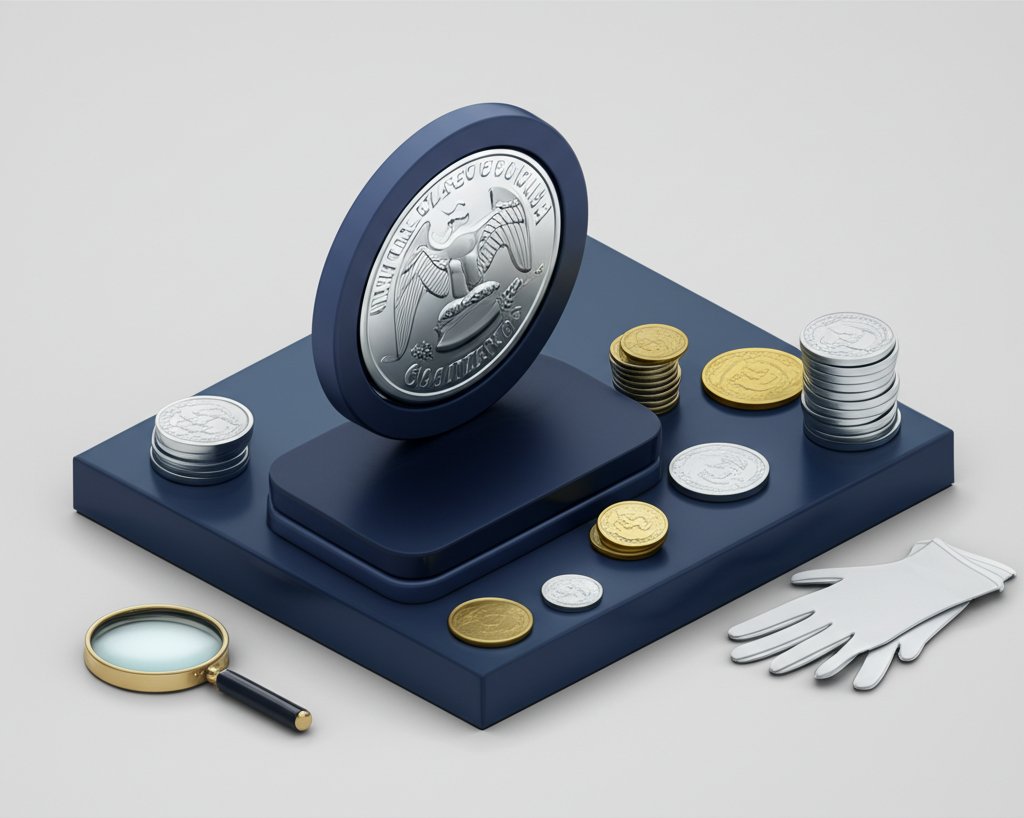
Imagine digging through old boxes or inheriting a coin collection, only to wonder if those dusty quarters are truly special. Many people overlook them, assuming they’re just pocket change. But some U.S. quarters, particularly those from a specific era, are genuinely valuable silver quarters, holding significant worth beyond their face value. The key is knowing how to spot these treasures among the everyday copper-nickel pieces.
This isn't about the latest commemorative quarters; it's about the genuine silver relics that have stories and real material value. Understanding what makes these coins valuable can transform a forgotten stash into a surprising asset, turning curiosity into clarity.
At a Glance: Unlocking Your Quarter's Hidden Value

- Dates Matter Most: Quarters dated 1964 or earlier are generally 90% silver.
- Beyond Melt Value: Rarity, condition, and specific features can make a coin far more valuable than its silver content alone.
- Key Identification Cues: Check the date, examine the coin's edge, and note its design.
- Beware of "Modern Silver": Post-1992 proof quarters are silver but fall into a different collector category than vintage circulation strikes.
- Don't Clean: Cleaning a coin can severely damage its numismatic value.
- Actionable Steps: Learn to identify, assess condition, and research specific dates and mint marks.
The Silver Quarter Standard: What You're Looking For
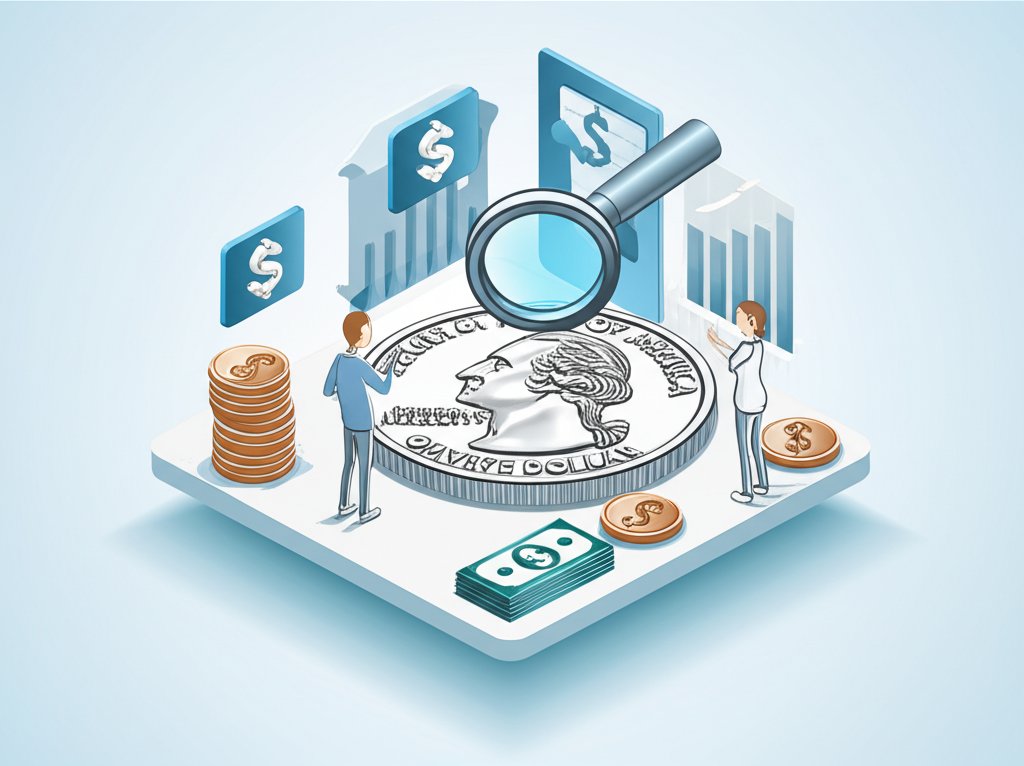
Before diving into specifics, let's establish the fundamental characteristic of a valuable silver quarter: its composition. From 1932 back to the inception of the U.S. Mint, most circulating quarters were made of 90% silver and 10% copper. This blend provided durability while maintaining intrinsic metal value. Each quarter from this era contains approximately 0.1808 troy ounces of pure silver.
The critical cutoff year is 1964. Quarters dated 1965 and later, produced for general circulation, are made of a copper-nickel clad composition – essentially a copper core sandwiched between layers of nickel. These modern quarters have no silver content and are only worth 25 cents, unless they are an extremely rare error coin.
However, the story doesn't end there. Since 1992, the U.S. Mint has also produced special silver proof quarters specifically for collectors. These can be 90% silver or even .999 pure silver. While these are indeed silver, their market and collector dynamics differ from the vintage circulation pieces we're primarily discussing as "valuable silver quarters."
Quick Silver Quarter Identification Checklist:
- Date: Is it 1964 or earlier? This is the primary indicator.
- Edge Test: Examine the coin's edge. A silver quarter will have a solid, uniform silver color. A post-1964 quarter will reveal a distinct copper stripe in its core.
- Weight (Approximate): A 90% silver quarter weighs around 6.25 grams. A copper-nickel clad quarter weighs approximately 5.67 grams. While not a definitive home test without a precise scale, a noticeable difference can sometimes be felt.
- The "Ring Test": When gently dropped on a hard surface (like wood, not glass or metal to avoid damage), a silver quarter often produces a higher-pitched, more sustained "ring" compared to the duller "thud" of a clad quarter. Use caution to avoid scratching your coin.
These simple checks can quickly filter out the common clad coins, helping you focus on the potential silver treasures.
Beyond the Melt: Unpacking Collector Premiums
While knowing a quarter is silver means it's worth at least its "melt value" – the intrinsic value of its silver content based on current spot prices (0.1808 × current spot price of silver) – many valuable silver quarters command a "collector premium." This premium can elevate a coin's value far beyond just its metal content. It’s what transforms a silver piece into a significant numismatic find.
Several critical factors influence this collector premium:
Rarity: The Less Common, The More Coveted
Rarity is often the biggest driver of a coin's value. It’s determined by the original mintage figures (how many were produced) and the number of surviving examples in various conditions. Low mintage numbers, combined with high attrition rates (coins lost, melted, or severely damaged over time), create true rarity.
For example, a quarter with a mintage of only a few hundred thousand pieces is inherently rarer than one with tens of millions. Understanding these production numbers is key to identifying which dates and mint marks have a built-in scarcity.
Condition (Grade): The Fresher, The Finer
A coin's condition, or "grade," is paramount. Numismatists use a detailed grading scale (like Sheldon Scale from 1 to 70, where 70 is perfect uncirculated) to describe a coin's wear and preservation. A coin with sharp details, original mint luster, and no damage will always be more valuable than a heavily circulated, scratched, or cleaned example.
- Uncirculated (Mint State, MS): These coins have never been used in commerce. They retain their original mint luster and show no signs of wear. Within MS, grades like MS-65 or MS-67 denote increasingly superb quality.
- About Uncirculated (AU): Minimal wear on the highest points of the design, but most luster is present.
- Extremely Fine (EF/XF): Light wear visible on the high points, but all major details are clear.
- Very Fine (VF): Moderate wear, but most lettering and details are sharp.
- Fine (F) and Below: Significant wear, details are often merged or faint. These typically command little premium unless the coin is exceptionally rare.
A Crucial Warning: Never clean old coins. Cleaning removes a coin's natural patina and can leave microscopic scratches that drastically reduce its collector value, often rendering it worth only its melt value, even if it was a rare date. Experts can spot a cleaned coin instantly.
Date and Mint Mark: Pinpointing the Provenance
The date tells you the year of issue, while the mint mark (a small letter, usually on the reverse, or sometimes obverse for older coins) indicates where it was struck. Common mint marks include "D" for Denver, "S" for San Francisco, and a blank or "P" for Philadelphia (though "P" only appeared on quarters starting in 1980, except for some specific issues like 1942-P Jefferson nickels).
Certain date and mint mark combinations are significantly rarer than others due to lower production runs, errors, or historical circumstances. These are often referred to as "key dates" or "semi-key dates." For instance, a 1932-D Washington quarter is far more valuable than a 1934 quarter, even in the same condition, because far fewer 1932-D quarters were minted.
Design Specifics and Varieties: The Nuances That Add Up
Sometimes, subtle variations in the coin's design, die errors, or overstrikes can create valuable "varieties." These might be barely perceptible to the untrained eye but are highly sought after by collectors. Examples include:
- Doubled Dies: Elements of the design appear duplicated or slightly offset (e.g., doubled lettering or date).
- Overdates: One date is struck over another (e.g., 1806/5).
- Mint Errors: Off-center strikes, planchet errors, or missing elements. While not always "pretty," some errors are incredibly rare and valuable.
These require a keen eye and often magnification to identify. If you suspect you have a variety, comparing it to known examples in a reputable coin catalog or online database is essential. For more comprehensive information on identifying and valuing your silver quarters, including design specifics and historical context, you can always refer back to our pillar guide to Understand Silver Quarter Value.
Diving Deeper: Specific Valuable Silver Quarters to Seek
Let's look at some of the most prominent series of valuable silver quarters and the specific dates and features that make them stand out.
Washington Quarters (1932–1964)
These are the most common type of silver quarters you're likely to encounter. While most Washington quarters from this era are only worth their melt value in circulated condition, a few stand out as true collector pieces:
- 1932-D (Denver Mint): With a mintage of only 436,800, this is the lowest mintage Washington quarter and the undisputed key date for the series. Even in worn condition, it commands a significant premium.
- 1932-S (San Francisco Mint): The second-lowest mintage at 408,000, slightly less than the 1932-D, making it another crucial date. Its value is comparable to the 1932-D in similar condition.
- Other Early Dates (1934-1936): While not as rare as the 1932-D or -S, these early issues, especially in higher uncirculated grades, can still fetch a decent premium.
Look for the mint marks (D or S) on the reverse, below the eagle.
Standing Liberty Quarters (1916–1930)
This elegant design features Lady Liberty standing, shield in hand, with an eagle on the reverse. The series has several significant rarities and condition-dependent features.
- 1916: The inaugural year, with a tiny mintage of only 52,000 pieces, makes it the absolute key date for the Standing Liberty series. It's extremely rare and valuable in any condition.
- 1918/7-S (Overdate): This is a famous and valuable error where the 8 was struck over a 7. Identifying it requires close inspection of the date, often with magnification.
- "Full Head" Details: For many Standing Liberty quarters, coins showing "Full Head" details of Liberty (clear details of her hair and face, especially her ear) are much more desirable and valuable. Wear often obliterates these fine details, so their presence indicates a well-preserved coin.
- Type 1 vs. Type 2: The 1916 and early 1917 coins are "Type 1," featuring an exposed breast on Liberty. Later in 1917, the design was modified to "Type 2," covering her with chain mail. Type 1 coins are generally rarer.
The mint mark on Standing Liberty quarters is located on the obverse, to the left of Liberty's feet.
Barber Quarters (1892–1916)
Designed by Charles E. Barber, these quarters feature Liberty's head on the obverse and an eagle on the reverse. This series contains some highly sought-after rarities, particularly from the San Francisco (S) mint.
- 1896-S: A significant key date with a relatively low mintage of 188,000.
- 1901-S: With a mintage of only 72,000, this is the lowest mintage Barber quarter and a prime key date. It is exceedingly valuable, even in lower grades.
- 1913-S: Another low mintage date (440,000) that is highly desirable.
- 1892-S and 1893-S: While not as rare as the above, these early San Francisco issues also command strong premiums, particularly in higher grades.
The mint mark on Barber quarters is located on the reverse, below the eagle.
Pre-1932 Quarters: The Historic Giants
Before the Barber series, the U.S. Mint produced several other silver quarter designs, including Draped Bust (1796-1807), Capped Bust (1815-1838), and Seated Liberty (1838-1891) quarters. These are among the earliest and most historically significant U.S. coins.
- Extreme Rarity: Even in heavily worn conditions, these coins are often considered rare and valuable due to their age, low original mintages, and high attrition rates.
- Historical Significance: Their age and direct link to the early days of the United States add a substantial layer of collector appeal.
- Value Floors: Unlike more common silver quarters, even a "junk silver" example of a Draped Bust or Capped Bust quarter will usually be worth several times its melt value due to its numismatic rarity.
If you find a quarter predating 1892, you very likely have a valuable piece, regardless of condition. Professional appraisal is highly recommended for these.
Practical Playbook: What to Do Next
You've identified potential valuable silver quarters. Now, what's your game plan?
Step 1: Secure and Protect Your Finds
- Handle Carefully: Always hold coins by their edges to avoid transferring oils from your skin, which can damage the surface over time.
- No Cleaning: Reiterate this. Do not clean them.
- Proper Storage: Place individual valuable coins in inert, PVC-free holders (flips or slabs) to protect them from environmental damage and physical wear. Avoid old paper envelopes that can contain sulfur.
Step 2: Research and Compare
- Consult Resources: Utilize reputable coin pricing guides (like the Red Book, A Guide Book of United States Coins), online databases (PCGS, NGC, Heritage Auctions archives), and specialized forums.
- Look Up Your Specifics: Search for your exact date, mint mark, and apparent condition. Pay close attention to recent auction results for coins similar to yours.
- Identify Key Features: For series like Standing Liberty, actively look for "full head" details. For Washington quarters, confirm the mint mark location.
Step 3: Grade Your Coin (Informally, Then Professionally)
- Self-Assessment: Using online visual guides, try to approximate your coin's grade (e.g., "Good," "Fine," "Very Fine," "About Uncirculated"). This helps you narrow down potential values.
- Professional Grading (For High-Value Coins): If your research indicates a potentially rare or high-value coin, consider submitting it to a third-party grading service like PCGS (Professional Coin Grading Service) or NGC (Numismatic Guaranty Corporation). They will authenticate the coin, assign a precise numerical grade, and encapsulate it in a sealed "slab." This process adds credibility, protects the coin, and usually increases its market value, but it comes with a fee. It's generally not cost-effective for coins worth less than $100-$200.
Step 4: Determine Next Steps – Sell or Keep?
- Selling: If selling, compare prices from multiple reputable coin dealers. Consider online auctions if your coin is professionally graded and has significant value. Understand that dealers need to make a profit, so their buy price will be less than the retail value.
- Keeping: If you decide to keep them, ensure they are stored correctly and perhaps consider building a collection around them. Numismatics can be a rewarding hobby.
Quick Answers: Demystifying Common Questions
Q: Are all quarters from before 1965 made of silver?
A: Yes, generally speaking, all circulating U.S. quarters dated 1964 and earlier contain 90% silver. This rule is consistent across all three major designs you might encounter: Washington, Standing Liberty, and Barber.
Q: My quarter is from 1965, but it looks silver. Is it valuable?
A: If it's a standard circulation quarter, no. Quarters from 1965 onward are copper-nickel clad and have no silver content. The "silver" appearance is due to the nickel outer layers. The only exception would be a rare error coin, but not because of silver.
Q: I found a quarter from the 1970s that looks really shiny. Could it be silver?
A: No, not from circulation. That shine likely indicates it's a proof coin, usually from a special collector's set, which would still be copper-nickel clad unless it's a very specific Bicentennial silver proof issue (which are 40% silver, not 90%). However, these 40% silver Bicentennial quarters were never intended for circulation and are easily identifiable.
Q: Why shouldn't I clean my valuable silver quarters?
A: Cleaning a coin, even gently, removes its natural patina (toning) and can leave microscopic scratches or alter its surface. This process is irreversible and causes a significant drop in its numismatic value, often reducing it to just its melt value. Collectors prefer coins in their original, undisturbed state, even if they appear dirty or toned.
Q: How much is a common 90% silver quarter typically worth?
**A: **For a common date Washington quarter in circulated condition (like a 1943 or 1957), its value is primarily tied to its silver content. This means it will trade at or slightly above its melt value. For example, if silver is $25/troy ounce, a silver quarter (0.1808 troy oz) would be worth approximately $4.52 in melt value. A small premium might be added by dealers.
Q: What's the difference between a "key date" and a "semi-key date"?
A: A "key date" is one of the absolute rarest dates or mint marks in a series, often having the lowest mintage and commanding the highest premiums. A "semi-key date" is also rare and commands a premium over common dates, but it's not quite as scarce or expensive as a key date. Both are important for collectors.
Your Next Steps: Recognizing True Value
Identifying valuable silver quarters isn't just about spotting a date; it's about understanding the confluence of rarity, condition, and historical context. With a magnifying glass, a reputable coin guide, and a keen eye, you can move from merely wondering about your old quarters to confidently recognizing a true numismatic find.
Start by sifting through any quarters you possess, paying strict attention to the 1964 and earlier dates. Look for those solid silver edges, and for any coins that seem particularly old or worn in an intriguing way. If you find a potential treasure, resist the urge to clean it, and begin your research. You might be holding more than just change.