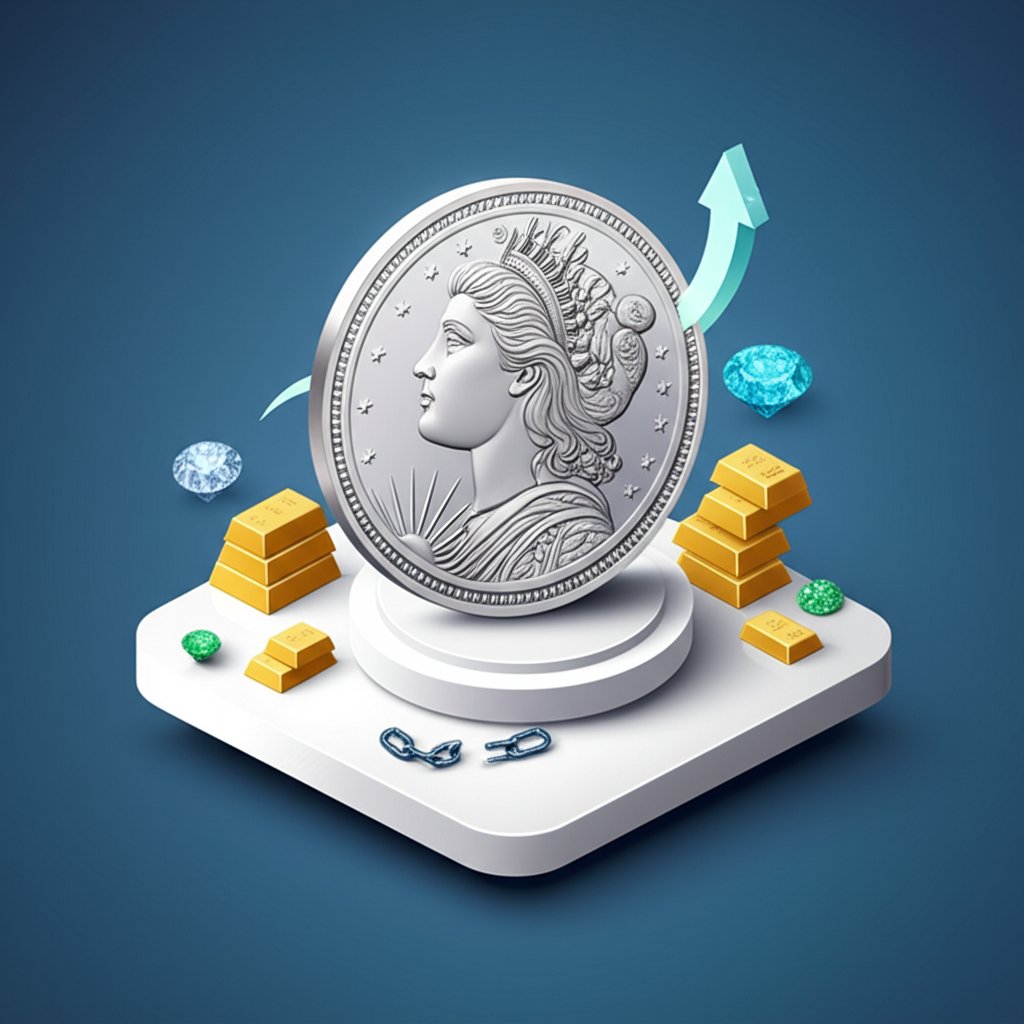
The glint of an old silver dollar, bearing the classic profile of Lady Liberty, often sparks a thrilling question: Is this just old money, or a hidden treasure? The value of a Liberty dollar can range from a few dollars over its silver content to millions, depending on a confluence of factors that turn a simple coin into a numismatic marvel. Far from being uniform, these iconic pieces of American history encompass several distinct designs, each with its own story, rarity, and price potential.
At a glance
- Liberty Dollar isn't one coin: It's an umbrella term for several silver dollar series featuring Lady Liberty, each with unique value drivers.
- Design and Rarity are paramount: Specific dates, mint marks, and historical context can exponentially increase value.
- Condition is King: The preservation level (grade) dramatically influences a coin's worth, often more than any other factor.
- Melt Value is the Floor: While silver content offers a baseline, numismatic value for rare Liberty Dollars can be thousands to millions higher.
- Expert Appraisal is Crucial: For significant pieces, professional evaluation is the only reliable way to determine true market value.
- Look Beyond the Obvious: Small details like luster, toning, or even tiny errors can turn a common coin into a collector's dream.
Unpacking the "Liberty Dollar" Legacy

When collectors speak of "Liberty Dollars," they're generally referring to several series of silver dollars issued by the U.S. Mint, all featuring different artistic interpretations of Lady Liberty. These aren't modern commemoratives; they represent some of the earliest and most historically significant American coinage. Understanding which "Liberty Dollar" you possess is the crucial first step in determining its potential worth.
The primary designs that fall under this captivating umbrella include:
- Flowing Hair Dollars (1794-1795): The very first U.S. silver dollar, showcasing a youthful Liberty with flowing hair. Extremely rare and historically significant.
- Draped Bust Dollars (1795-1803): Featuring a more mature, draped rendition of Liberty. This series includes the legendary 1804 Dollar.
- Seated Liberty Dollars (1840-1873): A classic design depicting Liberty seated on a rock, holding a shield and staff. This long-running series has many rare dates and varieties.
- Trade Dollars (1873-1885): While designed primarily for commerce in Asia, these also feature a seated Liberty. Often overlooked by casual collectors, some dates are exceedingly scarce.
- Morgan Dollars (1878-1904, 1921): Perhaps the most famous and widely collected Liberty Dollar, with a striking profile of Liberty wearing a Phrygian cap.
- Peace Dollars (1921-1928, 1934-1935): The last U.S. silver dollar struck for circulation, depicting Liberty with a radiant crown, symbolizing peace after World War I.
Each of these series carries its own history, mintage figures, and key dates that dramatically influence the value of a Liberty dollar from that era.
The Pillars of Liberty Dollar Value: What Makes Them So Valuable?
The significant value of a Liberty dollar isn't arbitrary; it stems from a combination of fundamental numismatic principles. When assessing your coin, you'll delve into its specific details and compare it against these key drivers.
1. Rarity and Historical Significance: The Scarcer, The Dearer
The most straightforward factor driving value is how many coins were originally minted and, more importantly, how many have survived today. Low mintage figures, coupled with historical events that led to melting or loss, create scarcity that collectors eagerly pursue.
- Specific Designs and Dates:
- Flowing Hair Dollars: As the inaugural silver dollar, any surviving example is highly prized. The 1794 Flowing Hair Dollar, for instance, represents the very dawn of U.S. coinage and can fetch millions due to its extreme rarity and historical weight. A prime example sold for a staggering $12,000,000 in 2013, largely due to its exceptional grade as a first-year issue.
- The 1804 Dollar: This is the "King of American Coins," an absolute legend. Though dated 1804, these were first struck in 1834 as diplomatic gifts. Only 15 are known to exist across various classes. The most expensive example sold for $7,680,000, not just for its beauty but for its incredible scarcity and compelling backstory.
- Seated Liberty Dollars (1866 "No Motto"): Certain varieties are exceptionally rare. Take the 1866 Seated Liberty Dollar without the motto "In God We Trust." Only two are known to exist, one selling for $1,207,500. Such anomalies represent unique production errors or specific historical circumstances that elevate their rarity beyond imagination.
- Trade Dollars (1885 Proof): While many Trade Dollars were melted, certain proof issues, like the 1885, are almost mythical. Only five are known, and one proof sold for $3,960,000 in 2019. Their restricted production and specific purpose add layers to their desirability.
- Morgan Dollars (1893-S): The 1893-S Morgan Dollar is a renowned rarity due to low mintage (100,000) and widespread melting under the Pittman Act of 1918. An exceptional example realized $2,086,875 in 2021, illustrating how scarcity combined with condition can drive astonishing prices for even relatively "modern" Liberty Dollars.
- Peace Dollars (1922 High Relief Matte Finish): Most 1922 Peace Dollars are common, but a few experimental "High Relief" pieces with a matte finish were struck. Only about ten are known, making them extremely valuable. One sold for $458,250 in 2014, showcasing how subtle design variations or experimental mintages can create significant rarity.
2. Condition is King: The Preservation Premium
After rarity, a coin's condition, or "grade," is the single most significant factor in determining the value of a Liberty dollar. Even a rare date will be worth considerably less if it's heavily worn or damaged. Grades range from "Good" (heavily worn) to "Mint State" (uncirculated).
- Mint State (MS): These coins show no traces of wear, retaining their original luster from the moment they left the mint. Within Mint State, a numerical scale (MS-60 to MS-70) further refines the grade based on bag marks, contact marks, and overall eye appeal. An MS-65 coin will be significantly more valuable than an MS-60 of the same type.
- Extremely Fine (XF): Coins in this grade show only the slightest wear on the highest points of the design. All major details are clear and well-defined.
- Fine (F): Significant wear is evident, but the main design elements remain distinct. Many finer details may have blended or worn away.
- Good (G): Heavy wear has taken its toll, with only the major outlines of the design visible. Letters and dates might be weak but legible.
For example, a common date Morgan Dollar in "Good" condition might be worth just above its melt value, while the same date in "Mint State" could command hundreds or even thousands of dollars. The distinction is paramount.
3. Mint Marks and Errors: Small Details, Big Impact
Where a coin was minted (its "mint mark") and any accidental imperfections during striking can drastically alter its value.
- Mint Marks: These tiny letters indicate the branch mint that produced the coin:
- "O" for New Orleans
- "S" for San Francisco
- "CC" for Carson City (often highly sought after due to lower mintages)
- "D" for Denver
- Coins from the main Philadelphia Mint typically have no mint mark.
Certain mint marks for specific dates are much scarcer than others, turning an otherwise common year into a key date. - Errors and Varieties: These are accidental deviations from the standard production process. Examples include:
- Off-center strikes: Where the die didn't hit the planchet squarely.
- Doubled dies: Apparent doubling of design elements or lettering.
- Repunched mint marks/dates: Visible previous strikes under the final one.
- Missing elements: Like the 1866 Seated Liberty "No Motto" example, where a planned design element was omitted.
Such errors, if genuine and recognized, can make a coin unique and highly desirable to collectors specializing in varieties.
To fully grasp how these factors interact across all types of silver dollars, from these early Liberty designs to later commemoratives, you can Understand silver dollar value in more detail.
Beyond Melt Value: The Numismatic Premium
For any silver dollar, there's always a base "melt value" determined by its silver content and the current market price of silver. Most older U.S. silver dollars (pre-1936) contain 90% silver, giving them a substantial intrinsic value. For example, with silver at $51.57 per ounce, a 90% silver dollar is worth at least $47.06 (as of 10/13/2025 according to the research context).
However, for genuine Liberty Dollars, especially those from the Flowing Hair, Draped Bust, Seated Liberty, or key date Morgan and Peace series, the numismatic value—what collectors are willing to pay—almost always far surpasses the melt value. The historical significance, rarity, and aesthetic appeal of a well-preserved Liberty Dollar elevate it into a different league entirely. Even an Eisenhower Dollar from San Francisco containing 90% silver, which isn't a classical "Liberty Dollar" but is a silver dollar, sold for $30,550 due to its specific composition and rarity, vastly exceeding its melt value. This highlights that for collectible coins, the material value is often just the starting point.
Your Four-Step Path to Uncovering the Value of Your Liberty Dollar
If you believe you have a valuable Liberty Dollar, here's a practical, step-by-step approach to begin your assessment:
Step 1: Identify Your Lady – Series, Date, and Mint Mark
Your first task is to precisely identify the coin in your hand.
- Determine the Series: Look at the design of Lady Liberty. Does she have flowing hair, a draped bust, is she seated, or is it the profile from a Morgan or Peace Dollar?
- Locate the Date: This is usually prominent on the obverse (front) of the coin.
- Find the Mint Mark: This small letter (O, S, CC, D) is typically on the reverse (back) of the coin, often above the eagle for older dollars, or below it for later ones. Remember, Philadelphia mint coins usually have no mark. Use a magnifying glass if necessary.
Knowing these three pieces of information allows you to consult specialized guidebooks or online databases to check for known rarities for that specific year and mint mark combination.
Step 2: Assess Her Condition – The Grade Game
This is where keen observation and some basic knowledge of grading come in. Handle the coin by its edges to avoid adding oils or damage.
- Examine Wear Patterns: Look for areas where the design has flattened or details have blurred due to circulation.
- Good (G): Heavy wear, only major outlines visible (e.g., Liberty's head may be bald, stars flat).
- Fine (F): Significant wear, but main design elements clear. Many smaller details lost (e.g., Hair strands on Liberty may be gone, details on eagle's feathers vague).
- Extremely Fine (XF): Slight wear on highest points (e.g., only slight flattening on Liberty's cheek, eagle's wingtips show minimal rub).
- Mint State (MS): No wear whatsoever, retaining original luster. This is the top tier.
- Look for Damage: Scratches, nicks, dents, cleaning (a common pitfall that drastically reduces value), or alterations can severely detract from value, even for rare coins.
- Practical Tip: Never clean a coin yourself. While it might seem to make it "look better," cleaning typically causes microscopic abrasions that are irreversible and destroy its original surface, significantly diminishing its numismatic value.
Step 3: Note Special Qualities – Luster, Toning, and Eye Appeal
Beyond the basic grade, subjective qualities can boost or diminish a coin's appeal and, consequently, its value.
- Original Luster: For uncirculated coins, a strong, vibrant cartwheel luster (the way light reflects off the coin's surface) is highly desirable. Dull or disturbed luster indicates mishandling or cleaning.
- Toning: This is the natural patination that develops over time as silver reacts with its environment. Attractive, even toning (e.g., iridescent blues, purples, golds) can enhance a coin's value, particularly on Mint State examples. Splotchy, dark, or unattractive toning can detract.
- Eye Appeal: This is an overall impression of the coin. Does it look "right"? Is the strike sharp? Are there distracting marks? A coin with great eye appeal will always command a premium within its grade.
Step 4: Seek Expert Appraisal – The Ultimate Verification
While self-assessment provides a preliminary idea, for any potentially valuable Liberty Dollar, professional appraisal is indispensable.
- Why it Matters: Experts can authenticate the coin, verify its date and mint mark, accurately grade its condition (often with specialized equipment and years of experience), and identify subtle errors or varieties that untrained eyes might miss. They also have current market knowledge to provide an accurate valuation.
- How to Get One:
- Local Coin Shops: A reputable local dealer can often give you an initial assessment and possibly an offer.
- Professional Grading Services: Organizations like PCGS (Professional Coin Grading Service) or NGC (Numismatic Guaranty Company) offer professional grading and encapsulation, which is virtually required for high-value coins. This process involves submitting your coin, and they return it in a sealed holder with its official grade.
- Online Appraisals: Some services offer online assessments based on high-quality photos, which can be a good preliminary step for less certain finds.
Quick Answers: Common Questions About Liberty Dollar Value
Are all Liberty Dollars valuable?
No, not all. While all silver dollars have a base melt value due to their silver content (for most pre-1936 issues), many common date Morgan and Peace Dollars in lower circulated grades may only be worth slightly above their silver melt value. It's the rare dates, specific mint marks, and high-grade examples that command significant premiums.
How much silver is in a typical Liberty Dollar?
Most U.S. silver dollars minted before 1965 (including Flowing Hair, Draped Bust, Seated Liberty, Trade, Morgan, and Peace Dollars) contain 90% silver and 10% copper. This amounts to approximately 0.7734 troy ounces of pure silver per coin. Later Eisenhower Dollars (1971-1974) can contain 40% silver in collector editions, while standard circulating ones are copper-nickel clad.
What's the biggest mistake people make with Liberty Dollars?
Cleaning them. Even gently wiping a coin can remove its natural patina and microscopic metal from the surface, irreversibly damaging its numismatic value. It's almost always better to leave a coin in its "as found" condition.
Where can I sell my valuable Liberty Dollar?
Reputable options include local coin dealers, specialized numismatic auctions (for very high-value pieces), or online platforms like eBay for common coins (though significant seller fees and buyer scrutiny apply). For truly rare or high-value pieces, professional grading followed by consignment to a major auction house is often the best route.
How do I store a Liberty Dollar to preserve its value?
Store your coins in inert, PVC-free holders or flips. Acid-free cardboard holders, Mylar flips, or professional grading slabs are ideal. Avoid soft plastic holders that can leach chemicals and damage the coin over time. Keep them in a cool, dry place away from direct sunlight or extreme temperature fluctuations.
Your Next Steps: From Discovery to Understanding
Discovering an old silver dollar featuring Lady Liberty is an exciting moment. Your immediate actions will be critical in preserving its potential value. First, determine which specific Liberty Dollar series you have and its date and mint mark. Second, objectively assess its condition without cleaning it. Finally, and most importantly, seek professional guidance for any coin you suspect might hold significant value. A seasoned numismatist can provide the accurate appraisal and expert advice you need to understand your coin's true place in history and its market worth.