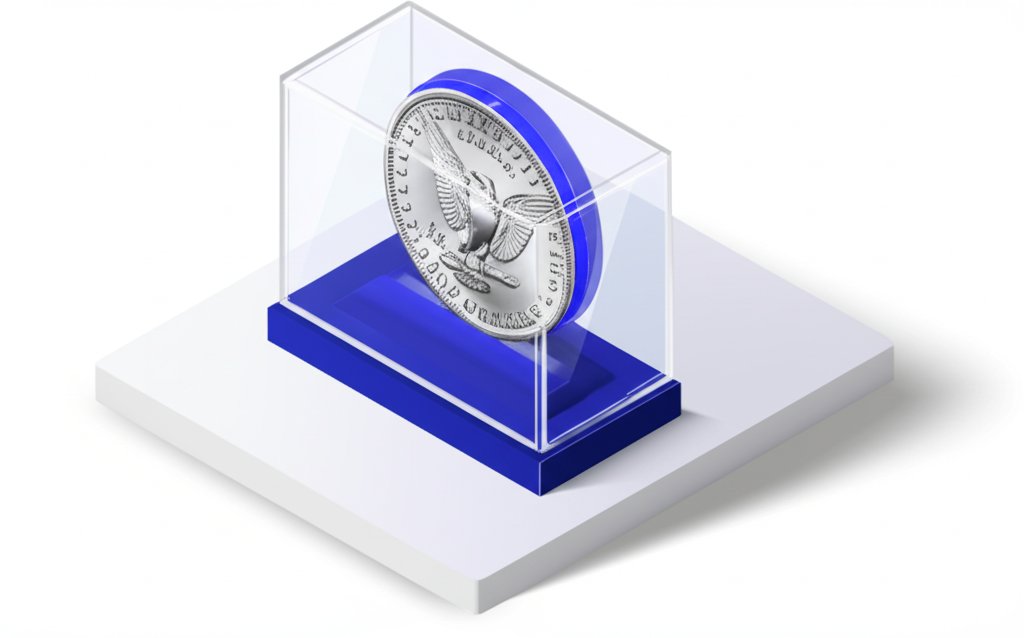
Holding an old silver dollar, you’re not just feeling the weight of metal; you’re holding a piece of American history, a tangible link to a bygone era. But beyond the historical appeal, the actual value of silver dollars can range from a modest premium over their metal content to millions of dollars, depending on factors many casual observers miss. Understanding these nuances is crucial, whether you’ve inherited a small collection, unearthed a forgotten treasure, or are actively seeking out specific pieces. It’s not just about age or "silver content"—it's about a fascinating interplay of rarity, condition, and historical significance that determines true worth.
At a Glance: What You’ll Discover About Silver Dollar Value
- Beyond Bullion: Learn why most silver dollars are worth far more than their melt value.
- The Age-Old Rule: Understand why 1877 and older silver dollars are always collector items.
- Grading's Dominance: See how a coin's condition can create exponential value differences.
- Mintmark Magic: Discover how a tiny letter can drastically change a coin’s price tag.
- Rarity is King: Identify the factors that make certain dates and varieties exceptionally scarce.
- Practical Steps: Gain actionable insights to assess your silver dollars and avoid common pitfalls.
Unpacking the "Silver" in Silver Dollars: A Foundation
Before diving into the high-flying values, let's briefly touch on the "silver" aspect. US silver dollars, particularly those minted before 1935, contain a significant amount of silver. For example, Morgan and Peace dollars (1878-1935) are composed of 90% silver and 10% copper, weighing 26.73 grams. This means even a common silver dollar has an inherent "melt value" tied directly to the fluctuating price of silver.
However, the common mistake is to assume this melt value is the only value, or even the primary one. While a dollar from 1878 or newer might hover just above its silver value if it’s heavily worn and common, the vast majority of silver dollars, especially those pre-1878, boast a significant numismatic (collector) premium. This distinction is the bedrock of understanding the true value of silver dollars.
The Great Divide: Bullion vs. Collector Value
This is perhaps the most critical concept to grasp when assessing the value of silver dollars.
- Bullion Value: This is simply the worth of the silver metal itself. You can calculate this by knowing the coin's silver content and the current spot price of silver. For many circulated Morgan and Peace dollars, particularly common dates with no special attributes, their value might be only a modest percentage above their bullion value. They are still attractive, but their desirability stems more from being large, impressive silver coins than from individual rarity.
- Collector Value (Numismatic Value): This is where things get exciting. Collector value is determined by demand from numismatists (coin collectors) and is influenced by factors like rarity, condition, mintmark, and historical significance. A coin with high collector value will trade for significantly more than its silver content, sometimes hundreds, thousands, or even millions of times more.
The Golden Rule for Silver Dollars:
"Never make the mistake of selling a dollar coin from 1877 or older just for silver. Those types of coins always have a collector value." This single piece of advice, stemming from the scarcity and historical importance of pre-Morgan silver dollars (Flowing Hair, Draped Bust, Seated Liberty, Trade Dollars), can save you from a costly error. Even in heavily circulated condition, these earlier issues command substantial premiums.
Condition is King: How Grading Impacts Value
Imagine two identical 1893-S Morgan Silver Dollars. One is heavily worn, details smoothed away from decades in circulation, while the other is pristine, never touched by human hands, retaining its original mint luster. The heavily worn coin might be worth tens of thousands, but the pristine one? We’re talking over $600,000. This dramatic difference underscores the paramount importance of a coin's condition, or "grade."
Coin grading is a precise, standardized system that assesses the amount of wear and preservation a coin has experienced. Grades range from "Poor" (P-1) to "Perfect Uncirculated" (MS-70). Intermediate grades like Fine (F), Very Fine (VF), Extremely Fine (EF or XF), and About Uncirculated (AU) denote increasing levels of detail and decreasing wear.
- Circulated Grades (P-1 to AU-58): These coins show signs of wear from everyday use. While many still carry significant collector value, especially rare dates or early issues, their value is less than their uncirculated counterparts.
- Uncirculated Grades (MS-60 to MS-70): These coins have never been used in commerce. They retain their original mint luster and sharp details. Within this range, even a single point can mean a massive jump in value. For example, an MS-63 can be hundreds of dollars, while an MS-65 (often termed "Gem Uncirculated") of the same date might be thousands.
Why such a big difference? Rarity in higher grades is key. A coin might be common in circulated condition, but exceedingly rare in uncirculated grades. Collectors often "grade-up," seeking the best possible condition for a given date and mintmark, driving prices up for top-tier examples.
For a deeper dive into the specific elements that dictate value across various coin types, including further details on condition and its nuances, you’ll find valuable context in our main guide on Key Silver Dollar Factors.
Decoding Mintmarks and Varieties: Small Details, Big Money
Beyond date and condition, two tiny features can exponentially alter the value of silver dollars: mintmarks and varieties.
- Mintmarks: These small letters indicate where the coin was minted.
- "P" (or no mark): Philadelphia Mint (the primary mint, often no mark before 1979)
- "S": San Francisco Mint
- "O": New Orleans Mint
- "CC": Carson City Mint (highly desirable due to lower mintages and historical significance of the Old West)
- "D": Denver Mint (for Peace dollars, as Denver wasn't minting dollars during most of the Morgan era)
A specific mintmark on a particular date can signify extreme rarity. For instance, the 1893-S Morgan Dollar, minted in San Francisco, is legendary for its scarcity and high value. Another prime example is the 1889-CC Morgan Dollar from Carson City, which commands hundreds of thousands of dollars in high grades, while an 1889-P (Philadelphia) is far more common. - Varieties: These are slight, unintentional differences in the dies used to strike coins. They can be subtle, like:
- Overdates: A new date stamped over an old one (e.g., 1879-S "Reverse of 1878" Morgan).
- Doubled Dies: Doubling of lettering or design elements due to a misaligned die impression.
- Repunched Mintmarks (RPMs): Where the mintmark was punched more than once, creating a slightly shifted or doubled appearance.
While not as universally impactful as mintmarks, certain varieties are highly sought after by specialists. Identifying these usually requires magnification and specific knowledge, as they are often very subtle.
The Power of Rarity: Dates and Mintage Figures
The fundamental principle of supply and demand heavily influences the value of silver dollars. A coin’s rarity is often tied to its original mintage figure (how many were produced) and its survival rate (how many still exist, especially in good condition).
Factors Contributing to Rarity:
- Low Mintage Numbers: Some mints produced significantly fewer dollars in certain years. Carson City mintages, for example, were often lower than Philadelphia's, contributing to their higher value.
- High Meltages: Millions of silver dollars were melted down over the years, either due to government programs (e.g., Pittman Act of 1918) or rising silver prices. This reduced the overall supply of certain dates.
- Circulation Wear: Even if millions were minted, if most saw heavy circulation and few were saved in good condition, the high-grade examples become rare and valuable.
- Key Dates: Certain combinations of date and mintmark are known as "key dates" because they are exceptionally scarce and highly desirable.
Case Snippets: Rarity in Action
Let's look at some of the most valuable silver dollars, illustrating these points:
- 1893-S Morgan Silver Dollar: With a mintage of only 100,000, this coin is exceptionally rare, particularly in higher grades. An uncirculated example can fetch over $600,000.
- 1901 Morgan Silver Dollar: Despite a mintage of over 6 million, this date is scarce in uncirculated condition, indicating many were melted or heavily circulated. A high-grade example can exceed $400,000.
- 1889-CC Morgan Silver Dollar: Carson City produced only 350,000 of these. High-grade examples regularly sell for over $300,000.
- 1928-S Peace Dollar: A key date for the Peace Dollar series with a mintage of 1.6 million, but many were not saved. A top-condition example sold for over $16,000.
These examples clearly show that raw mintage numbers aren't the sole determinant. Survival rate and condition play equally crucial roles.
Your Practical Playbook for Assessing Silver Dollar Value
Ready to evaluate your own silver dollars? Here's a step-by-step approach:
- Identify the Type of Silver Dollar:
- Early Dollars (1794-1873): Flowing Hair, Draped Bust, Seated Liberty, Trade Dollars. Always assume significant collector value, regardless of condition.
- Morgan Dollars (1878-1921): The most iconic and widely collected. Recognizable by Lady Liberty's profile and the eagle on the reverse.
- Peace Dollars (1921-1935): Lady Liberty with a tiara, eagle on reverse standing on a rock.
- Modern Dollars (1971-Present): Eisenhower, Susan B. Anthony, Sacagawea, Presidential. These are generally not silver (except for specific collector issues) and have very little numismatic value beyond face value, unless proof or uncirculated special editions. Focus on the pre-1935 issues for significant silver dollar value.
- Determine Date and Mintmark:
- Carefully locate the date.
- Look for the mintmark, usually on the reverse, either below the eagle (Morgan) or near the eagle's tail feathers (Peace).
- If no mintmark, it's typically Philadelphia.
- Assess the Condition (Roughly):
- Hold by the Edges: Never touch the coin's surfaces with bare hands.
- Examine Details: How much detail remains on Liberty’s hair, the eagle’s feathers, and the lettering?
- Look for Luster: Does the coin have an original cartwheel luster, or is it dull?
- Check for Damage: Are there scratches, dents, cleaning marks, or evidence of being mounted in jewelry? Any form of damage, including cleaning, severely diminishes value.
- Warning: Do not clean your coins. This is the fastest way to destroy numismatic value. A professional conservator might treat a coin, but amateur cleaning causes irreversible damage.
- Consult Value Resources:
- Online Databases & Guides: Sites like PCGS, NGC, and reputable dealer websites offer pricing guides based on grade.
- Coin Catalogs (e.g., Red Book): These annual publications provide comprehensive listings and values.
- Auction Results: Check recent sales of similar coins.
- Seek Professional Opinion (Crucial for High-Value Coins):
- If you suspect you have a valuable coin (especially pre-1878, key dates, or high-grade examples), consult a reputable coin dealer or consider professional grading services (PCGS or NGC). These services authenticate, grade, and encapsulate your coin, providing a definitive value assessment and enhancing market liquidity.
Example Scenario: The Inherited Box
You inherited a small box of coins. Among them are five silver dollars: - An 1878 Morgan Dollar, heavily worn, no mintmark.
- An 1881-O Morgan Dollar, moderately worn.
- An 1893-S Morgan Dollar, very worn.
- A 1923 Peace Dollar, good condition, some luster.
- A 1928-S Peace Dollar, moderately worn.
Your Action:
- 1878-P Morgan: Likely common date, low collector premium, value close to silver melt, but still a solid dollar.
- 1881-O Morgan: New Orleans mint, generally common. Moderately worn still means good collector value above melt.
- 1893-S Morgan: STOP! Even "very worn" (say, VG-8 grade) for this date can be worth tens of thousands. This is a potential treasure. Do not clean. Get professional assessment.
- 1923 Peace Dollar: Common date, "good condition" (AU-50 to MS-60 range) means a nice collector premium.
- 1928-S Peace Dollar: Another key date! Even "moderately worn" (VF-20 to XF-40 range) could be worth hundreds, possibly thousands. Get professional assessment.
This scenario highlights how a mix of common and rare dates can exist in the same collection, making careful identification essential.
Quick Answers: Common Questions About Silver Dollar Value
Q: Are all old silver dollars valuable?
A: Not equally. While all pre-1935 US silver dollars have collector value above their silver melt value (especially 1877 and older), the exact value of silver dollars varies wildly based on date, mintmark, and condition. Some common dates in low grades might only be worth a small premium over silver, while others are worth millions.
Q: Should I clean my silver dollars to make them look better?
A: Absolutely not. Cleaning a coin, even gently, causes microscopic scratches and removes original patina, permanently damaging its surface and severely reducing its numismatic (collector) value. Collectors prefer coins with natural toning and wear.
Q: Where can I sell my silver dollars?
A: Reputable options include local coin dealers, online auction sites (if you know how to grade and photograph well), or major auction houses for high-value coins. Always get multiple appraisals if you have valuable pieces.
Q: What's the difference between a Morgan and a Peace Dollar?
A: They are distinct series. Morgan dollars (1878-1921) feature a classical depiction of Lady Liberty with a Phrygian cap and an eagle with outstretched wings. Peace dollars (1921-1935) depict Liberty wearing a radiate crown, symbolizing peace after WWI, and an eagle at rest. Both are 90% silver, but their designs, mintage histories, and key dates differ.
Q: How do I tell if my silver dollar is a replica or fake?
A: Fakes exist, especially for highly valuable dates. Key indicators include incorrect weight, off-color metal, blurry details, improper edge reeding, and magnetic properties (real silver is non-magnetic). If in doubt, compare it to known authentic examples or seek expert opinion.
Your Next Step: Informed Action
The journey of understanding the value of silver dollars is a rewarding one. You've learned that merely being "old" or "silver" is only the beginning. The true worth lies in the specific date, the mint where it was struck, its journey through time (condition), and its inherent rarity.
Your immediate actionable steps should be:
- Identify: Pinpoint the type, date, and mintmark of your silver dollars.
- Preserve: Handle coins only by their edges. Store them in inert, archival-safe holders, never PVC.
- Research: Use reputable online resources and print catalogs to get a general idea of value ranges for your specific coins and their approximate condition.
- Seek Expertise: For any coin you suspect might be valuable (especially pre-1878, or key dates like the 1893-S, 1901, 1889-CC Morgan, or 1928-S Peace dollars), seek an appraisal from a certified professional or consider submitting it to a third-party grading service like PCGS or NGC. This small investment can confirm significant value and protect your asset.
Approach your silver dollars with curiosity and caution, and you'll unlock not just their monetary value, but also the rich history they represent.