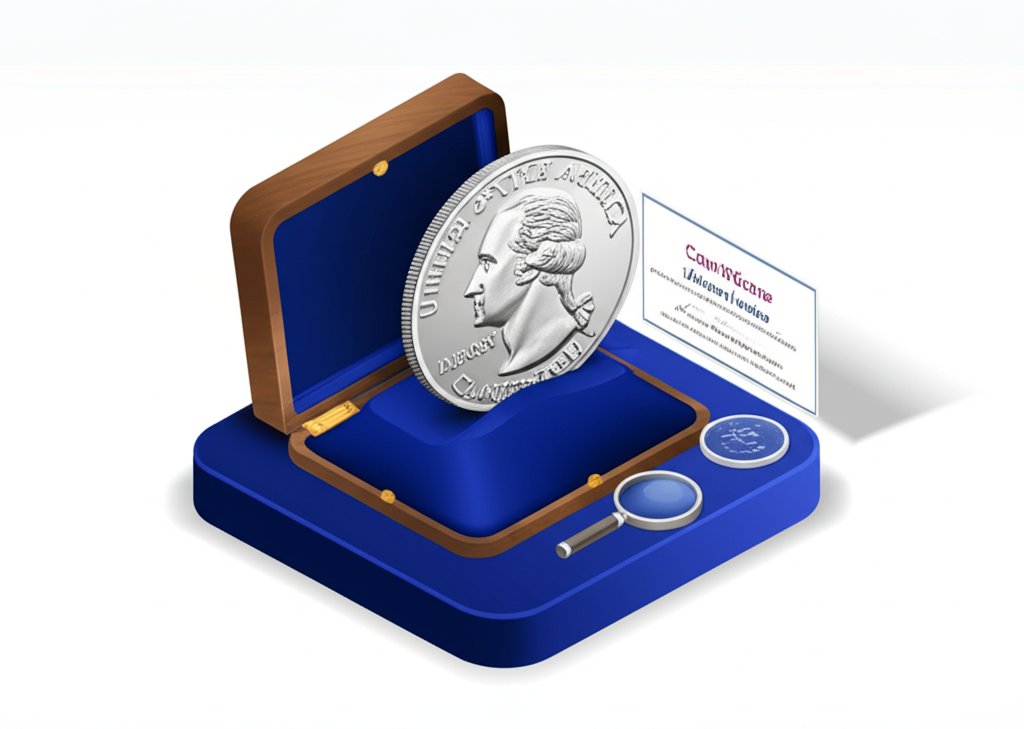
Finding an old quarter can feel like unearthing a small treasure, but when it's a Washington quarter from before 1965, you've definitely found something more than face value. The washington quarter silver value isn't just a fleeting market trend; it's rooted in a tangible asset: 90% pure silver. Unlike modern clad coins, these pieces hold inherent worth as bullion, often significantly more than 25 cents. For collectors, however, certain dates and conditions can push that value far beyond its precious metal content, transforming a humble quarter into a true numismatic prize.
At a Glance: Your Washington Quarter Silver Value Checklist
- Identify Silver Content: Any Washington quarter dated 1964 or earlier is 90% silver, guaranteed.
- Know the Baseline: Each contains approximately 0.1808 troy ounces of silver, providing an intrinsic melt value.
- Spot Key Dates: The 1932-D and 1932-S are notoriously low-mintage and highly sought after.
- Assess Condition: Wear (or lack thereof) drastically impacts collector premiums. Details on Washington's hair and the eagle are key indicators.
- Locate Mintmarks: "D" (Denver) or "S" (San Francisco) below the eagle on the reverse can signal rarity. No mintmark means Philadelphia.
- Avoid Cleaning: Never clean a silver quarter; it can permanently diminish its collector value.
The Foundation: Understanding Silver Melt Value
Every Washington quarter produced between 1932 and 1964 contains a significant amount of silver. Specifically, these coins are composed of 90% silver and 10% copper. This composition translates to approximately 0.1808 troy ounces of pure silver per coin. This silver content ensures that even the most worn-out Washington quarter will always be worth more than its 25-cent face value, fluctuating with the global spot price of silver.
To calculate the baseline melt value, you simply multiply the current spot price of silver per troy ounce by 0.1808. For instance, if silver is trading at $25 per troy ounce, a silver Washington quarter holds an intrinsic melt value of $4.52 (0.1808 x $25). Should silver prices surge to, say, $51.57 per ounce, as they have historically, that same quarter's melt value would climb to approximately $9.32. This bullion value acts as the floor for any silver Washington quarter's worth.
Identifying Your Silver Washington Quarter
Before you dive into potential collector value, confirming you have a silver quarter is crucial. The primary indicator is the date: if it's 1964 or earlier, it's silver. However, there are a couple of other handy visual checks:
- The Edge Test: Examine the coin's edge. A silver quarter will have a solid, consistent silver-colored edge. Modern quarters (1965 and later) are "clad," meaning they have a copper core sandwiched between layers of nickel-copper, revealing a distinct copper stripe on the edge.
- Weight and Tone: While subtle, silver quarters are slightly heavier than their modern counterparts due to silver's density. They also tend to have a brighter, more consistent metallic tone compared to the duller sheen of clad coins, which can sometimes appear tarnished in a way silver doesn't.
Beyond the Melt: Unlocking Collectible Premiums
While the intrinsic silver value sets a solid base, the true excitement for many lies in the collectible premium. Certain Washington quarters, due to their scarcity, historical significance, or exceptional condition, can command prices far exceeding their melt value—sometimes hundreds or even thousands of dollars. The value drivers here are date, mintmark, and condition. For a broader overview of how all silver quarters derive their value, including design types and market factors, you can explore our comprehensive Silver quarter value guide.
Date and Mintmark: The Rarity Equation
Not all silver Washington quarters are created equal in the eyes of a collector. Production numbers (mintages) varied significantly by year and mint location. Low mintage figures translate directly to rarity, which in turn drives up demand and price.
The most famous examples are the 1932-D and 1932-S Washington quarters. These were the very first year of issue for the Washington quarter series, and their mintages were exceptionally low:
- 1932-D (Denver Mint): Mintage of only 436,800 coins.
- 1932-S (San Francisco Mint): An even scarcer mintage of just 408,000 coins.
To put this in perspective, many later Washington quarters had mintages in the tens or even hundreds of millions. Finding a 1932-D or 1932-S in any condition will fetch a significant premium over its melt value. Even in heavily worn "Good" condition, these coins are highly desirable. Other dates and mintmarks, especially during the WWII years when metal rationing affected production, can also carry premiums, though generally not as high as the 1932 key dates.
You'll find the mintmark on the reverse side of the coin, directly below the eagle. A "D" indicates the Denver Mint, an "S" signifies the San Francisco Mint, and the absence of a mintmark means it was produced at the Philadelphia Mint.
Condition (Grade): The Wear and Tear Factor
A coin's condition, or "grade," is perhaps the most significant determinant of its collector value after rarity. Professional grading services use a 70-point scale, where MS-70 (Mint State 70) is a perfect, uncirculated coin, and lower numbers indicate increasing wear. Even slight differences in wear can translate into hundreds or thousands of dollars in value.
Here's how to assess the condition of your Washington quarter, focusing on key areas that show wear:
- Mint State (MS-60 to MS-70): These coins show absolutely no signs of circulation wear. Original mint luster is fully intact. Look for crisp details on Washington's hair above his ear, his cheek, and the fine feathers on the eagle's chest and legs. The lines of the shield should be sharp.
- About Uncirculated (AU-50 to AU-58): Very slight traces of wear on only the highest points. The luster might be slightly diminished. On a Washington quarter, you might see minor flattening on the high points of Washington's hair (e.g., above his forehead or ear) and the eagle's chest.
- Extremely Fine (XF-40 to XF-45): Light wear is visible on most high points. Washington's hair will show some flattening but still retain considerable detail. Fine feather details on the eagle's breast might be partially worn away, but major details remain. The lines in the shield will still be quite distinct.
- Fine (F-12 to F-15): Moderate wear has smoothed large areas. Washington's hair will appear largely flattened, though the outlines of the strands are still discernible. The eagle's head, chest, and legs will look faded and flat, with only the major outlines remaining. The details within the shield will be weak.
- Good (G-4 to G-6): Heavy wear has removed most fine details. Washington's portrait and the eagle's design are largely outlines. Letters and numbers in the legends and date may begin to merge with the rim, but are still readable.
Case Snippet: The 1932-S Washington Quarter
Imagine finding a 1932-S Washington quarter. If it's in heavily worn "Good" condition (G-4), its value might be around $150-$250, still far above its silver melt value. However, if that same 1932-S coin is found in "Extremely Fine" (XF-40) condition, its value could jump to $700-$1,000 or more. A Mint State example could easily fetch several thousand dollars, highlighting the profound impact of condition.
Eye Appeal and Professional Certification
Beyond the technical grade, a coin's "eye appeal" plays a role. This includes factors like attractive toning (natural patina, often blue, gold, or iridescent hues), a strong strike (how sharply the design was impressed), and minimal distracting marks or scratches. Coins with exceptional eye appeal for their grade often sell for higher prices.
For valuable silver Washington quarters, especially key dates or high-grade examples, professional third-party grading by services like PCGS (Professional Coin Grading Service) or NGC (Numismatic Guaranty Corporation) is highly recommended. These services authenticate the coin, assign a precise grade, and encapsulate it in a sealed holder, providing confidence to buyers and often increasing the coin's market value.
Practical Playbook: Valuing Your Washington Quarter
Here's a step-by-step approach to assessing the washington quarter silver value you might have:
- Confirm the Date (1932-1964): This is non-negotiable for silver content. If it's dated 1965 or later, it's not a 90% silver quarter.
- Verify Silver (Edge Test): Look at the coin's edge. A solid silver appearance confirms its composition.
- Determine Melt Value: Check the current spot price of silver online. Multiply that price by 0.1808 to get your coin's minimum value. Websites like Kitco.com or GainesvilleCoins.com provide real-time spot prices.
- Locate the Mintmark: Look on the reverse, under the eagle. Is it "D," "S," or absent?
- Identify Key Dates: Check if it's a 1932-D or 1932-S. If so, you have a valuable coin regardless of condition.
- Assess Condition (Roughly): Using a strong light and magnifying glass, compare your coin to descriptions of Good, Fine, XF, and Mint State. Focus on Washington's hair, cheek, and the eagle's details. Be honest about wear.
- Consult a Price Guide: Once you have a date, mintmark, and approximate condition, consult a reputable coin price guide (e.g., the "Red Book" – A Guide Book of United States Coins, or online resources like PCGS.com/prices or NGCcoin.com/price-guides). These guides will give you estimated values for different grades.
- Consider Professional Grading: If you believe you have a key date or a high-grade common date, especially one appearing AU or MS, consider sending it for professional certification. This step adds cost but can significantly de-risk and enhance the coin's value.
Quick Answers: Common Questions About Washington Silver Quarters
Q: Are all Washington quarters from 1932-1964 valuable?
A: Yes, in the sense that they are all worth more than their 25-cent face value due to their 90% silver content. Their intrinsic melt value guarantees a baseline worth. However, not all carry significant collector premiums beyond their silver content; many common dates in lower grades primarily trade for their melt value.
Q: How do I tell if my quarter is silver without checking the date?
A: The most reliable non-date method is checking the coin's edge. A silver quarter (1932-1964) will have a solid, uniform silver-colored edge. Modern clad quarters (1965-present) will display a visible copper stripe in the middle of their edge. Silver quarters also tend to have a slightly different feel and sound when dropped compared to clad coins, but the edge test is definitive.
Q: Should I clean my silver Washington quarter to make it look nicer?
A: Absolutely not. Cleaning a coin, even gently, will almost always damage its surface and destroy its original patina, drastically reducing its collector value. A cleaned coin is easily identifiable to experts and is generally worth significantly less than an uncleaned coin, even one with heavy tarnish. Preserve it as found.
Q: What's the main difference between melt value and collector value for these coins?
A: Melt value is solely based on the fluctuating market price of the silver content, providing a minimum value. Collector value, or numismatic value, includes the melt value plus an additional premium driven by factors like rarity (date/mintmark), condition (grade), demand, and eye appeal. A common date in low grade might only have melt value, while a rare date in high grade will have a significant collector premium on top of its melt value.
Your Next Steps: From Discovery to Valuation
Uncovering a silver Washington quarter is always a win, representing a tangible piece of history and a small investment in precious metals. Your first priority is always to confirm its silver composition by checking the date (1932-1964) and the edge. From there, understanding the interplay between its guaranteed silver melt value and potential collector premiums is key.
Start by calculating its base silver value, then scrutinize the date and mintmark for any notable rarities like the 1932-D or 1932-S. Finally, carefully assess its condition, remembering that preserving its original state is paramount. With these steps, you'll be well-equipped to appreciate the true worth of your Washington quarter, whether it's a bullion piece or a numismatic treasure.