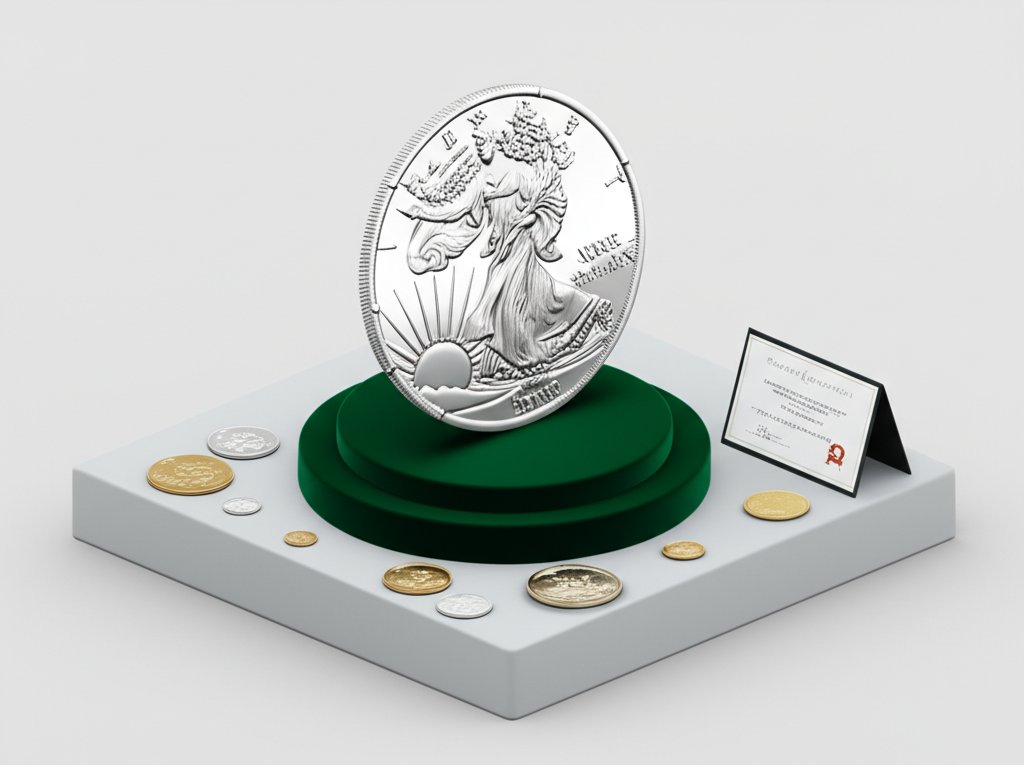
When you stumble upon an old silver dollar, whether it’s in a forgotten box or a long-lost collection, the immediate question often isn't just "What is this?" but rather, "What silver dollars are valuable?" While every genuine silver dollar holds intrinsic worth due to its metal content, a select few transcend their bullion value to become numismatic treasures worth thousands, or even hundreds of thousands, of dollars. Identifying these standout pieces requires a keen eye and a structured approach, looking beyond just the shine to the crucial details that tell their story.
At a Glance: Identifying Valuable Silver Dollars
- Series Matters: Distinguish between Bust, Seated Liberty, Morgan, and Peace dollars; each series has its own rarities.
- Date & Mint Mark are Key: Specific date-mint mark combinations are the primary drivers of extreme value.
- Condition is Paramount: A coin's grade (from Mint State to Good) dramatically impacts its worth.
- Special Qualities Enhance Value: Original luster, appealing toning, and lack of damage can push a coin into higher echelons.
- Research is Your Ally: Consult reputable price guides and consider professional authentication for high-value finds.
More Than Just "Old Money": Decoding Your Silver Dollar's Series
Before you can pinpoint a valuable silver dollar, you need to understand which "family" it belongs to. The United States has minted several distinct series of silver dollars, each with its own characteristics, history, and, most importantly, potential for high value. Knowing the series is the first step in unlocking its story and estimating its worth.
The Early American Icons: Bust and Seated Liberty Dollars
These are the ancestors of U.S. silver coinage, minted from the late 1700s to the late 1800s.
- Flowing Hair & Draped Bust Dollars (1794-1804): These early pieces feature Lady Liberty with flowing hair or a draped bust. They are exceedingly rare and almost universally valuable, often commanding five to six figures even in lower grades due to their age and historical significance. Think of these as the "first editions" of American coinage.
- Seated Liberty Dollars (1840-1873): Depicting Liberty seated on a rock, holding a shield and pole, these dollars represent a more sustained period of minting. While some common dates exist, many Seated Liberty dollars, particularly those from Carson City ("CC") or with low mintages, can be very valuable. Their age and often lower production numbers make them a collector's favorite.
For a deeper dive into how broader collection factors influence the value of these and other series, you might want to Discover silver dollar value through a comprehensive guide that explores the overarching market dynamics.
The Wild West Legend: Morgan Silver Dollars
The Morgan Silver Dollar, minted from 1878 to 1904 and again in 1921, is arguably the most recognizable and widely collected U.S. silver dollar. Featuring Lady Liberty on the obverse and an eagle with outstretched wings on the reverse, these coins evoke the spirit of the American West. Their widespread circulation means many are available, but certain dates and mint marks are astonishingly rare and command premium prices.
Many of the most valuable silver dollars are Morgans. For example, the 1893-S Morgan Silver Dollar is a legendary rarity, with auction prices soaring past $600,000 for top-tier examples. The 1901 Morgan Silver Dollar and the 1889-CC Morgan Silver Dollar also regularly fetch hundreds of thousands of dollars, showcasing the incredible potential hidden within this series.
A Symbol of Peace: Peace Dollars
Minted from 1921 to 1935, the Peace Dollar commemorates the end of World War I, featuring a youthful Lady Liberty on the obverse and a bald eagle perched on a rock, holding an olive branch, on the reverse. These coins are generally more accessible than Morgans, but certain dates, particularly those with low mintages or from specific mints, are highly sought after.
The 1928-S Peace Dollar, for instance, has seen values climb over $16,000 for uncirculated specimens, while the 1925-S Peace Dollar can reach over $15,000. While not typically reaching the dizzying heights of the rarest Morgans, a valuable Peace Dollar is still a significant find.
The Devil's in the Details: Dates and Mint Marks That Drive Value
Once you've identified the series, the next crucial step in determining what silver dollars are valuable is to meticulously inspect the date and the mint mark. These two identifiers, in combination, are the primary drivers of a coin's rarity and, consequently, its market value.
Reading the Date: A First Clue
The date, clearly visible on the coin, tells you the year it was struck. Older coins aren't automatically more valuable, but certain dates within each series had significantly lower production runs due to economic conditions, melting, or other historical factors. A seemingly insignificant difference of just one year can turn a common coin into a treasure.
For example, an 1881 Morgan dollar is quite common, but an 1893-S Morgan dollar is one of the rarest and most valuable U.S. coins.
Deciphering the Mint Mark: O, S, CC, D, and the Invisible P
The mint mark indicates where the coin was produced. This tiny letter, usually found on the reverse side of the coin, below the eagle for Morgans and Peace dollars, is critical.
- "O" for New Orleans: Coins from the New Orleans Mint (1838-1909) often have their own unique market dynamics. The 1893-O Morgan, for instance, is highly prized, valued at over $189,000.
- "S" for San Francisco: The San Francisco Mint (1854-1955) produced some significant rarities. The 1893-S Morgan and the 1928-S Peace Dollar are prime examples of "S" mint marks commanding enormous premiums.
- "CC" for Carson City: Coins from the legendary Carson City Mint (1870-1893) are almost universally sought after. The "CC" mint mark itself carries a mystique due to the mint's short operating period and its association with the Wild West. The 1889-CC Morgan is a standout, often exceeding $300,000.
- "D" for Denver: The Denver Mint (1906-present) produced Peace dollars in the later years. While not as consistently rare as Carson City coins, specific Denver-minted Peace dollars can still be valuable.
- No Mint Mark for Philadelphia: The primary U.S. Mint in Philadelphia typically did not use a mint mark. So, if your silver dollar lacks a mint mark, it was likely struck in Philadelphia. While many Philadelphia issues are common, certain dates, such as the 1895 Morgan Dollar (often referred to as the "King of Morgans" due to its low mintage), are extremely valuable, reaching over $78,000 even without a mint mark.
Noteworthy Date & Mint Mark Combinations (from the most valuable Morgan and Peace Dollars):
| Coin Series | Date & Mint Mark | Approximate Value (High Grade) | Notes |
| :----------------- | :--------------- | :----------------------------- | :---------------------------------------------- |
| Morgan Silver Dollar | 1893-S | $617,980 | The undisputed king. Extremely rare. |
| Morgan Silver Dollar | 1901 | $478,092 | Philadelphia mint, surprisingly rare in high grade. |
| Morgan Silver Dollar | 1889-CC | $314,608 | Carson City rarity, highly desired. |
| Morgan Silver Dollar | 1884-S | $280,900 | San Francisco rarity. |
| Morgan Silver Dollar | 1893-O | $189,072 | New Orleans mint, scarce. |
| Morgan Silver Dollar | 1895-O | $173,316 | Another New Orleans rarity. |
| Morgan Silver Dollar | 1896-O | $147,056 | Scarce New Orleans issue. |
| Morgan Silver Dollar | 1895 | $78,652 | Philadelphia Proof Only, legendary low mintage. |
| Peace Dollar | 1928-S | $16,665 | A key date for the Peace Dollar series. |
| Peace Dollar | 1925-S | $15,150 | Another valuable San Francisco Peace Dollar. |
Values are illustrative and represent high-grade auction results from the ground truth provided.
Beyond "Good Shape": Understanding Silver Dollar Grading
Even if you have a rare date and mint mark, the coin's condition, or "grade," is paramount to its value. A rare coin in poor condition will be worth significantly less than the same coin in excellent condition. Professional grading assesses the amount of wear, surface preservation, and overall eye appeal.
What Each Grade Means for Value
Coin grading uses a standardized scale, with higher numbers indicating better condition. Here's a simplified look at key grades for silver dollars:
- Mint State (MS-60 to MS-70): These coins show no traces of wear, even under magnification. They retain their original luster and detail as they left the mint. An MS-60 coin might have some minor bag marks, while an MS-70 is perfectly flawless. This is where the highest values are found for rare coins.
- Example: An 1893-S Morgan in "Good" condition might be worth a few thousand dollars, but in "Mint State," it could exceed half a million.
- Extremely Fine (XF-40 to XF-49): The coin shows slight wear on the highest points of the design, but all major details are sharp. Luster may be present in protected areas. This grade represents a well-preserved circulated coin.
- Fine (F-12 to F-19): Significant wear is evident, but major design elements are still clear and separate. Many small details will be worn smooth, but the overall design remains distinct.
- Good (G-4 to G-6): The coin is heavily worn, with the main design elements outlined but merged into the rim in places. Most fine details are gone, and the date might be weak but legible. While a "Good" grade generally means low value for common coins, for extreme rarities, even a G-4 can be worth a considerable amount.
The "Eye Appeal" Factor: Luster, Toning, and Scratches
Beyond the technical grade, "eye appeal" plays a huge role in a coin's market desirability and, thus, its value. Two coins with the same technical grade can have vastly different prices based on these subjective, yet critical, factors:
- Luster: This refers to the original cartwheel effect or frosty sheen a coin has when it's untarnished and uncirculated. Strong, original luster is highly prized.
- Toning: This is the natural patination that develops on a silver coin over time as it reacts with elements in the air or its storage environment. While artificial cleaning destroys value, natural, vibrant toning (e.g., iridescent blues, purples, golds) can significantly enhance a coin's appeal and value, especially for uncirculated pieces.
- Absence of Damage: Major scratches, dents, heavy bag marks, rim dings, or signs of cleaning (which manifests as an unnatural brightness or hairlines) can severely reduce a coin's value, sometimes by 50% or more, even if the date/mint mark is rare. Collectors want pristine surfaces.
Unearthing the Giants: The Most Valuable Silver Dollars in Focus
While every silver dollar has a melt value due to its composition (around $47.06 for many pre-1936 Morgan dollars and $39.69 for Peace dollars at a silver price of $51.57/oz as of Oct 13, 2025), truly valuable coins are those that soar far beyond this intrinsic worth. These are the pieces that make headlines in auction rooms.
The most valuable silver dollars are overwhelmingly Morgan dollars, particularly those from the later years of the 19th century and specific mints known for low production.
Top Tier Examples (beyond bullion value):
- 1893-S Morgan Silver Dollar: The apex of Morgan dollar collecting. With only around 100,000 minted, and a large number lost to melting or circulation, very few high-grade examples survive. Value: $617,980+ for top grades.
- 1901 Morgan Silver Dollar: A surprising rarity from the Philadelphia Mint. While P-mint coins are often common, this date saw a very low survival rate in uncirculated condition. Value: $478,092+ for top grades.
- 1889-CC Morgan Silver Dollar: The Carson City Mint is known for its low mintages, and this year is a standout. Value: $314,608+ for top grades.
- 1884-S Morgan Silver Dollar: Another San Francisco rarity, highly sought after by collectors. Value: $280,900+ for top grades.
- 1893-O Morgan Silver Dollar: A New Orleans mint issue that is exceptionally scarce in higher grades. Value: $189,072+ for top grades.
While the majority of these top-tier coins are Morgans, Peace dollars also have their heavy hitters:
- 1928-S Peace Dollar: One of the lowest mintages for the series, making it highly desirable. Value: $16,665+ for top grades.
- 1925-S Peace Dollar: Another key San Francisco issue for the Peace Dollar collector. Value: $15,150+ for top grades.
Case Snippet: The Legend of the 1893-S Morgan
Imagine finding an 1893-S Morgan dollar. Even if it's heavily circulated ("Good" condition), it could still be worth thousands of dollars. An average example in "Fine" condition might fetch tens of thousands. But an uncirculated specimen, with full luster and no wear, becomes a world-class numismatic prize. Its extreme rarity, combined with the iconic status of the Morgan dollar, elevates it far beyond its silver content to a truly staggering value. This isn't just a coin; it's a piece of history that few can claim to own.
Your Step-by-Step Playbook for Identifying Valuable Silver Dollars
Ready to assess your own silver dollars? Here's a practical guide to help you systematically identify potential treasures.
- Inspect the Series:
- First, determine the type: Is it a Bust, Seated Liberty, Morgan, or Peace dollar? This immediately narrows down your search.
- Tip: Use images from reputable online sources or coin guides to compare your coin's design.
- Locate the Date and Mint Mark:
- Date: Always the first numerical identifier. Note it down.
- Mint Mark:
- Morgan Dollars: Look on the reverse, below the eagle's tail feathers.
- Peace Dollars: Look on the reverse, above the eagle's tail feather, usually on the left side of the rock.
- Early Dollars (Bust/Seated Liberty): Mint marks vary, often on the reverse, but many early issues from Philadelphia had no mark.
- Tip: A jeweler's loupe (10x magnification) is indispensable for clearly seeing these small details.
- Assess the Condition (Preliminary Grade):
- No wear? Does it still have its original frosty luster? No rubbing on the high points (Liberty's hair, eagle's breast)? This could be Mint State (MS).
- Slight wear? Are only the very highest points rubbed? Luster mostly gone but details sharp? Likely Extremely Fine (XF).
- Significant wear? Are fine details gone, but main elements still clear? Likely Fine (F) or Very Fine (VF).
- Heavy wear? Design flattened, date barely legible, merging with the rim? Likely Good (G) or About Good (AG).
- Crucial: Avoid cleaning your coin! Even professional cleaning reduces value.
- Check for Special Qualities:
- Original Luster: Is the surface bright and reflective in an original way?
- Appealing Toning: Does the coin have attractive, natural discoloration, or is it splotchy and ugly?
- Surface Blemishes: Are there any deep scratches, dents, heavy nicks, or evidence of polish/cleaning? Even minor marks can drastically reduce value.
- Research Your Findings:
- Once you have the series, date, mint mark, and a rough idea of condition, consult a reputable coin price guide (e.g., Red Book, online databases like PCGS or NGC).
- Look up your specific coin to see what comparable examples have sold for. Be realistic about your grading; most amateur assessments are overly optimistic.
- Consider Professional Opinion:
- If your research suggests your silver dollar might be one of the valuable rarities (e.g., potentially worth hundreds or thousands), seek professional authentication and grading. Reputable services like PCGS (Professional Coin Grading Service) or NGC (Numismatic Guaranty Corporation) are the industry standard. Their assessment provides confidence and unlocks full market value.
Quick Answers to Common Silver Dollar Questions
Are all silver dollars valuable?
Every genuine U.S. silver dollar holds intrinsic value due to its silver content, which is significantly more than its face value. For instance, a common Morgan dollar contains about 0.7735 troy ounces of silver. At a silver spot price of $51.57/oz (as of Oct 13, 2025), this translates to a melt value of approximately $39.88, which is well above its face value of $1.00. However, numismatic value (collector's value) varies wildly, with many common dates being worth only slightly more than their melt value, while rarities soar into the thousands or hundreds of thousands.
Can I clean my silver dollar to make it look better?
Absolutely not. Cleaning a silver dollar, even with specialized coin cleaners, will almost certainly reduce its numismatic value. What might seem like dirt or tarnish to an untrained eye is often natural patination (toning) or just original surface accumulation that collectors prefer to be untouched. Cleaning alters the coin's original surface, destroying its luster and historical integrity, which are key components of its collector value. A cleaned coin is identifiable by its unnatural sheen or fine hairlines, and its value is significantly diminished.
What's the difference between Morgan and Peace dollars beyond looks?
Beyond their distinct designs, Morgan and Peace dollars differ primarily in their age, silver composition slightly, and historical context. Morgan dollars (1878-1921) contain 90% silver and 10% copper, weighing 26.73 grams. Peace dollars (1921-1935) also contain 90% silver and 10% copper, but are marginally lighter at 26.73 grams with a slightly different silver content by weight that often puts their melt value a bit lower than Morgans. Morgan dollars generally represent the industrial expansion and settlement of the American West, while Peace dollars symbolize the nation's hope for peace after World War I. This difference in context influences which dates are rare within each series.
Where is the best place to get my silver dollar valued?
For a preliminary estimate, online resources like PCGS.com, NGCcoin.com, and reputable coin dealer websites offer price guides and auction results based on grade. For a definitive, certified valuation and authentication, especially for potentially high-value coins, send your coin to a professional grading service like PCGS or NGC. These services encapsulate your coin in a tamper-evident holder and assign a universally recognized grade, which is essential for maximizing its market value and ensuring authenticity.
Taking Action on Your Silver Dollar Discovery
Identifying truly valuable silver dollars is a journey of careful observation, historical context, and informed research. Don't let the sheer volume of coins or complex grading terms intimidate you. Start by identifying the series, then hone in on the date and mint mark, and finally, objectively assess the coin's condition. Remember, every silver dollar has a story, but only some hold extraordinary value. With patience and these actionable steps, you're well-equipped to discover if your silver dollar is one of them.